...among the women of Egypt's renaissance and among the leaders of the literary and social movement. The two of them agree in opinion in answer to this question, and this is their answer:
The Egyptian woman is fully worthy of entering Parliament, given the necessity of equality at the present time. Voting means only choosing the right person to carry out his national tasks in the
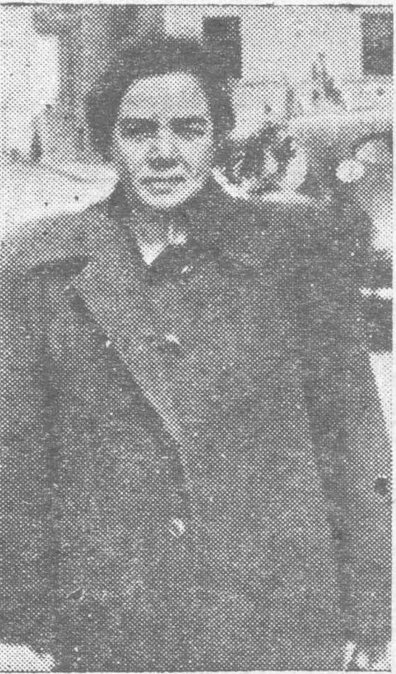
best way. This choice requires neither culture nor wide learning, but only a measure of discernment and national consciousness, and both exist in Egypt among men and women alike. Events have proved that in every national movement that arose in the country and redounded to its benefit, woman bore her share on an equal footing with man.
As for entering Parliament, that will naturally not be for every woman, but for the educated women holding certain scientific qualifications equal to man's; such women stand on a par with the members of Parliament and surpass a good number of them. And

we believe with full conviction that the Egyptian woman will bring her country the greatest benefit by entering Parliament, which will enable her to call for reform in the family and in society.

The nature of Lebanon closely resembles the nature of Switzerland — the one as an Eastern land, the other as a Western one. The Swiss woman has not yet obtained equality of rights with man, nor has she exercised her political rights, and this by her own wish and her orientation in life. As for the
Lebanese woman, although she is less advanced than the Swiss, she has a native intelligence that distinguishes her to some degree; but she lacks knowledge and the development of an independent personality of her own, such as modern world civilization requires.
The Lebanese woman is cheated of her rights — in law, in tradition, and in society — although the Arab woman of old had a past worthy of imitation!
In my opinion it would be well for woman in Lebanon to be given her political rights, as an encouragement to her, that she may complete the development of her personality in society, and undertake — she and man together, side by side — the mending of national and social problems, in pursuit of a sounder future!...

In Iraq today, as in every other Arab country, there are two classes of women: the educated and the ignorant. The educated woman is at a degree of maturity and understanding no less than man's. She is supported by men, especially by the upper class among them. This educated woman feels what the ignorant one suffers of pains and injustice in her rights, and is more capable of helping her than man is; for man does not have the experience needed to go deep into and understand the mind of the suffering woman, to study her problems, and to work to raise her level and lift her out of misery and wretchedness. By entering Parliament she can, better than man, secure the demand for these rights, and the relief of her ignorant sister.