These are the musings of a genuine artist, which went on living silently in old notebooks, until the profound artist Moustafa Farroukh came to bring them forth on the pages of this magazine.
Farroukh lived sweet years of his youth amid the splendor and majesty of art, in Europe, in the shadows of temples and shrines and in the galleries of museums, and his spirit drank deep of those immortal masterpieces of art... And The Woman's Voice is proud to present these artistic memoirs to its readers in every one of its issues.
"The Editorial Pen"
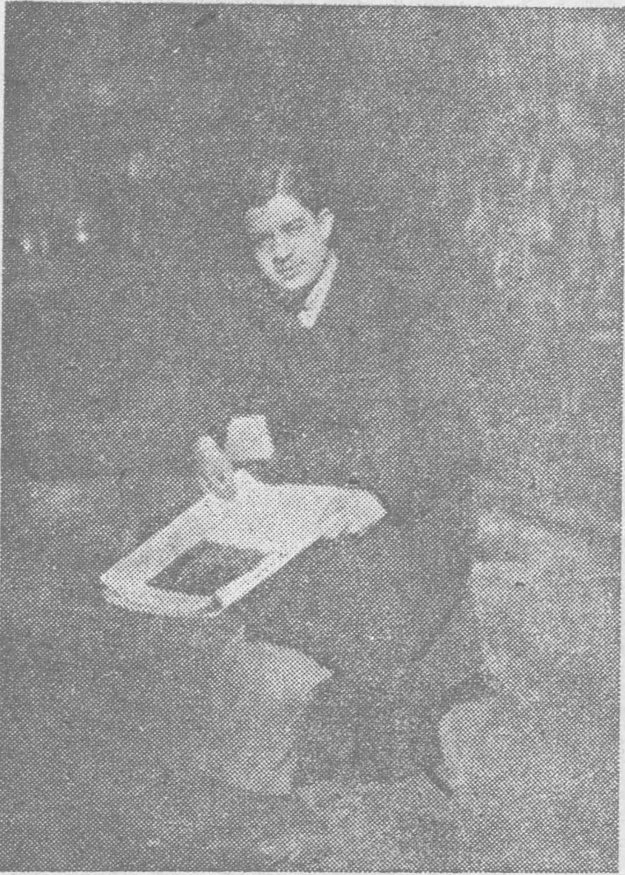
The artist Farroukh in his youth, 24 years ago.
In the late summer of 1924 the steamer Brazil was leaving Beirut's clamorous harbor, and I stood on the ship's deck like a dreamer, scarcely able to believe that I had won the fulfillment of a cherished wish that had so long teased my artistic dreams — and here I had won at last a journey to the cradle of art and beauty, the eternal city, Rome.
Rome, the Eternal City, as they call it, which was a place of pilgrimage for the great artists, a spur to their genius, and a sweet wellspring for their brilliance; the cradle of the arts and the storehouse of thought since the most ancient ages — does it not deserve that we speak of it, if only a little?
Indeed! I have forgotten neither
Rome nor art, though my acquaintance with the city is still fresh. And here, now that I have settled in, I offer fleeting pictures of the city of art, the city of Julius Caesar, Caracalla, Titus, and Scipio — nay, the city of men of thought and art: Galileo, Petrarch, Tasso, and Marconi; the city of Michelangelo, Leonardo, Raphael, Correggio, and the others who raised high the glory of mind and spirit and laid the foundations of this great civilization.
There is movement, yet no movement; there are crowds, yet no clamor... and between the one and the other you see flower sellers at every turn. Along the street rise towering buildings of marvelous architecture, all art and harmony, and in some of their corners appear statues, some symbolic and some realistic, of certain men of genius — scholars, writers, and artists. Is the heritage of the truly advanced nations anything more beautiful than these faces, when civilizations are remembered and nations are honored?...
Hardly a building is without some ornamental carving, and these buildings stretch away in a straight line whose end the eye
cannot see. If one looks at the vendors' shops — greengrocers, cheese, meats, flowers — one is seized with astonishment at their fine arrangement and cleanliness. And if the fancy takes you and you enter a refreshment shop or a café, you see a wonder and your appetite grows: utmost cleanliness, perfect order, the greatest care, and a restful quiet.
In truth, one hardly wearies of gazing at what is around him, for he always finds something new. While he is in the streets, among the towering buildings and the ceaseless movement, he is suddenly surprised by the sight of a beautiful garden, soft of blossom, gracefully planted, breathing fragrance, in whose midst nestles a pool from which the water gushes.
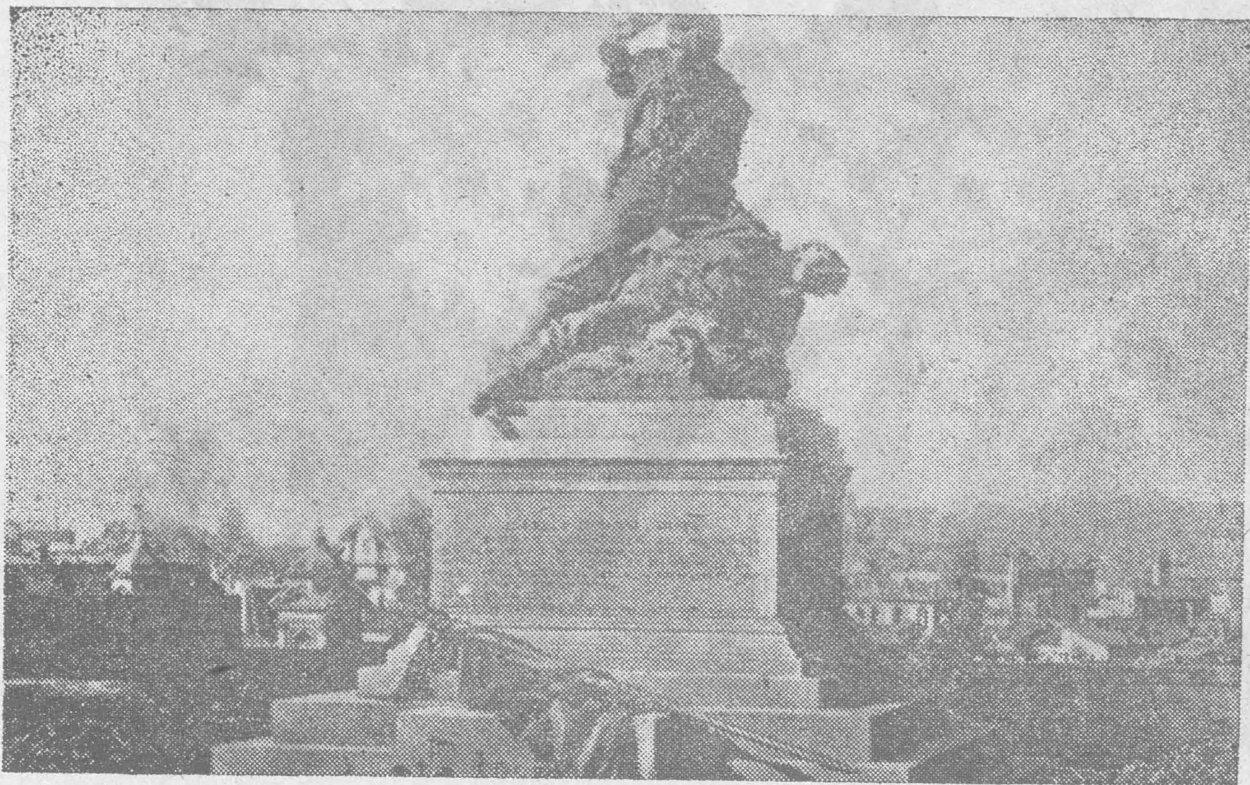
And sometimes, in the middle of the long streets, you find public squares in whose center a statue has been raised to one of their geniuses, or their leaders, heroes, and teachers, reminding you at once of their glorious history and testifying to their esteem for those who labor...
It is four o'clock, and the families have begun to arrive with their children. Here, on that green meadow, are clusters of children at play, and near each of them their mothers, either reading or knitting clothes for them.
And there, on the other side, appeared a woman with her husband, seated together talking or reading. At the far