
It is no secret to you that you live in an age in which the forces of destruction hold sway more than the forces of building govern, in which chaos wins more than order wins, an age nearer to sickness than to health and soundness. Nor is it hidden from you that in this age good and evil have come to be mixed together in a corrupting confusion, and wheat and tares grow in the field in a tangled growth; and it has become one of the most binding of necessities, for whoever wishes to live a useful life, to learn the knowledge of good and evil, so as to be able to tell the wholesome from the rotten. The strange thing is that in this age there is much counterfeit, and much truth as well; in it are violent forces of destruction and great forces of construction; it is at one and the same time an age rich to the point of extravagance and poor to the point of grinding poverty. And stranger still, it opens the field to reformers and opens the field to corrupters alike.
The forces at work in this age are many and strong. But there are forces more manifest than others, and all of them push it toward crumbling, shaking, and disorder. The first of these forces is the commercial, money-seeking spirit. You know that this spirit has prevailed in the recent period. The utmost measure by which it can gauge its success is the disposal of its material and intellectual wares, without
a thought for the things and the ideas it pushes into the market. It wants to sell, and only to sell, and it does not care, beyond that, what it sells: is it useful and wholesome? is it necessary and needed? — or does it sell something other than this and that? How like this age is to a vast storehouse containing everything, necessities and luxuries, the necessary and the unnecessary, the wholesome and the harmful, of ideas, creeds, doctrines, and opinions, of books, magazines, newspapers, and the various films of the cinema. And people enter this vast storehouse without having any clear idea of what they need.
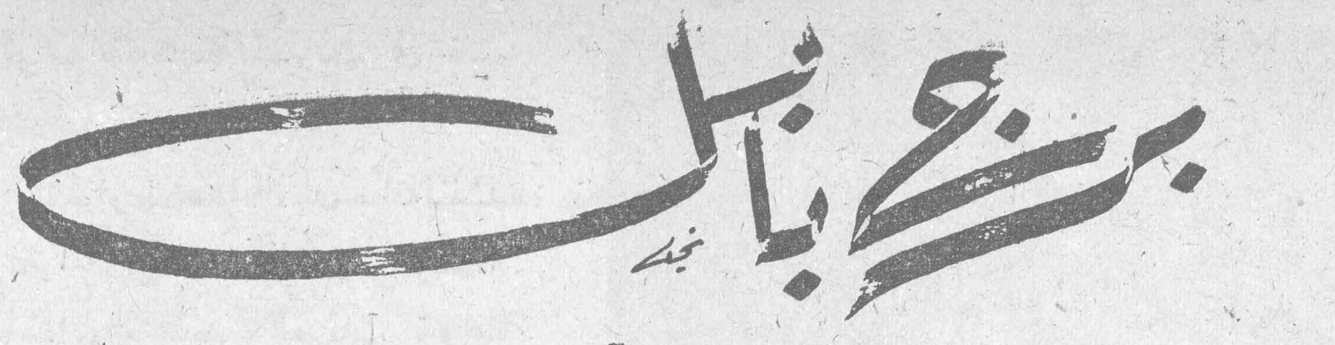
So be on your guard, sister, when you enter this storehouse; and be aware of the sellers' skill and their glibness. The good life makes it incumbent upon you to learn a knowledge by which you may distinguish between what you need and what you do not need, and by which you may withstand the sellers' glibness and turn their cunning back upon their own throats. This knowledge is "the science of values"; and if you obtain a sufficient measure of this science, you will be able to walk through this age — through this Tower of Babel — with a firm foot, a seeing eye, and an attentive ear.
And there is another force in this age, namely the force of science. It is a fascinating, alluring force, which can enumerate for you the noble services it has rendered — and still renders — to humanity in the past ages and in this age, and can claim that it works for the welfare of man.
And how eagerly you desire to provision yourself with science with all the strength you have been given; how readily you imagine that science alone is capable of raising mankind to summits it has not reached to this day, and of gov
erning all its fields; how completely you place your trust in science and believe in it with a faith by which you fancy that whatever does not submit to experiment is false, that whatever cannot be measured by the measures of science is drivel and absurdity, and that whatever science does not approve and bless is a matter for doubt, suspicion, and accusation.
Provision yourself with science with all the strength you have been given, for science is light. But beware! In the science of this age there is more of fire than of light, and the difference between fire and light is like the difference between wrecking and building, like the difference between error and guidance. Provision yourself with science with all you have been given, for nations have excelled only by science. But beware of believing that it is able to govern all the fields of living activity, for some of them are material and some are spiritual. Science, though it cultivate the mind and carry it to the summit, will be able to do nothing in the field of character and the field of the spirit. It will not raise your character high, nor refine it, and it will not breathe into your spirit the warmth of faith. And how sorely we need, sister, upright character and deep faith in this age in which moral standards and ethical measures have been shaken, in which souls are troubled, and doubts, suspicions, and misgivings toy with them, and which looks upon the spiritual and moral worlds — the very worlds science cannot reach — with looks of anxiety and accusation.
Provision yourself, sister, with science, and cultivate your mind by it. It will guide your steps only in the world of the mind. As for the worlds of virtuous character, seek out for yourself in them a high example by whose guidance you