outer walls niches have been left holding statues of the greatest emperors of Rome. It consists of
two floors: the lower given over to the arts of sculpture, the upper to painting.
I entered this museum, and the first thing I saw was a marble statue of a beauty reclining on her couch, propping her head with her right hand and holding an apple in her left. She appeared naked but for a transparent veil covering her middle, and she is of great beauty. The artist Canova excelled in rendering the proportion of her limbs, and above all in showing the softness of flesh in this mute marble body. Its art inclines to the Greek manner called "Neoclassique." This beauty is Pauline Borghese, sister of Napoleon Bonaparte.
On the opposite side is a statue from the Greek legends called "Apollo and Daphne." This Apollo is the god of art and beauty, pursuing the beauty Daphne, daughter of the god of vegetation, who, when he tried to seize her, turned into a tree, fine branches sprouting from her fingertips. The sculptor Bernini succeeded in drawing this delicate subject out of the marble, in the harmony of the bodies, and in excellence of expression. It is counted a brilliant gem of art, attesting to the sculptor's genius: by way of the chisel he made it suddenly pulse with life, radiate thought, and speak wisdom.
This artist has another statue, representing David, bent with all
his strength on hurling his sling at his giant foe, according to
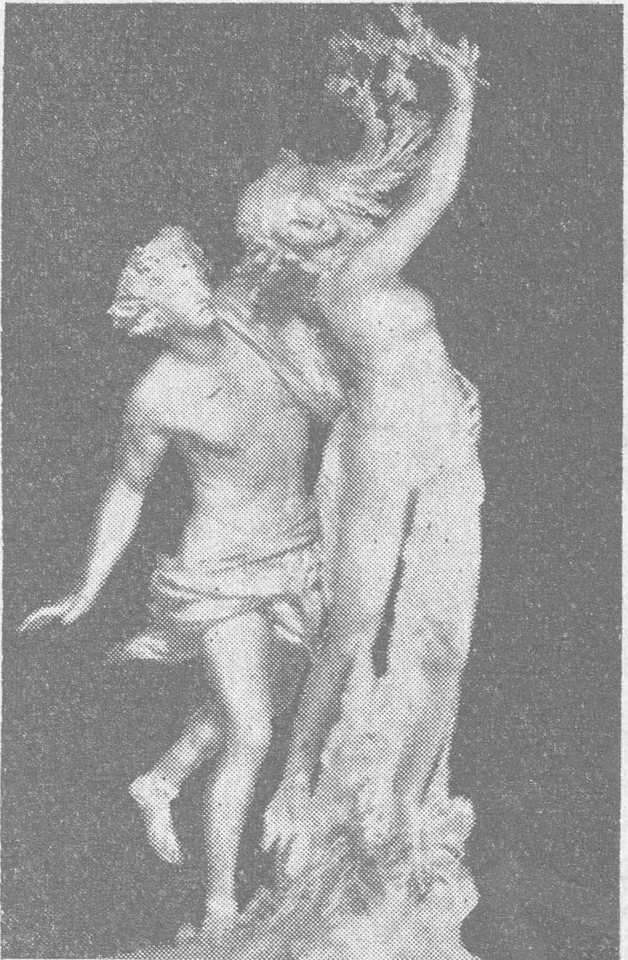
The beauty Daphne and the god "Apollo"
the well-known story. Bernini the sculptor, God rest his soul, succeeded completely in carving this statue, through the extraordinary power he put into the choice of David's pose; and he succeeded in conveying the fitting meaning through the lines of the neck, the swelling of the muscles, their tensing and their pressure, and then the effect of all this on the face — above all in the mouth and the eyes, and the resolve and force of will that show in them, bent on
destroying the usurper. Whoever contemplates this extraordinary masterpiece feels strength stir within him and revolt awaken; he is moved to struggle and to rise. It is a crying example of energy and zeal — and how greatly we need statues alive like these, to drive into our own frozen statues something of this energy and awareness.
Then there are various statues, among them busts of the most sumptuous kinds of marble: the face, for instance, of rose-colored stone, and the garments black or green or brown, all of it translucent and gleaming, ravishing the mind. Thus the beauty of the material was joined to the splendor of the art — and how great the two are when joined...
Most of these works represent great emperors of Rome, some of the popes, and nobles of the generation of which we speak. Some belong to the Greek era and other periods.
And I felt a fierce hunger, my eyes all but devouring the marvels below them and above them, marvels that ravish the mind. I roamed here and there, contemplating this and gazing at that; but my leaning toward painting, and my love of color, were stronger than sculpture — and so I quickened my steps up the stairway to the upper floor.
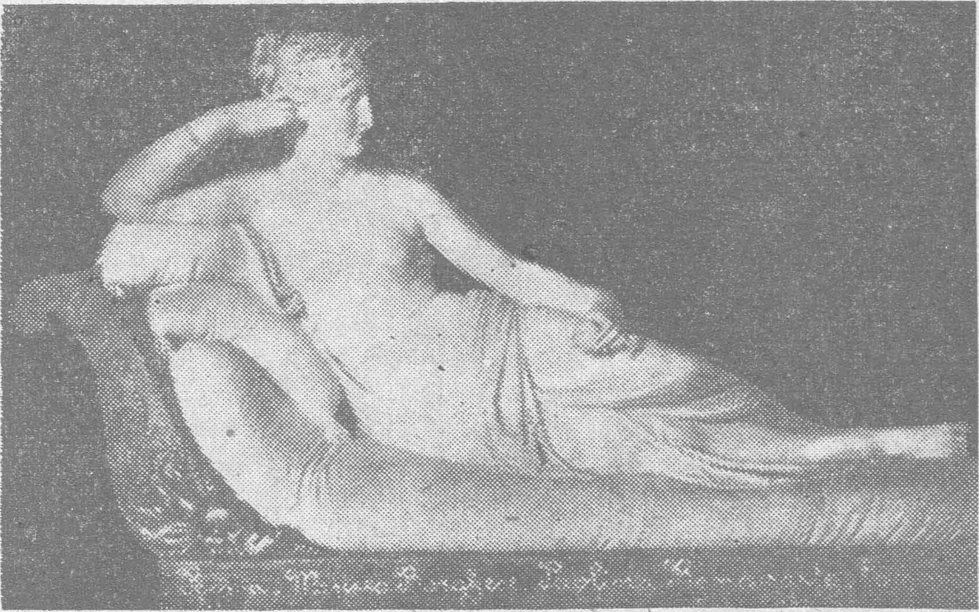
— Pauline Bonaparte —
The rose is the favorite flower of all Arab women down through the ages.
The Arabs carried the rose to Spain... and the rose was the flower dearest to the women of Andalusia.
And if you walk today through Seville, or Granada, or Cordoba, your eye will scarcely fall on a single woman without a red rose in her jet-black hair...