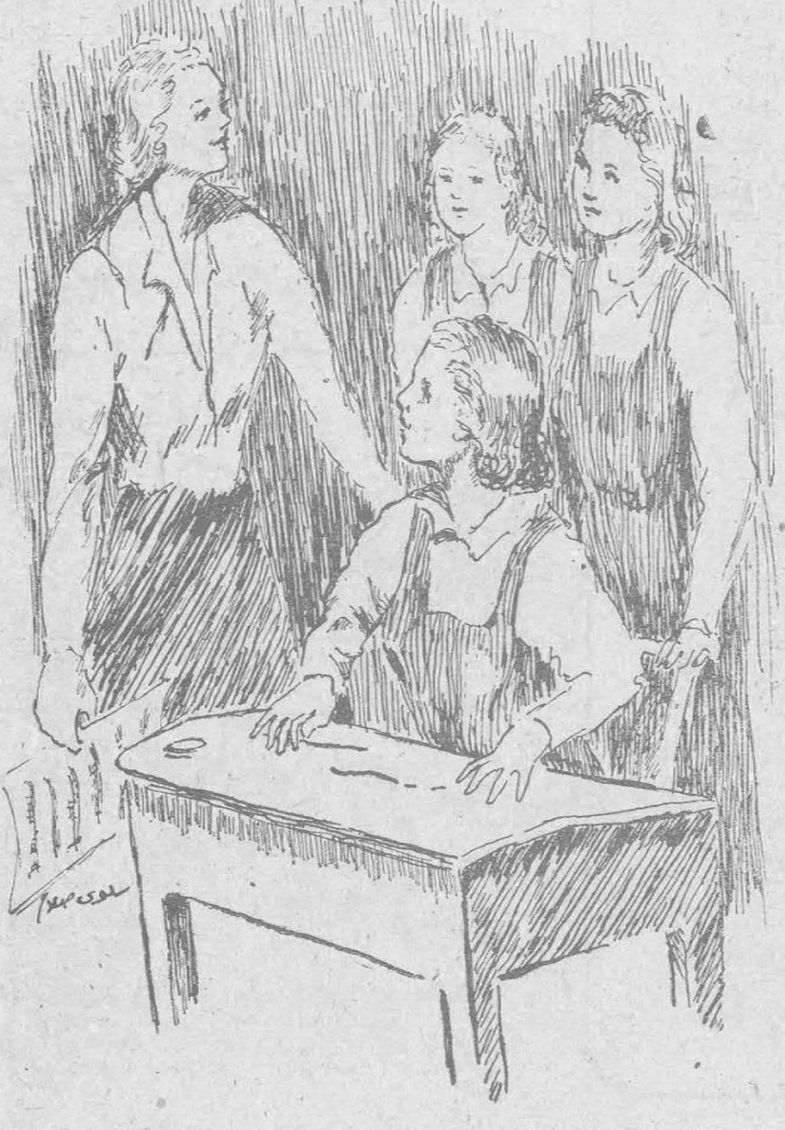
We were three girls at one school. We were in the springtime of life, and our souls had opened onto worlds of enchanting fantasy drawn for us by Western and Eastern books, original and translated, representing the best that the minds of writers ancient and modern have produced. We drank from the springs of Western literature and learning as a thirsty flower drinks of the morning dew. Then, in our free hours, we would sit recalling our lessons and our readings, reviewing the past ages and exchanging opinions and impressions...
— Have you read Galsworthy's “The Mob”? You must read it.
— What do you think of “Thus Spake Zarathustra”?
— And Nehru's book, the story of his life? It brims with sincerity. For the first time I find an Easterner speaking with such frankness.
From time to time we would adopt a hero whom we called the hero of the month. Sometimes it was “Cyrano de Bergerac,” sometimes “Shelley,” at another time “Gandhi” or “Lawrence.” We would read deeply about him and lose ourselves in studying and analyzing him, with wonder and contentment in our hearts, as if the genius we sang of had become part of our very selves.
Although we were in a foreign school, we looked upon the foreigners we mixed with with distance and wariness: in our view they were colonizers, whose concern was to spread the influence of the West in the backward lands and strip them of their character. And we looked with disdain on classmates of ours who curried favor with the foreigners out of servility or a desire to gain some advantage. But among those foreign women teachers there was one who caught our attention — not by her looks, though they were attractive, but by her freedom, her energy, and the oddity of her ways. She taught physical
education, and in dancing she had astonishing expressive arts that left us bewildered and amazed before her, watching her supple muscles and her marvelous inventions. She would take long trips on her bicycle, racing the winds as she went and climbing the heights, then come back with the sun having tanned her freckled face, her mouth breaking into a wide and most innocent smile, and say, laughing:
“I don't know which of us will live longer, I or Layla” — that being the name of her bicycle. She had given it an Arabic name, saying: it deserves the name, for it is thoroughbred like the Arabian horse — indeed sturdier.
Her name was Sawsan, but we nicknamed her “Su.” With our feminine instinct we would wonder: how old might she be? Not one of us dared put the question to her openly, and we contented ourselves with what one of us said: she is a woman without age.
Even so, some of the girls were bold enough to ask her: Is there no man in your life? She would answer with her usual laugh and say: Oh yes — that was long ago. We quarreled over certain opinions and parted.
— And afterward?