the flash of the stars, whose touch is scorching flame, and the color of sorrows...
The poems are distinguished by a strong unity, just as the whole collection is a unity of tightly joined parts, bound together by the meanings of pain, revolt, anxiety, perplexity, questioning, lost hope, and longing for the unknown — the meanings of the romantic poetess turned in upon herself, who
cannot escape her own subjectivity because she is still at the beginning of the road, and who for this reason prefers solitude and darkness:
Put out the candle and leave us two strangers here We are two parts of the night — what meaning has the light?
But at times she slips free of the bonds of self, and her poetry bursts forth as a hymn glittering with colors, hushed with wonder and awe before the rocks of Sarsank and its icy springs. And her voice rises, human and universal, in the poem "Let Us Be Friends" — and there is the cry of humanity, complaining of deadly loneliness and yearning for a world ruled over by tenderness and brotherhood.
I loved her poem "The Train Passed," brimming with the images, sounds, and epithets that
compose the atmosphere of the train as it folds up the long Iraqi distances; and I loved the poem "The Thread Tied to the Cypress Tree," for the fresh picturing and the deep intimations it contains.
In sum, the poetry of Nazik al-Mala'ika is a sweet breath and a new light in the sky of Iraq, and it is the emancipated woman's proof against those, men and women alike, who would smother her talents and shut away her liberties.
And we hope for every good from her youthful activity, not for the Iraqi woman alone but for the Eastern woman generally; and we salute in her the poetess of lofty culture and thought, who has chosen to draw her inspiration from the highest human ideals.
Every
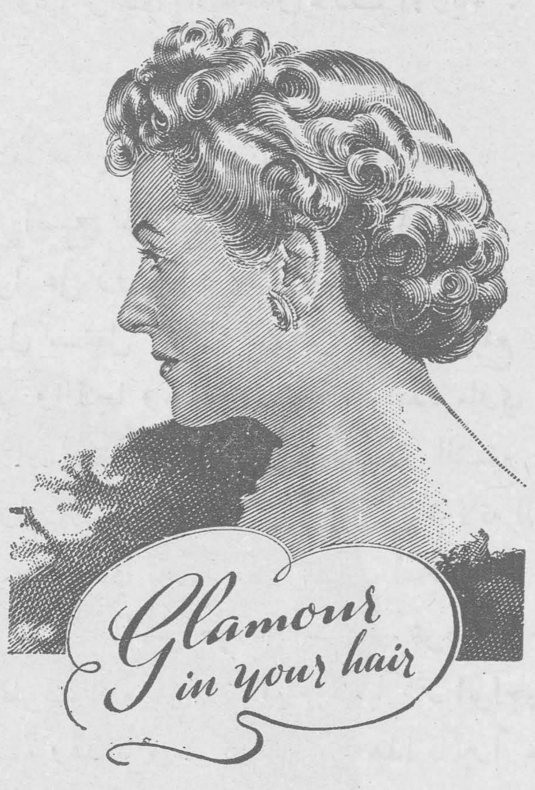
How to Use "Evan Williams" Preparations
Lesson Eight
The Graded Compound Henna
The compound henna among the "Evan Williams" preparations has been made up especially to lend coppery hair, and red or dark hair, charm and allure. This henna is not to be used on hair touched with gray. This graded henna is safe in its results and assured of success when it is applied to coppery, dark, or chestnut hair that has lost its color or has grown dull. But if gray has crept into some of the hair of the head, this henna is used to restore its color to it.
Nor is the benefit of this henna confined to renewing the hair's vigor and reviving its color: it also prevents excessive moisture and keeps the scalp sound and healthy.
There is no need to use shampoo before applying the "graded henna," unless the hair is very oily. As for how to prepare and apply it, it is as follows:
Place the required quantity of henna on a sheet of paper (you need the whole packet for the whole head, and half of it for tinting the new roots only); then crush it well, put the powder into an earthenware vessel, add hot water to it — provided it is not boiling — and mix it until it becomes a thick paste.
Then set the vessel in a pot of hot water (so that the paste stays hot while it is being used) and leave it for five minutes.
Divide your hair into small strands, then apply a generous quantity of the paste, with a small brush, to its roots, bearing it as hot as you can. Then cover your head with a sheet of black paper, wrap your hair in an old towel, and leave it between 15 and 30 minutes, according to the depth of color you desire; then wash your hair with plenty of water.
And finally, wash it with the ordinary henna shampoo among the "Evan Williams" preparations.
Glamour in your hair