• She was born in Nazareth, Palestine, in 1895, to Lebanese parents. She spent the days of her childhood in Nazareth, where her father, Elias Ziadeh, taught in one of the government institutes.
• When she reached her fourteenth year she came to Lebanon and entered the school of the Sisters of the Visitation at Aintoura (Lebanon), where she showed a sharpness of intelligence that astonished her teachers.
• She was known for her inclination to solitude: in the hours set aside for walks she would go to a neighboring wood, keep to herself, and meditate before the sea through the pines, reading and writing. She usually carried with her Byron's "Childe Harold" and the Meditations of Lamartine, her two favorite poets. In the summer season she would go to her family in Shahtoul.
• In 1904 May rejoined her family in Nazareth, having finished her studies; then they went to Egypt, where her father took over the direction of the magazine al-Mahrousa, and she pursued her studies with eagerness and devotion, her inclination to solitude and reflection only growing stronger.
• In 1910 she published her first book, in French — Flowers of Dream — under the pen name Isis Copia; then she began translating stories from German and English.
• In 1911 she returned to Lebanon and spent the summer season there at Dhour el-Choueir, in the Green Cottage. When she returned to Egypt she began to take part in editing "al-Mahrousa," her father's magazine, and she caught the attention of the cultivated men and men of letters in Egypt, who came flocking to court her favor; and overnight her home became a refined literary salon frequented by the finest men of the pen in the Arab countries — among them we may mention Ismail Sabri Pasha, Shibli Shumayyil, Taha Hussein, Khalil Mutran, Antoun Gemayel, Aybi Khayr, Yacoub Sarrouf, and other luminaries.
• In that period she wrote in particular in "al-Ahram," "al-Hilal," "al-Muqattam," "al-Muqtataf," and the "Progrès."
• From 1911 she was captivated by Gibran's writings; she wrote to him and he wrote to her, and deep bonds grew between them, and these relations continued unbroken until Gibran died.
• During the World War she enrolled in the Egyptian University and studied the history of general philosophy, the history of Arab philosophy, and ethics under the Spanish Orientalist Count Galarza.
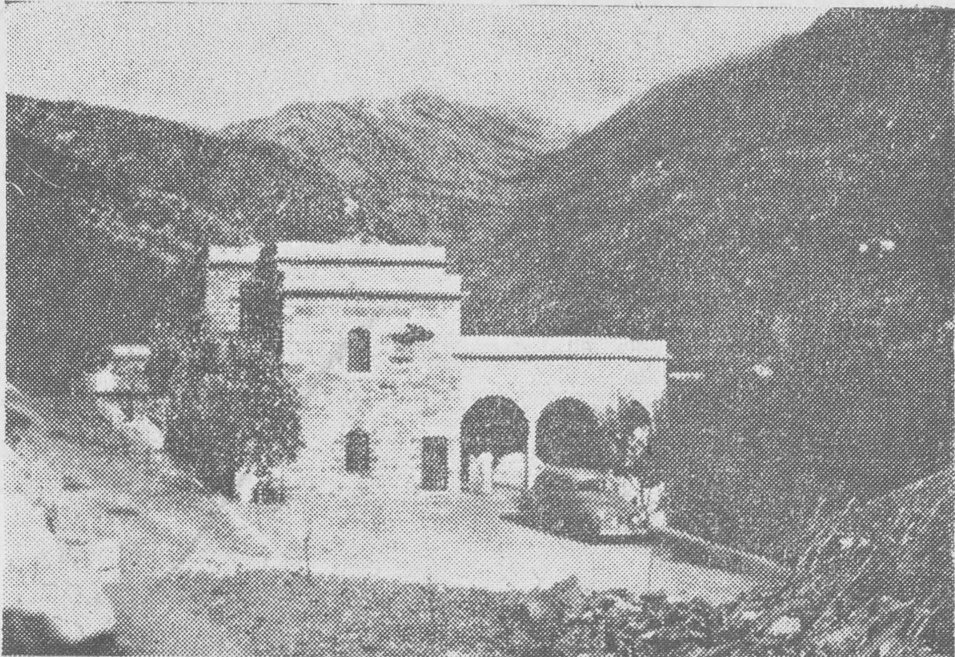
The house where May used to spend her summers in Shahtoul
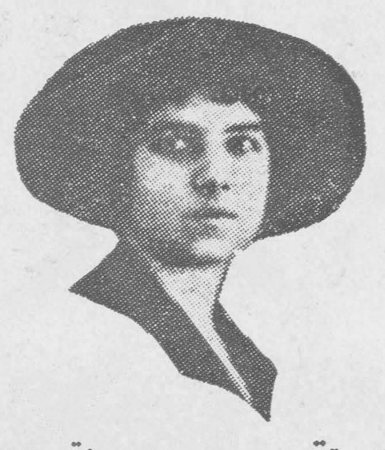
• After the war she gathered some of her studies published in the press into several books, the first of them "Bahithat al-Badiya," and among them "Darkness and Rays," "Between the Ebb and the Flow," "al-Sahaif," "Words and Signals," and "Sawanih Fatat."
• In 1929 her father died; in 1930 her mother died; and in 1931 Gibran died. The world grew desolate before her, and loneliness tormented her; she left Egypt seeking consolation, and traveled to Italy, Switzerland, England, and France, trying to lull her crying pain, but it only grew more grievous; so she returned to Egypt and changed her residence, and her body wasted away and melancholia came over her.
• In 1936 she returned to Lebanon, seeking in its air tenderness, treatment, and help — and in vain; her melancholia turned into hysteria, and she stayed for a time in the Asfouriyeh and then in the Rebeiz hospital, where she wrote her valuable manuscript "Nights of the Asfouriyeh"; and once she had recovered she returned to Egypt, carrying from Lebanon a choking grief, having given up writing.
• She lived for a time in Freikeh, next door to Ameen Rihani, her intimate friend; then she returned to the Nile Valley, her second homeland, carrying the memory of Lebanon deep within her; she withdrew from writing, from study, and from the world, and lived the life of a hermit until she departed this life in the Maadi hospital in Cairo on October 19, 1941.