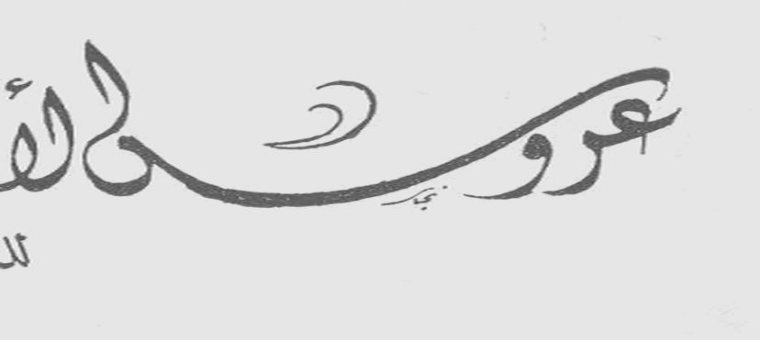
... Then comes the bride of women's letters in this generation — a young woman I know well, for she was my companion in study and my colleague in the pursuit of literature and philosophy at the Egyptian University: she is Mademoiselle Sahba.
Do you know who she is?
If you do not, then listen:
I had at the Egyptian University a colleague who competed with me fiercely, and I harbored toward her a shadow of dislike. The late Ismail Bey Ra'fat noticed this, called me to his office, and said:
"Do you know what 'Mayya,' of whom the poets sang, means?" I said, "No!" He said, "'Mayya' is wine in Persian, and the people of Persia call the tavern 'may-khaneh.'" From that day I knew that Miss May means Mademoiselle Sahba.
And this Miss May is a personality of true descent from Eve. She is a womanly personality in everything: her heart is a woman's heart, her feelings a woman's feelings, and her style in writing, oratory, and conversation is the style of a captivating young woman who knows how to conquer breasts and hearts. She is a girl of two worlds, uniting Egyptian and Syrian qualities; she has read the literatures of many different nations, and she knows how the Arabs used to think and how the Egyptians, the French, the English, and the Germans think.
In her writing are the shadows of what she has read and heard and known; and with all that she is an Eastern girl in whose veins run the dreams of the authentic East.
Miss May was my companion at the Egyptian University for three years, and the students used to differ with me sharply whenever we set about appraising her literary gifts. So we asked Professor al-Mahdi to judge the dispute that had arisen among us — some of us preferred Bahithat al-Badiya and some ranked May first — and the Professor said: "That one is more copious; this one is more graceful."
It is certain in my view that this girl is of remarkably solid culture; she is a model of the cultivated young woman whom the people of this generation seek, and her knowledge of literature is sound knowledge; for that reason she counts among the rarest of cultivated women.
As for her writing, it is a literature that aspires to the ranks of the masters. She would like to look at life with the eyes of men, but her womanly nature does not permit her to do so. And it is a beautiful fault, for she is forever hovering about the flowers of womanhood, and the very titles of her articles all but proclaim that she never was and never will be anything but a girl of true descent from the Lady Eve.
Among this girl's merits is that she introduced into the social order the institution of literary salons: she had in her house a salon to which people came and went on Tuesday evenings. By ill luck I never once attended this salon, for there were grudges between her and me, and certain mischief-makers had given her the illusion that I did not