I did not know May personally, but I knew her through her literary outpourings. I remember hearing her at the West Hall forum at the American University of Beirut in the days when I was a student there. I heard her deliver a lecture on a social subject, in which she treated the faults of human society.
May possessed an ample share of culture and learning: she had mastered Arabic and French and was well acquainted with English. She left us a precious store of literary works. Among her works: Bahithat al-Badiya; The Aim of Life; Words and Signals; Equality; A Girl's Musings; Darkness and Rays; The Pages; Between Ebb and Flow; The Return of the Wave; Love in Torment; Smiles and Tears; and then the book Flowers of Dream, which she composed in French, and which fortune has not favored me with reading. Yet when you read these works, or some of them, you find that they reflect, among other things, a perplexed, troubled, restless soul, pulled to and fro by life's flow and ebb. Reading May in her books, you feel that she is the prisoner of desolation and solitude; and if it was granted her to break free for an hour, she is lost and astray, having missed the road, with darkness engulfing her. She is a seeker in the desert of life who does not know the aim of life. Perhaps the cause of it goes back to her torment in love and to her remaining far from the bliss of motherhood, which the Village Poet preferred to the bliss of God.
Her many sayings show you her sense of this desolate emptiness. Among them, what she says in
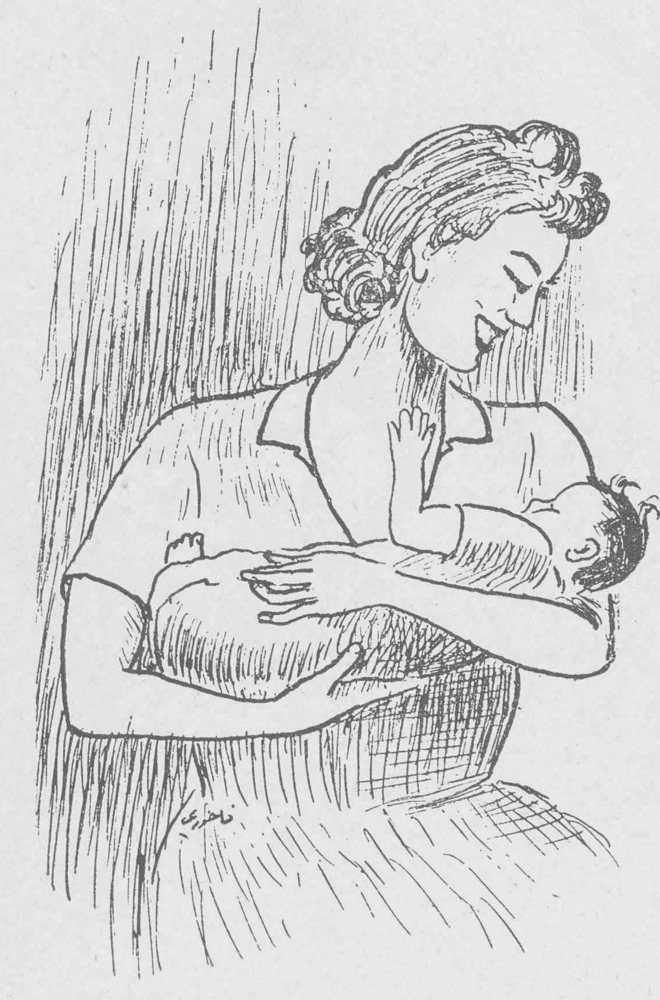
the piece “The Child and I”: “I asked him, will you not sit on my knee? He sat down in silence. And when I felt the weight of his small body I remembered my only brother, dead; and my heart leapt to my lips, and tears welled between my eyelids. So I bent toward the child to sip the sweetness of his cheek, distracting myself with that kiss from the melancholy rising from my heart as the clouds rise from the edges of the seas. How sweet is the kiss of children, and how sweet the taste of their smiles.”
I would hardly be exaggerating at all if I said that the word “child” and its like were among the dearest words of the language to the heart of this virgin mother! In the piece “The Child's Weeping” she also writes: “I heard the child laugh, and my ethereal spirit trembled in my earthly body. The voice of this infant echoes back the voices of the angels, etc....” And here she is, in her article “From a Father to His Son,” all but confessing the desire for motherhood pent up in her soul when she asks: “And to him who says in his secret heart, how, I wonder, does a mother love? how, I wonder, does a father love?—you brought part of the answer in the first letter, where you described your love for your son with a beautiful description, etc.” Perhaps this feeling of desolation that May suffered goes back to her being a poet of delicate sensibility; and the poet lives forever in a harsh desolation amid the most crowded gatherings of men, and among his own people and friends. At a celebration in Bikfaya—in the districts of Lebanon (May's original homeland, or mother-homeland, as they say)—she says at the close of her address: “Lebanon is a single word. It is a small word. But all love and all hope are in it, for it is the name of the dear homeland, in whose breast are the graves of the
ancestors and the beloved; it bends over their remains as a mother bends over her nursing child.”
Thus “mother” and “nursing child” are words May repeats, and repeats with a great deal of sweetness. And when she mentions the mother, she remembers this ill-starred Arab nation which has condemned woman to deprivation of many things that are her right in life and the secret of her beauty. So she says: “Painters symbolize slavery by drawing a despairing man dragging his chains; had they been just, none but woman would have been the symbol. That
is because they have grown used to enslaving her not by tyranny, oppression, and torture alone, but by kindness, pampering, and endearment. The poor women swoon with delight at being loved for their beauty; had they thought