... And what shall I say of a man whom God sets between two women: a woman who turns his dreams into waking, and a woman who turns his waking into dreams? What shall I say of a heart that God places between two lamps?
What shall I say of this man?
Is he melancholy? ... Is he happy? ... Is he a stranger to this world? I do not know. But I ask you whether you wish him to remain a stranger to you..
Is he a stranger, with no one in all existence who knows a word of the language of his soul? I do not know. But I ask you whether you do not wish to speak to him in that language — you who know it best of all.
Are you not also a stranger to this world? Are there many in this world who understand the language of your soul?
You and I, May, are among those whom life has favored with friends and lovers and disciples. But tell me: is there among those jealous, devoted ones anyone to whom we can say, Come, then, carry ... my cross — at their ease, without wishing it for themselves; they prefer their solitude, and prefer silence, and prefer to lead their hearts astray from what is laid up in them and to divert themselves with what has nothing to do with feeling; they prefer any exile and any misery (and is there any misery or exile apart from the solitude of the heart?) to contenting themselves with the scanty drops.
What is the meaning of this that I write? I do not know what I mean by it. But I know that you are my beloved, and that I fear love. I expect much of love, and so I fear it may not bring me all that I expect. I say this knowing that a little love is much. But the little, in love, does not content me. Drought and barrenness and nothing at all are better than a meager pittance.
How I dare confide this to you, and
a single name: Gibran. — Egypt, January 15, 1924.
For one single day? Is there any among them who knows that behind our songs there is a song that voices cannot imprison and strings cannot make tremble? Is there any among them who knows the joy in our sadness and the sadness in our joy?
You say to me: you are an artist and a poet, and you ought to be content, because you are an artist and a poet. But, May, I am no artist and no poet. I have spent my days painting and writing, but I am not in my days and my nights.
I am mist, May — mist that covers things but does not become one with them.
I am mist that has never condensed into drops. I am mist, and in the mist is my solitude; in it is my aloneness and my desolation, in it my hunger and my thirst. And my calamity is that the mist, which is my reality, longs to meet another mist in the sky, and longs to hear someone say: "You are not alone; 'we are two'; I know who you are."
Tell me, May: is there in your parts
how I let it slip, I do not know. Thank God I write it on paper and do not utter it aloud; for were you present now in the flesh, I should flee in shame after such words and hide for a long while, and I would not let you see me until you had forgotten. Even writing — today I sometimes begrudge it to myself, because in it I am free with all this freedom.
Do you remember the saying of the Easterners of old, that it is better for a girl neither to read nor to write? Saint Thomas appears here. And what I show here is not merely the trace of heredity; it is something farther back than heredity. What is it?
You tell me — what is this? And tell me whether I am astray or on the right path. For I trust you, and I believe, as a matter of course, everything we say. And whether I
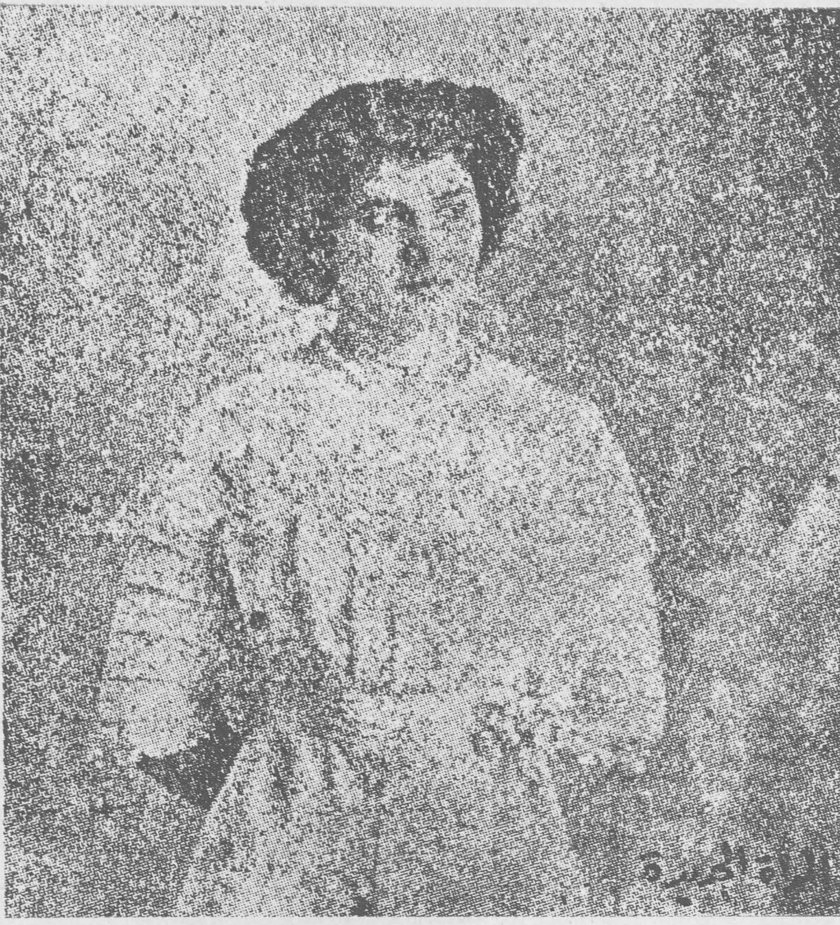
... the new
anyone who can and will say to me: "I am another mist, O mist; come, let us settle upon the mountains and in the valleys; come, let us walk among the trees and above them; come, let us flood the lofty rocks; come, let us enter together into the hearts of creatures and into their cells; come, let us roam those far, inaccessible, unknown places." Say, May
Do you remember, May, your telling
am wrong or not wrong, my heart goes out toward you, and the best that is in me keeps hovering about you, guarding you and tending you.
The sun has set behind the horizon, and through the wondrous clouds and shapes and colors a bright star has shone forth. One star: Venus, the goddess of love. Do you suppose it is inhabited, like our earth, by human beings who love and long? Perhaps there is on it one like me, who has her one Gibran — sweet, far, far away, who is the near, near one. She writes to him now while twilight fills the sky, and she knows that darkness follows twilight, and that light follows darkness, and that night will succeed day, and day follow night, many times over before she sees the one she loves. And so all the desolation of twilight and all the desolation of night steal into her, and she casts the pen aside to take refuge from the desolation in