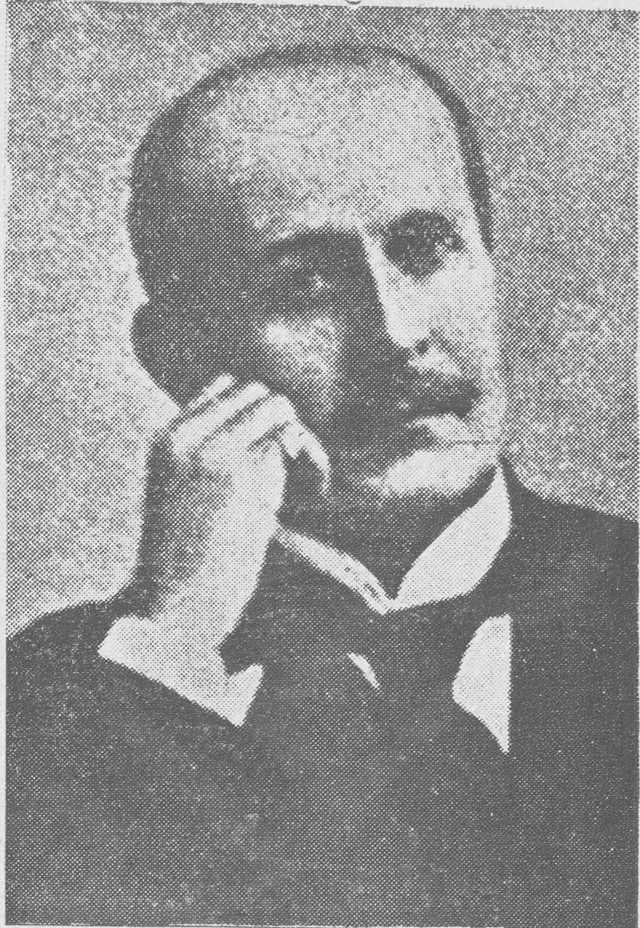
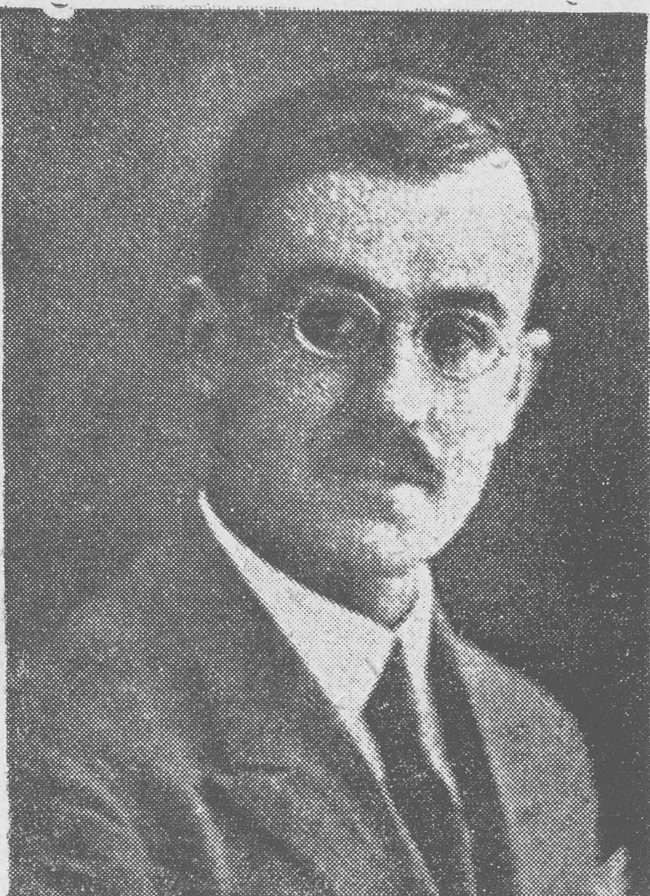
“May” admired Dr. Yaacoub Sarruf as a scholar and man of letters, and Sarruf admired this cultivated young woman and said of her: “This young woman keeps pace with European writers in research; I do not recall having seen her equal among the writers of Arabic, nor her superior among the Europeans...”
Between them passed scholarly and literary correspondence, and she would often call him “my venerable master,” “lord of the crown and the scepter,” and “Pharaoh the mighty.”
From a letter May wrote to Dr. Yaacoub Sarruf:
“I write to you while the sun descends the steps of the horizon, and the evening clouds swim as if in lakes of gold and amber, of chrysolite and ruby. Along all the edges of the horizon the warmth of spring glows and the wakefulness of nature spreads abroad. And upon the earth is the like of that wakefulness and that warmth. How lovely the shrubs the Planning Department has so generously planted for us, smiling with their lilac blossoms along both sides of our street! Did you go out today for Shamm al-Nasim, or did you content yourself with a walk along Imad al-Din Street? Perhaps at this
moment you are walking in the open country, gazing at this enchanting sunset and thinking of me... As for me, I have not left the house these many days.”
And in another she says:
“The hour has passed upon a single thought: to draw the whole of my feelings as a bouquet of congratulation and homage for your beautiful birthday; to draw that bouquet fresh, tender, bright, and full, as it is in its hidden original. And I long to breathe into the pen a swift, bewitching power, so as to say, if only in one line, what I feel and what I wish to express.”
Were I in Lebanon today, I should perform the duty of pilgrimage to the rising-place of your intellectual sun; and it will be among my greatest joys this summer to visit that small great spot where, beyond doubt, they will one day raise you a statue — on the day the East passes beyond momentary enthusiasm to the performance of its duty toward its great men, those who are truly great, and not those it foolishly fancies to be great!
Antoun Gemayel's tie with May did not, at first, go beyond literary friendship and general
esteem; but as time advanced, and as she advanced in genius, brilliance, and charm, that esteem grew — nay, it ripened into a lofty feeling and a spiritual love... call it, if you will, a chaste love, pictured in this letter he sent her in 1926, one of several letters written in the ink of the heart and issuing from the depths of the soul:
And it may be of interest to point to that tender letter he sent her in October 1928, for it lays bare the inner reaches of two souls,
each bearing the other a true affection and a devoted feeling:
“My dear one.
I was much grieved by what has befallen your right eye. May your eyes be spared — the right of them and the left; nay, may you be spared in your whole and in your every part. You may find in this pure prayer and this sincere wish a touch of selfishness. So long as you believe that selfishness is the foundation of all our deeds and feelings, so be it... Was it not the swelling of your eyelid that kept you from writing, and so denied me the enjoyment of your letter before today?”
And in a second letter he says:
“The hour is now late in the night, and I can do no more than travel in thought to that lofty balcony (meaning the balcony of her house), to which I owe so much at this hour; and I halt long over my writing, lost in seas of memories. Nay, the words defy me; I search for them and cannot find them...”
I commend you to God, Bébé, in the hope of meeting you in health and well-being. And I have become
the other Bébé L'autre Bébé
After this strong friendship, God set separation between them; a certain coolness arose between them after her illness, and Gemayel turned away from her memory.