The beautiful Nefertiti
If you were asked who is the most beautiful woman in history, what would your answer be? Would you say she is Ingrid Bergman, or Helen of Troy, or Nefertiti, the brightest star in the sky of Pharaonic Egypt?
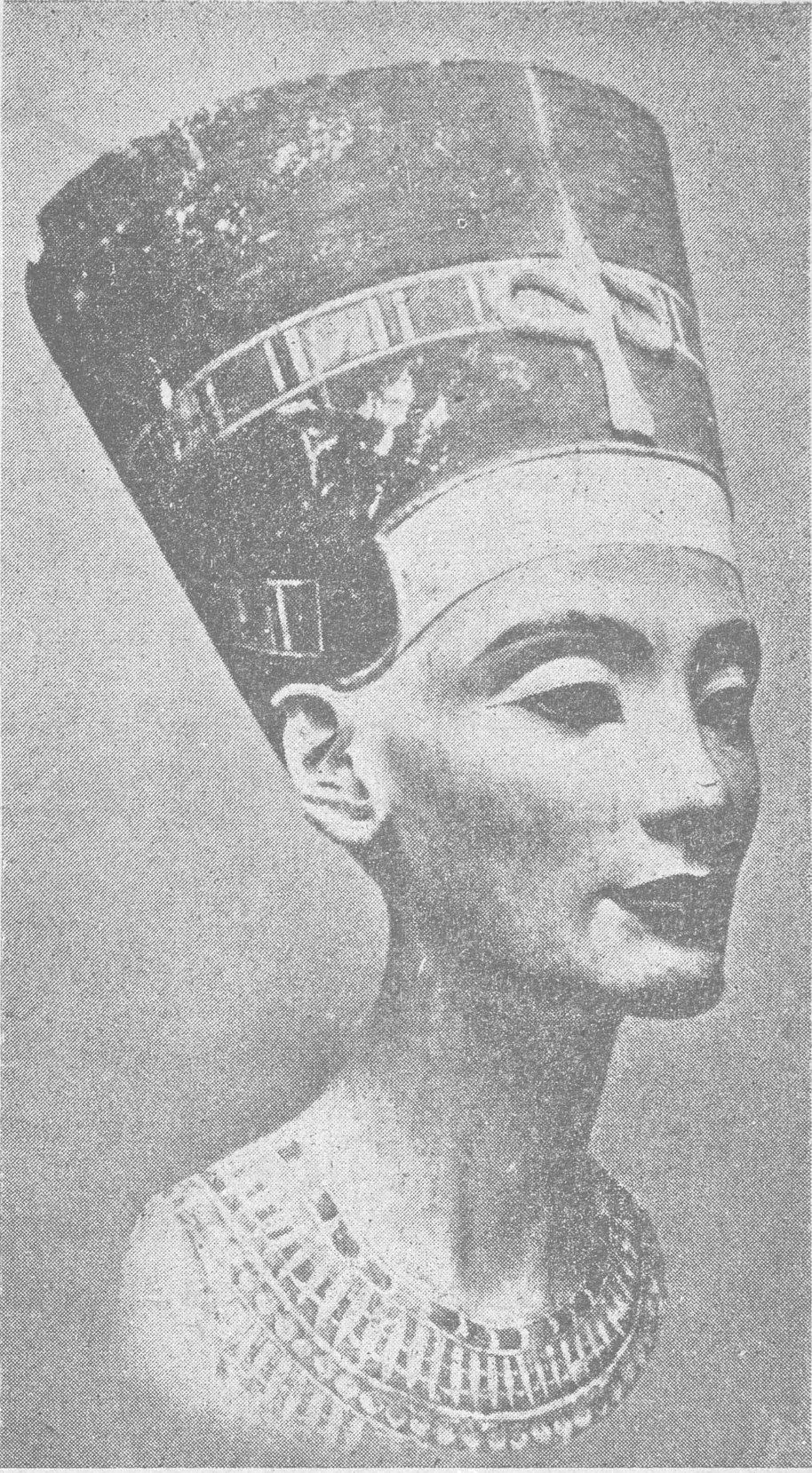
But what do you say of Nefertiti? And what do you know about her? Perhaps you know a great deal, especially since her painted bust was found in the workshop of the sculptor Thutmose in the town of Akhetaten, on whose ruins the village of Tell el-Amarna stands today. In a corner of the ruins of one of the buildings, German archaeologists came upon a limestone statue covered with grime, with a slender neck and a beautiful bust of a face; they took it for one of those mask-like busts common in the age of the Eighteenth Dynasty — until the chemists finished cleaning it and removing the clay that clung to it, and were so dazzled by the fineness of its workmanship and the beauty of its painted features, brimming with life, that they went straight back,
coated it in clay, and stowed it among the fragments of antiquities heaped in a corner of their room. And from there Nefertiti, Queen of Upper and Lower Egypt, clad in clay, was carried on a foreign steamer to her new home in the National Museum in Berlin. Pictures of this matchless work of art appeared in every part of the world, and the world was enchanted by her. What was it that enchanted it? Was it mere chance that the exquisite features of her face and the fine molding of her bones should agree with the ideal beauty of woman's face in that day? I do not think so, for tastes in beauty in the twenties of this century have changed, while Nefertiti has remained the model of woman's perfect beauty. And in truth she is that: in the exquisite carriage of her head, her pride in her own loveliness, the delicacy of her lips, her eyes brimming with wisdom, and her glances full of disdain and the love of independence. That is what Nefertiti tells us after four and thirty centuries; what, then, did she say in her own day?
The standards of beauty by which the Western world still works even today we owe not to the Egyptians alone, but to the Greeks as well. So deep was the Greeks' perception of the beauty of bodily form, and so devoted were they to representing it, that had nothing come down to us but their artistic remains, we should conclude from that alone that they were a nation steeped in the purely artistic spirit. But they were more than that: they were bold seafaring explorers, heroes of wars and grinding battles, and masters among philosophers and thinkers — and from the depths of this philosophy of theirs was born their love of beauty.
In ancient Greece the goddess Athena was the model of perfect womanhood. She united wisdom, intelligence, and earnestness. Homer described her as having two clear gray eyes whose glances overflow with calm; that her 'neck is firm of stock, beautiful and smooth'; that she is 'white of arm, strong of foot, and large of eye'; that she is statue-like in her figure, shedding purity and sweet fragrance wherever she comes; and that, on the side of the mind, she is worthy to take part in the gravest deliberations of the gods, even in their deliberations of war. She stood for perfect motherhood, wisdom, shrewdness, and serenity, and her leadership was acknowledged by every one of her sons and daughters.
And there are other goddesses in the two epics, all of them representing the loftiest types of Greek womanhood. Ideal beauty required that a woman be tall and not short of stature, exquisitely formed, quick of mind, alive to her family responsibility, and