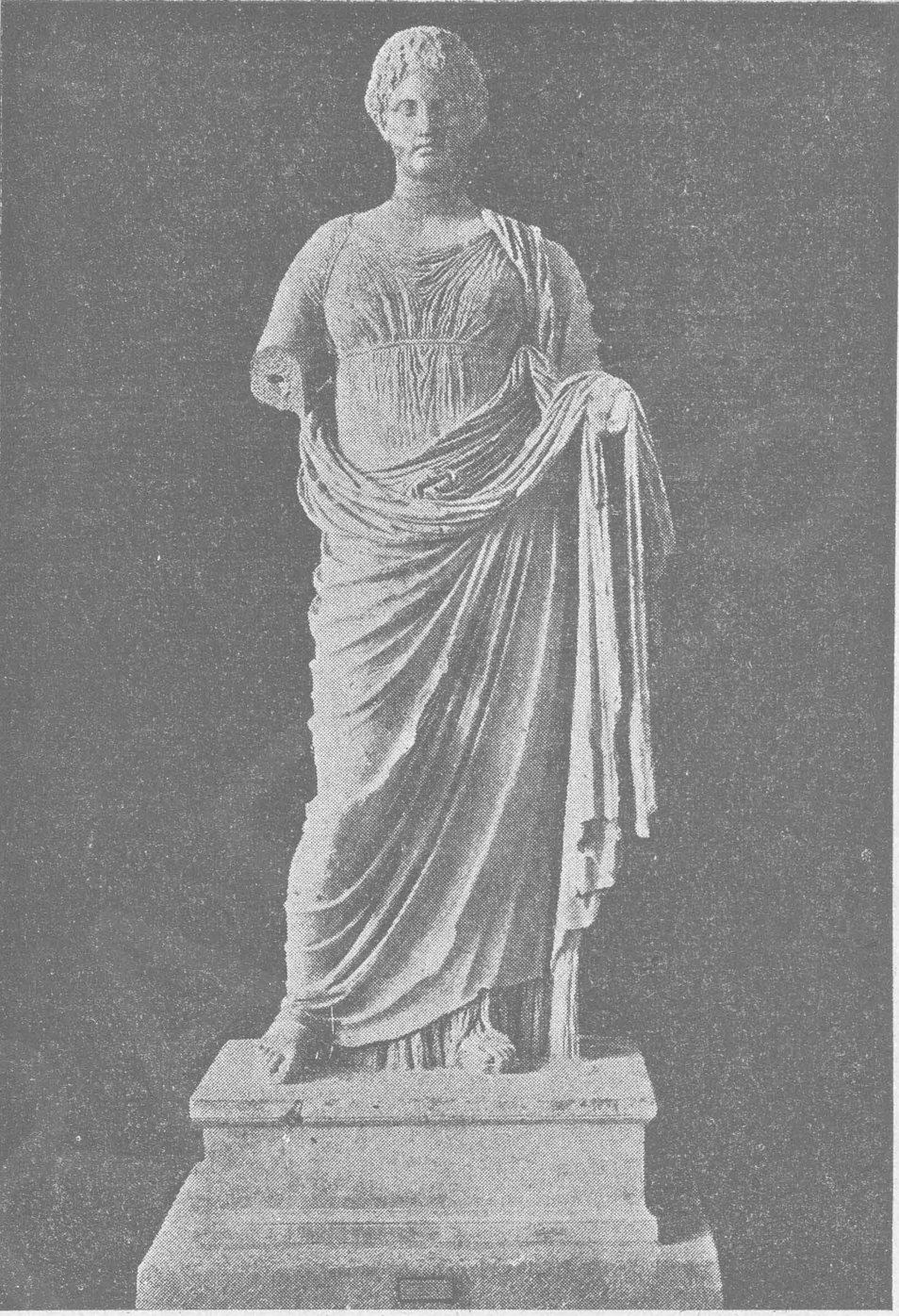
knowing how to preserve her beauty despite the passing of many years.
The fact is that the true ancient Greek woman had honey-colored hair inclining to red, and blue eyes — though black hair and black eyes often won approval, or turned to censure, according to the fancies of the mightiest poets of that dandified age. Long hair, however, was always among the marks of the beautiful woman, and it flowed down to her waist.
Nor was the Greek beauty a flabby creature: she had a square, strongly muscled shoulder, cheeks unmarred by soft excess fat, and a strong neck with no leaning toward thinness, on which her head rose in haughtiness and self-esteem. In short, her beauty was the beauty of health and soundness. And the Greeks would not pronounce a thing beautiful unless the beauty took in every member of the body.
In our view, the secret of the greatness of those ancient Greek women will remain beyond our understanding until we admit that formal beauty, in Greek eyes, was not bodily alone, but spiritual and mental as well. They held that the gods alone could bestow perfection; bodily perfection, then, is an outpouring of the gods, even if in its range it goes beyond animal pleasure.
A Greek maiden of marvelous beauty, symbolizing the goddess of health.
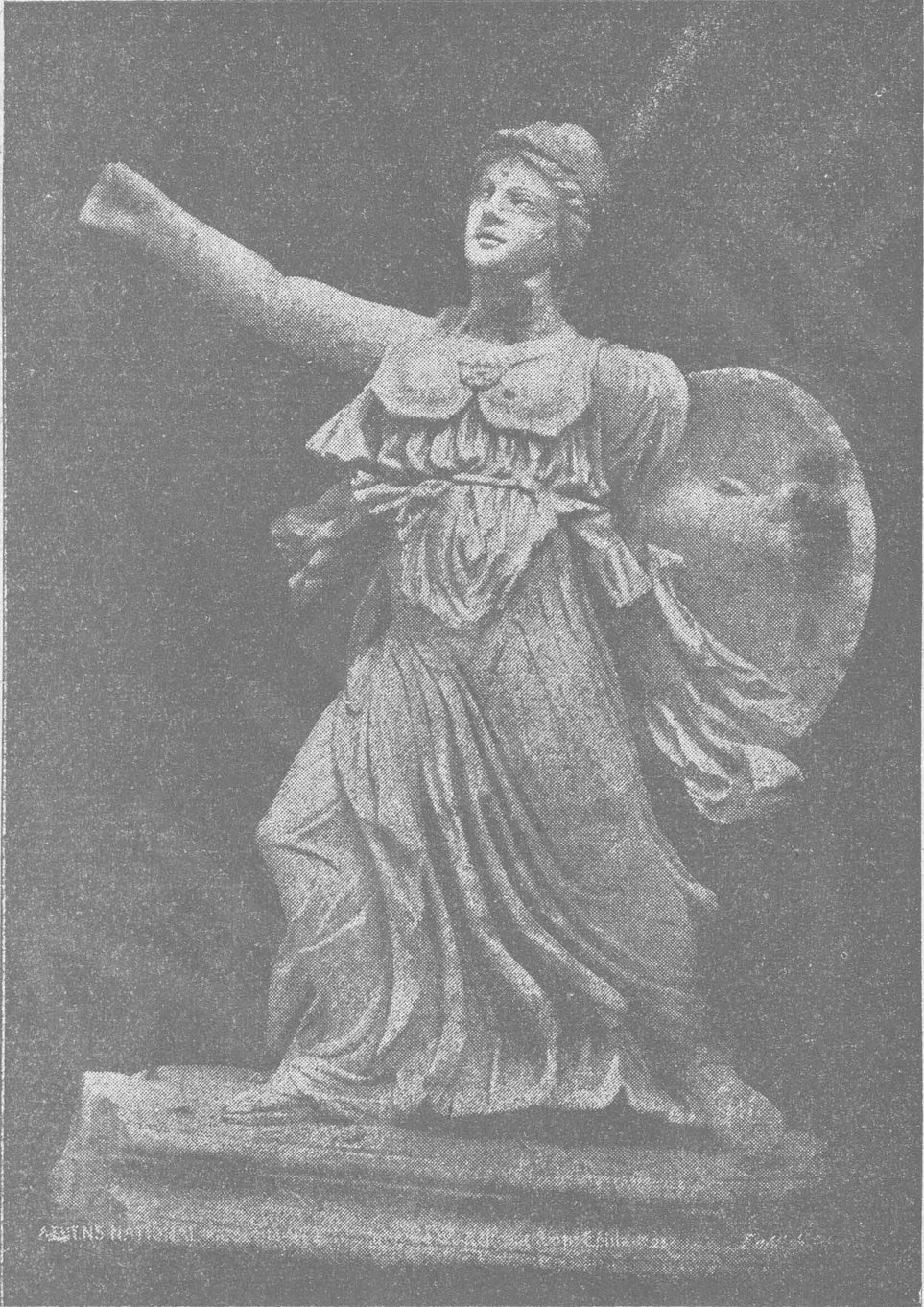
And when Hera, mother of the gods, had a special appointment with the divine council, she took special pains over her adornment. Here is what was written of her on this subject:
'And she washed her body with the distilled scents of the flowers of the mountainside, and anointed it with perfumed olive oil, and combed her hair and plaited its shining locks. Then she put on a robe woven by her daughter the goddess Athena, and fastened it with clasps set with jewels and buckles of gold; she girded herself with an embroidered girdle, adorned herself with her two gleaming earrings, and let fall over her head a beautiful new veil that covered all the members of her body.'
The Greek beauty was distinguished by height and favored long hair, especially fair hair, which she plaited into thick braids and coiled on top of her head in the shape of a cap. Sometimes she brushed it back from her forehead and knotted it above the nape of her neck. And she was lavish in her use of perfumed hair oils.
Fair hair was among the prevailing fashions, and the Greek woman would try to counterfeit it with soap, soda, water, goat's fat, and saffron — for women with naturally blonde hair were few.
The Greeks admired athletic women.