Royal Baking Powder
(Royal yeast powder)
ROYAL
CREAM OF TARTAR
BAKING POWDER
Guarantees you
the success of your sweets,
dishes, and pastries
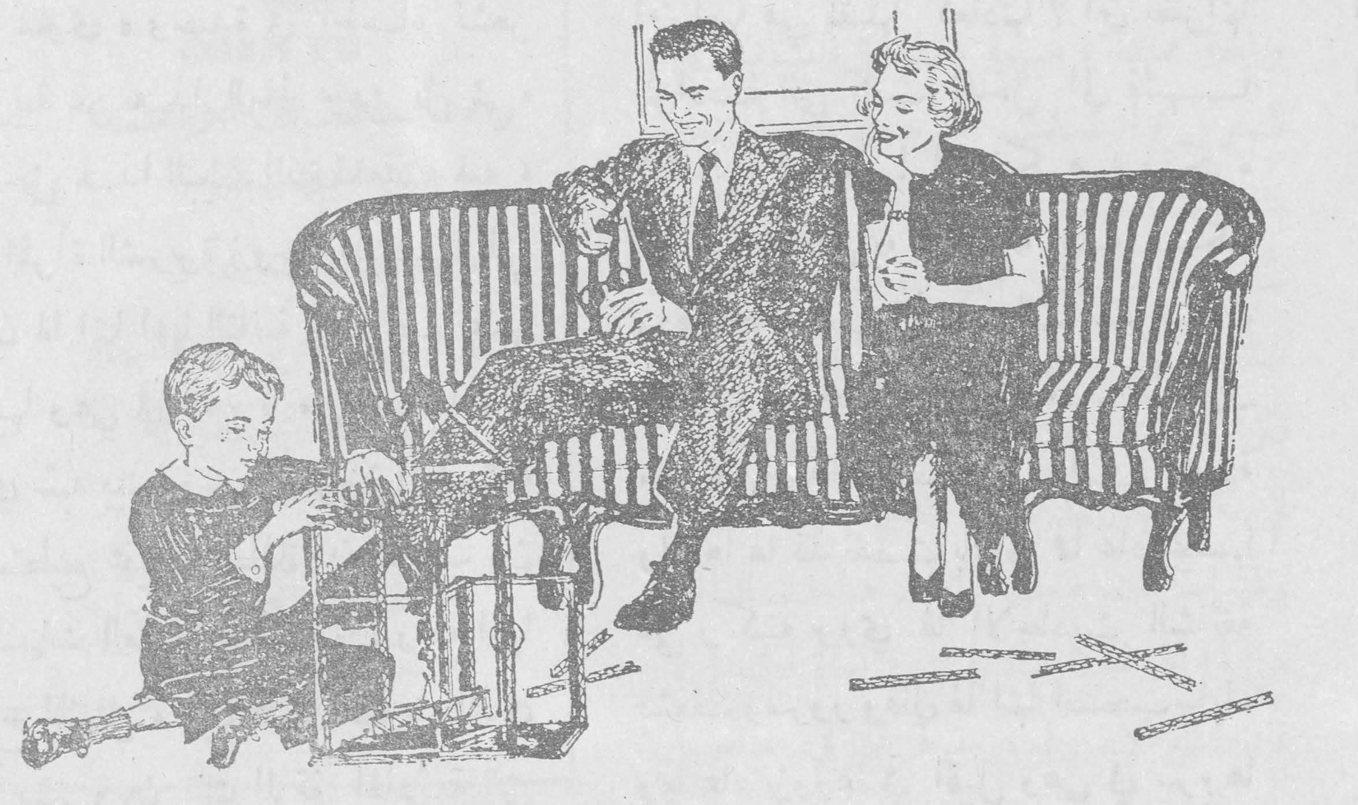
Parents rejoice when they discover that they have an intelligent son, and suppose that this intelligence of his is enough to secure his success, at school first and in the world afterward, when he becomes a man. But this theory does not accord with reality; for however superior the child may be in intelligence to his companions, and however quick in mastering his lessons, he needs the same care and attention from his parents as the child of ordinary intelligence — indeed more — if they wish to direct him toward a brilliant future.
Someone will ask: and how is exceptional intelligence in our children to be recognized? The answer is extremely easy. The intelligent child is, for the most part, strong of build and taller in stature than his fellows; health is not a problem faced by intelligent children, but is confined to ordinary children rather than the intelligent ones — a fact people seldom know. And the child who excels in his lessons is generally excellent in physical sports as well, and successful in his dealings with people and in winning their hearts.
And now, if the desire has arisen
in you to know the degree of intelligence in your children, here is some elementary information to help you in the inquiry. And remember that everything your child says which may indicate intelligence and understanding has its value strictly in relation to his age. Look into what children of his age say, and judge whether his sayings are beyond his years or below them, compared with the sayings of his fellows.
The ordinary child speaks 22 words at the age of 18 months, and at the age of two years the number of words reaches 300. If the child, before the age of two and a half, can speak fluently and use sentences complete in construction, this indicates that he is assuredly a child of exceptional intelligence!
The child gifted in handwork soon finds his way to the hammer and the pincers, and uses them with a certain pleasure and skill.
And the one gifted in mechanics is not slow — without anyone showing him the way — to hunt out old machines and clocks, playing with them for hours at first, until he arrives of his own accord at astonishing results! The artist child instinctively looks for papers on which to express himself in lines and circles, and these "scribblings" are rarely devoid of meaning, taste, and artistic balance!
The intelligent child is generally a child of many occupations; everything new delights him,
catches his attention, and absorbs his interest.
the state of the weather every day, whether in words or in drawings. And although I was expecting the children to take to the contest, I did not expect the number of replies to exceed a dozen or so; yet every day after the closing date of the contest I was surprised by a flood of children's letters brought to me by the post, until their total exceeded a hundred replies. In this there is sufficient proof of the extent of our children's feeling of the pressing need for something to amuse them, sharpen their gifts, and set their thinking in motion.
It is time for us, parents and educators, to realize that the child is not a secondary member of society; he is a human being lacking nothing that we possess; he is our hope, and the tree we water and tend today that it may bear fruit for us tomorrow. Our children need more care, attention, and concern, and a great deal of love and respect.