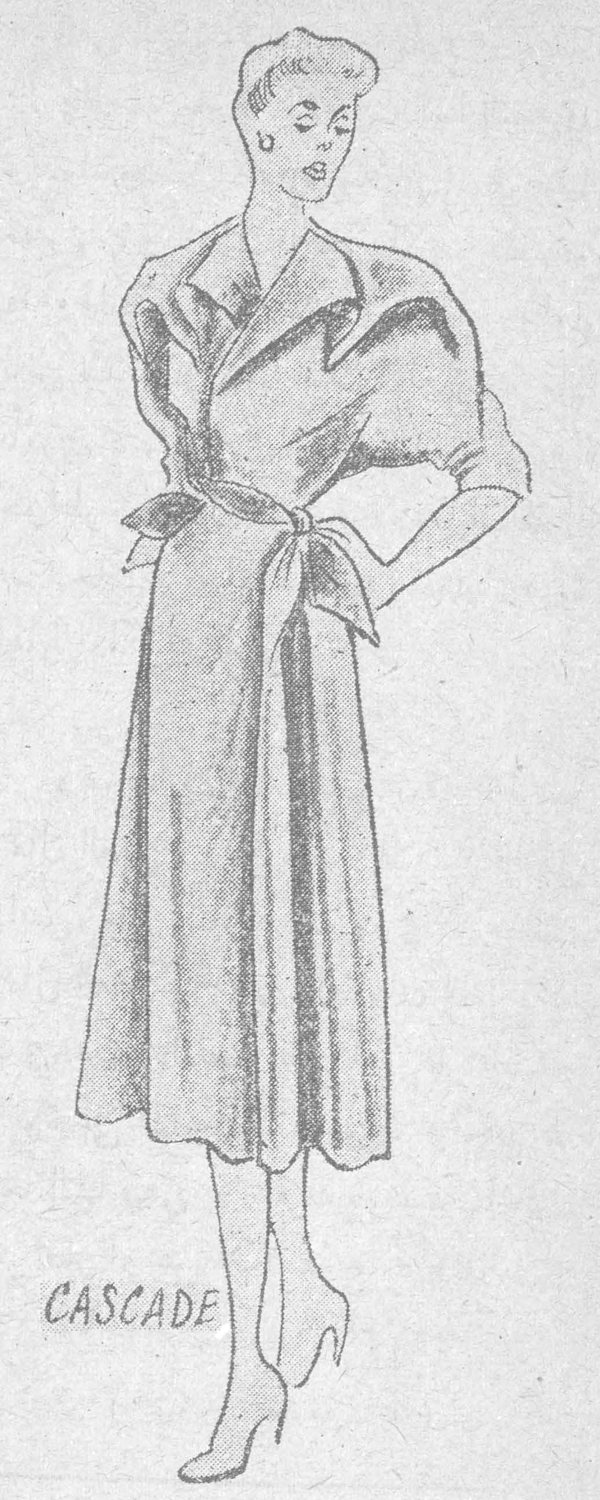
CASCADE
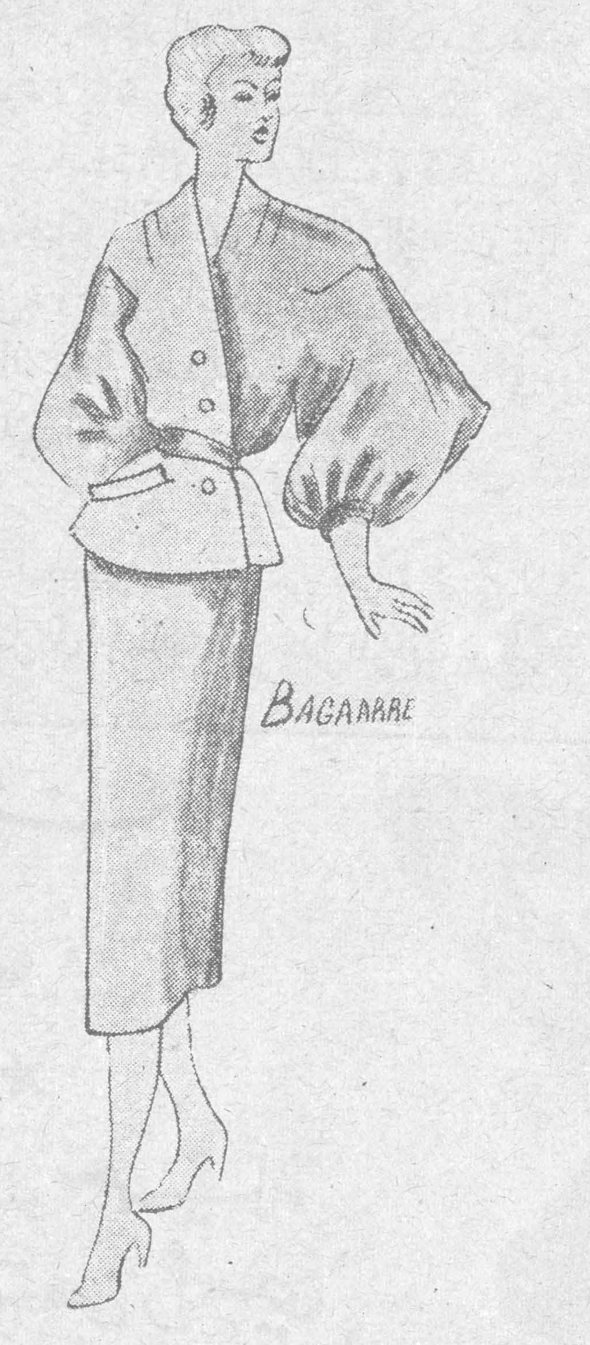
BAGARRE
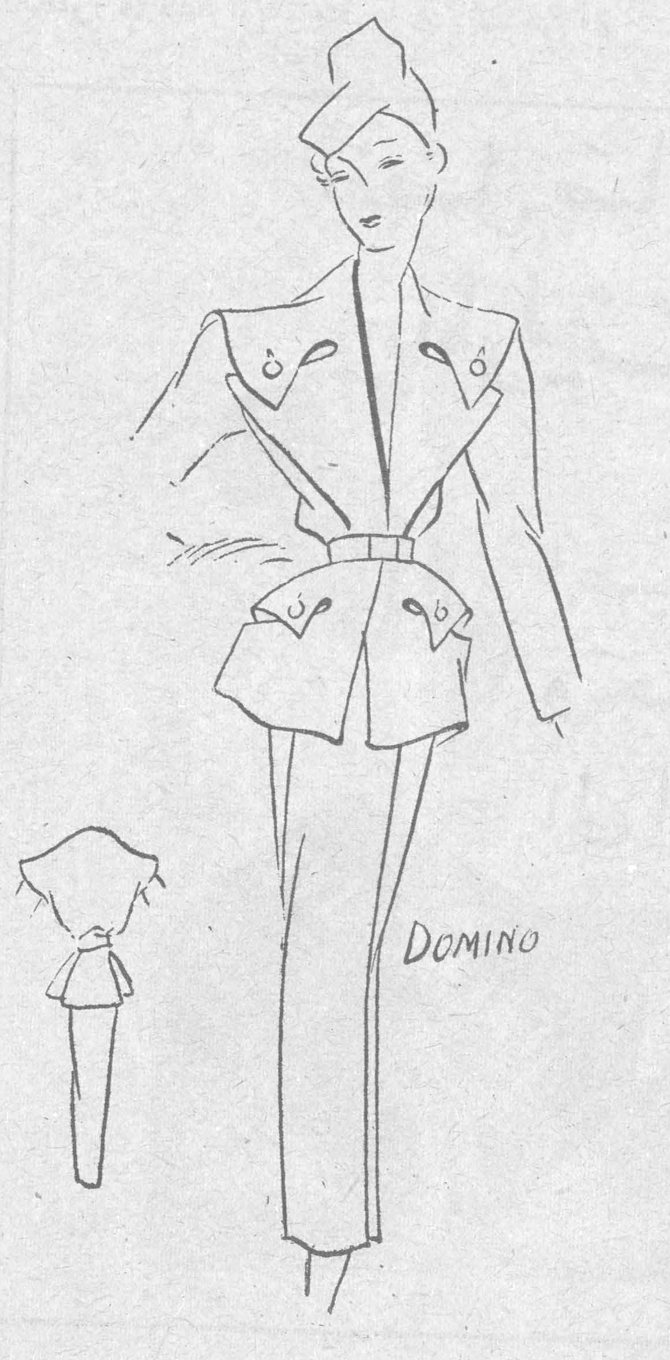
DOMINO
The Woman's Voice wished me to talk to it about the "mid-century" fashion, and not to deny spring its due share of my talk... and The Woman's Voice shall have what it wants.
As for the mid-century fashion, whose name stirs the curiosity of the ladies, it is the one proclaimed by Christian Dior at the opening of this year, to give this dividing stretch of time a fashion by which it will be remembered, just as the quarter-century fashion (1925) is remembered, and that of the century's beginning (1900). He took care that it should bear a special stamp, and be distinguished by colors, trimmings, and lines unknown to the fashions that went before. And this fashion is, in itself, nothing but a longing — indeed a return — to the garçonne style that spread in 1925, and which Baghdad knew in the days of al-Rashid.
The mid-century garçonne has traits she must honor: her head should be small; her hair short and tousled, like hair the wind has played with; she should bind her breasts and hide them as far as possible; she should be broad of shoulder without padding, cinched at the waist without stays, flat of belly, swaying at
the back and the hips; and her skirt should stand 38 to 40 centimeters off the ground. The skirts have singular, novel lines: some are shaped like a cigar or like a torpedo, others resemble a flower, or a seashell, or a fountain of water, or a paper kite. Nor are the coat and the jacket any less novel than the skirt, for they have been given high collars like a funnel, encircling the neck and part of the face — like the Stuart collar or the shepherd's collar — and the sleeves have
been treated lavishly, beginning wide and low and ending in ample turned-back cuffs like the two wings of a bat. All this, besides glittering stars scattered over the hair, the single earring for the single ear, besides adorning the bosom with blossoms and hanging pendants from the bracelets.
Hardly had the mid-century fashion caught on and settled in than