... We do not know what the woman of Lebanon will say as she hears, for the first time, such a woman's voice calling for a return to the land — the pure, bountiful land that gives and does not begrudge. To the
women of Lebanon, then, we offer these words...
Miss In'am al-Saghir has conveyed to us the conversation that passed
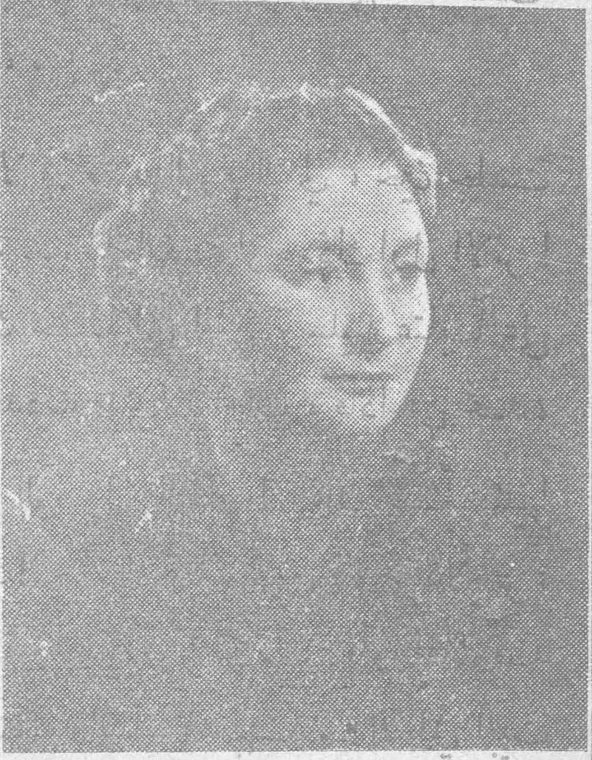
between her and Mrs. Nazik al-Abid Beyhum.
Mrs. Nazik al-Abid Beyhum is one of the ladies of refined society and one of the few among Syrian women — and, I believe, the only one among Lebanese women — who have taken an interest in matters of agriculture. She is a lady Syrian by birth, descended from one of the most distinguished families of Damascus, and Lebanese in nationality by her marriage to Mohammad Jamil Bey Beyhum. She is a charitable lady who loves good works and labors in silence and without clamor, so that one sees the flour without hearing the din.
The Palestinian refugee women are among those who have taken up all her time of late, living at her expense and under her wing; together with generous colleagues of hers she has worked to found a workshop for the refugee women, from which they can earn what keeps body and soul together and spares them the need to beg and the deadly life of dependence. Recently, in partnership with Palestinian and Lebanese women, she realized the idea of an orphanage for girls, the daughters
of Palestine's martyrs; this club was opened last month, and it now houses ten girls who are learning every kind of practical and theoretical lesson and being raised in a sound, national upbringing.
Then I ventured to put a few questions to Mrs. Beyhum, that you may learn her opinion:
Q — What, in your view, is woman's mission?
A — If the Creator has fitted woman to be a working member in the affairs of life and made her capable of mastering every science and art, why then does man hem
her in when it comes to realizing ... rights and duties? Does man not see that woman spends the greater part of her day searching for some work to fill her empty hours? Does he not notice that at times the field is left open for her to sink into the depths of the belief that she was created for love alone, giving herself over to adornment and display? And it is an injustice that the very man who made woman's highest ideal the winning of his acceptance and approval should
himself then be the one denouncing her conduct, seeing that she thinks of nothing but adornment and dress and demands much for their sake.
Q — What, then, do you ask of man, so that he may help woman free herself from this condition?
A — Let him make useful work dear to her, and let him bring her to believe that she was created, as he was created, capable of every work, so that she may not feel an abasement within herself — and so that the mothers of their children not stand in the position of servants. Yes, woman is a cause of joy and a bringer of happiness; in her smiles is the spirit of gentleness, and in her tears the moan of existence. But for all the delicacy of feeling, the fineness of sentiment, and the tenderness of heart that adorn her, and for all the modesty, patience, and chastity that distinguish her, she is in the greatest need of self-respect and greatness of soul, and in the greatest need of safeguarding her feelings. All this so that she may keep her sincerity, and so that her love may be a natural love — the love of the free for the free.
Q — What was your first work in the service of the daughters of your sex and of your homeland?
A — I felt all these things as my eyes were opening to life. I felt my duty toward my homeland, my duty toward my people, and my first duty toward the daughters of my sex. So I resolved to make the press my tongue, and began to call on it to help me realize these precious hopes; I undertook to publish a magazine of my own, the magazine "Nur al-Fayha," which was the earliest of the women's magazines in Syria. Then I joined the charitable associations and the political parties, attended the congresses, was imprisoned, and was exiled.
"I found happiness