The death rate from pneumonia has fallen 75 percent in the last twenty years.
One day early this winter, a woman lay in one of New York's hospitals, inside an 'oxygen tent,' panting with a strange rapidity and tossing on the fire of a raging fever...
The doctors had drawn up their report on this woman, indicating that the illness was a form of acute pneumonia — but that the possibility of recovery was great, indeed certain!
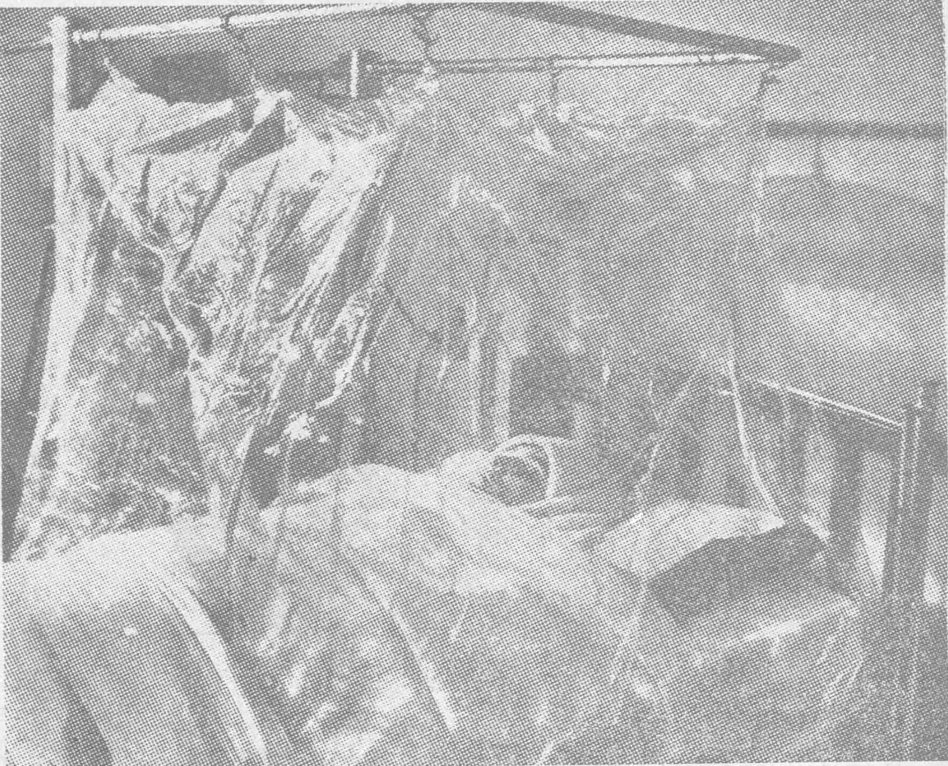
The pneumonia patient, inside the oxygen tent, in the most dangerous stage of the disease.
The microbe that struck this woman down is of the kind that occurs mostly in the damp months of winter. Pneumonia is not one of those diseases that strike some people and spare others; but it appears that it calls more often on the people of crowded cities! It appears, too, that it strikes children and the aged more than it strikes the young, and that man has stronger immunity against it than woman!
It is agreed that heavy strain, exposure to cold, chest inflammations, and the taking of alcohol — all of these weaken immunity, or resistance, to pneumonia; but infection occurs, without fail, as the result of contamination by an active microbe...
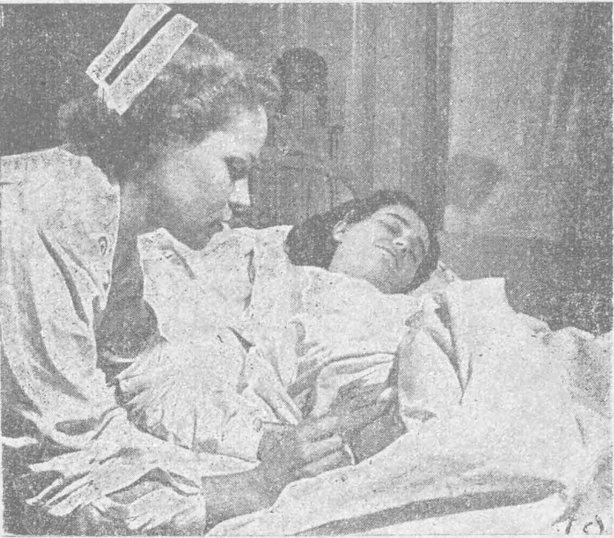
The patient was given penicillin twice a day for a full week, and the course of the disease was halted from the first injection!
Had this lady been stricken with pneumonia in 1930 instead of 1950, the report the doctors wrote of her condition would have been deeply pessimistic, and signed off with the word 'danger.' In that era a third of all cases of pneumonia ended in death, because medicine was not then armed against it with the sharp weapon we have today.
In the last twenty years, the treatment of pneumonia has taken three strides to arrive at the
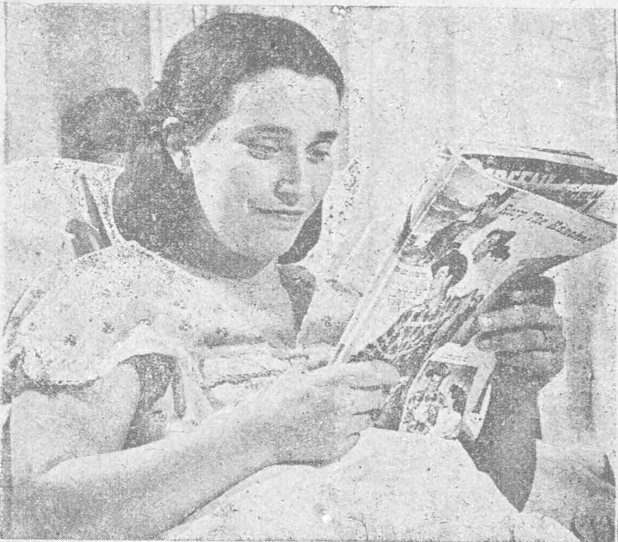
A picture of the same patient, five days after she fell ill: she is able to sit up in her bed and read. Three days later she was able to get up and walk.
excellent result we speak of today. First: treatment with animal serum; second: treatment with sulfa; and third: penicillin — and this last treatment is beyond question better than the others, for the speed of its action and its distance from