
In the early third century A.D. there sat upon the throne of Rome a dynasty of Syrian emperors whose era was distinguished by the attempt to tinge social life and religious ideas in Rome with an Eastern color, until Rome's great poet Juvenal said, "The Orontes empties into the Tiber." This age was distinguished also by the great role played by woman, whether in political, literary, or military life, so that it was said, "In Syria there are women, but no men." Among the eminent women of that age were Julia Domna, priestess of the Temple of the Sun at Homs and wife of the Emperor Septimius Severus — the most famous of them; her sister Julia Maesa, mother of the Emperor Elagabalus; and her daughter Julia Mamaea, mother of the Emperor Alexander Severus — in truth the wisest and ablest of them all.
We do not know exactly in what year this woman was born, for her name did not rise to prominence until her son came to the throne at the age of fourteen. She then devoted herself entirely to caring for him and training his body, his mind, and his character: to strengthen his body she would oblige him to bathe in a pool of cold water every day and to drink a measure of water before every meal.
Alexander studied under great masters and grew passionately fond of Greek and Latin literature, and nothing restrained him from pursuing them but his mother's plea that he take upon himself the founding of a lofty government ruled by love and peace. For that reason he followed her counsel and that of his teacher, the famous Beiruti jurist Ulpian: he drew close to the Senate after the estrangement begun by his predecessors in power, and surrounded himself with a number of senators whom he consulted on important questions, his mother mediating between them and him. It was she who managed affairs; it was she who debated with the senators; it was she who sat with men of letters and philosophers, examining their writings and their ideas, advising, guiding, and directing.
Mamaea's activity at court and among its men was not confined to political and literary matters alone; it extended to military affairs as well. She accompanied her son from Rome to Syria, where the fires of war were blazing between the Romans and the Persians on the eastern frontier; she roused the armies to battle and marched at their head until a great victory was hers, by which she drove the young forces of Ardashir back from Syria after they had occupied it and wrought devastation there.
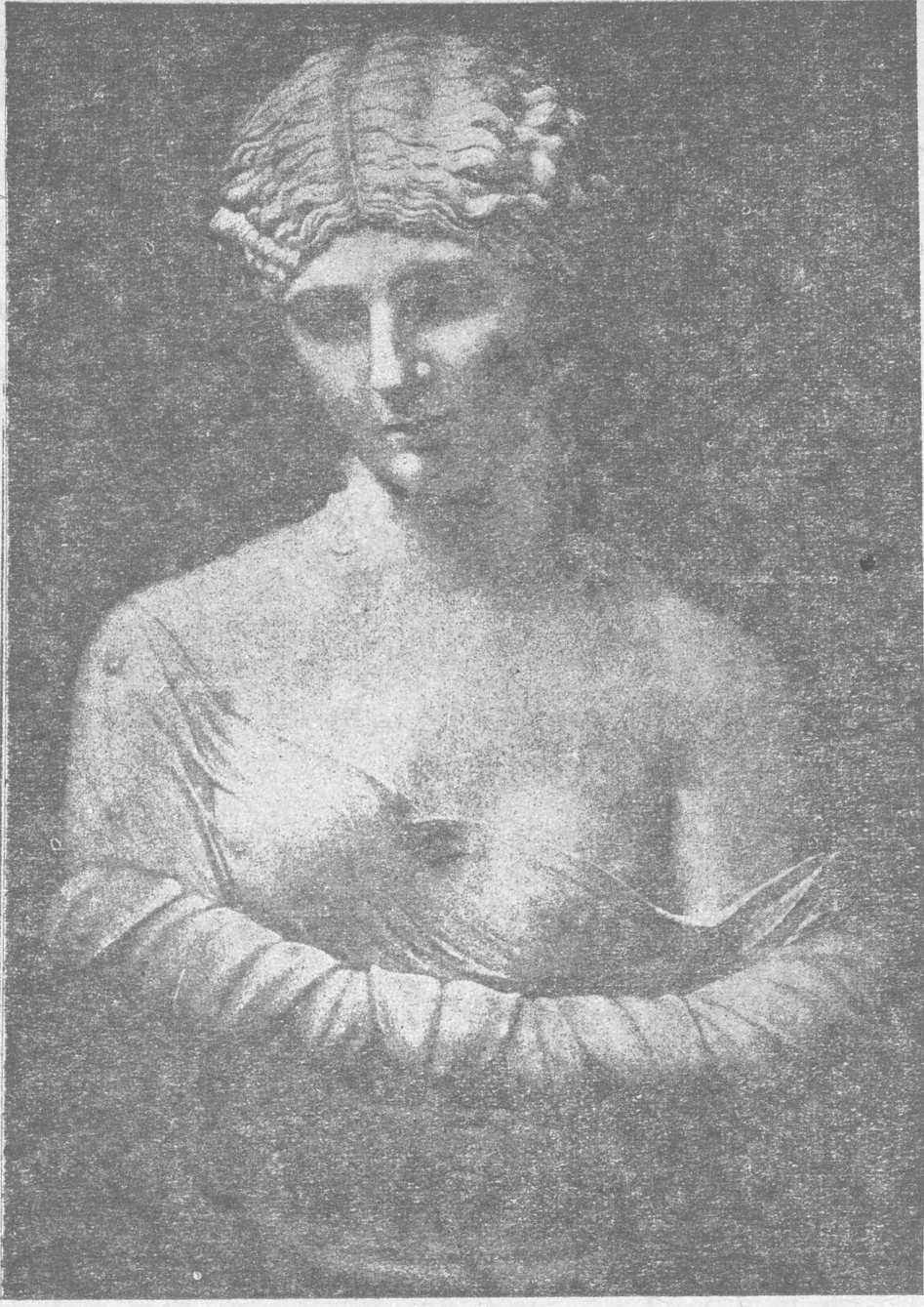
Among the things to which Julia Mamaea attended, giving them her great care and her warm sympathy, were religious matters. The third Christian century was an age of struggle between Christianity and the Roman religions, native and imported, such as the worship of Mithra and of Cybele. This struggle grew very fierce, for each of these religions embodied a particular way of life diametrically opposed to the other: the Christian religion, with its asceticism and austerity and its turning of attention to man as an individual human being, was a direct reaction against the life of luxury, ostentation, and indulgence that Rome was living. Julia could not but be affected, and her son affected with her. She took upon herself the trouble of traveling from Rome to Antioch to hear Origen, the philosopher of Christianity in that day; she sent royal guards to him and summoned him to her, and he stayed with her no short time, during which she listened to his expositions and his opinions. In the wake of this meeting with so able a philosopher she began to expound to her son, and to urge upon him, a life of asceticism and austerity, of devotion, and of the consecration of oneself to the cause of the empire and the cause of his family. Alexander was thus the only one among the Syrian emperors who turned his gaze from the pavilions of luxury and empty pleasure toward a life of contemplation, wisdom, and deliberation. He allowed all religions to work in freedom — even Christianity, which