another in making pilgrimage to Zagazig, and in taking pledges from the sheikh who was there!
Then came a fifth man, who claimed that Ismail carried a talisman written by a Bedouin shepherd boy whom he had taken in as a guest one night and lodged generously — and that in this Bedouin there was a breath of the spirit of God. So the villagers went out seeking the shepherd, and hurried to him with eggs and ghee and chickens, begging him to write them talismans like the one he had written for Ismail. The Bedouin swore to them that he was unlettered, that he could neither read nor write; but they thought he was playing coy, so they pressed him harder and gave more generously; and he began handing them folded scraps of paper covered with cloth, bartering them away at the steepest of prices, saying to himself: the fool's provision is upon the madmen!
Ismail's good mother saw all this and heard it, and every night she would ward her son against its evil with incantations over his body, and with alum which she burned; then she would make out, in the fantastic shapes of its brittle remains, the faces of those who talked most about her son. She did not curse them, but asked God's forgiveness for them; and she would crush those shapes at the heels of her son as he slept, and sleep at peace, because she had crushed the spirits of evil beneath the feet of her beloved boy.
But the spirits of evil do not die!
For one day there appeared on Ismail's face and body flat red patches, verging a little toward black, which neither pained nor troubled him.
He waited for them to go away, but they did not; they grew larger and spread, and little by little they veiled the kindly features that had made the villagers love to look upon Ismail's face.
With the days his cheeks and his ears swelled; his nose broadened, thickened, and sank in; his voice grew hoarse; the hair spread over his face and fell away; and his eyes grew dull...
And his mother knew that it was the disease that had killed his father...
It was no longer hidden from anyone that Ismail was stricken with leprosy.
Yet for all that, Ismail never ceased going to the field, planting and pulling up, loving people, and fighting the disease that crept through his body with a giant's strength.
But the people began whispering among themselves what the registrar had said of him:
"Speak to the leper with a spear's length between you and him." And as the tale passed from mouth to mouth, the spear became two spears, then three, then ten, until at last they scattered from around him... none would speak to the leper.
He would go to the mosque for the Friday prayer and find himself the center of a widening circle in which there was not a living creature; and when the prayer was called and the worshippers formed their rows, he would find himself in a row by himself. So he took the arrow in his liver and hid it, and he went no more to the mosque to pray...
Then the registrar said: "And among men is he who worships God upon an edge: if good befalls
him, he rests content in it; and if a trial befalls him, he turns over upon his face... he has lost this world and the next."
Yet in his house Ismail never ceased from prayer....
He began to thank God for leaving him his devoted friends, who visited him and spoke with him — a spear's length between them and him — and then departed in haste... Then he thanked Him for leaving him his faithful wife and his good mother, whose two hearts were torn with grief over the beloved whom the eyes of women had conquered in the end.
The mother turned to the Bedouin shepherd — the villagers' exaggerations had by now made of him a physician, a soothsayer, a settler of needs, and a summoner of jinn without a rival — asking him to make an amulet for her son; and she gave him half of what she had saved through her long life to make the pilgrimage to God's Sacred House.
And the wife turned to the sheikh in Zagazig, asking him to bless her husband and to intercede for him with God for a cure. So he came to the village in a grand procession of followers, and stayed as a guest with her uncle, the village headman, who was one of his disciples. He prescribed for the
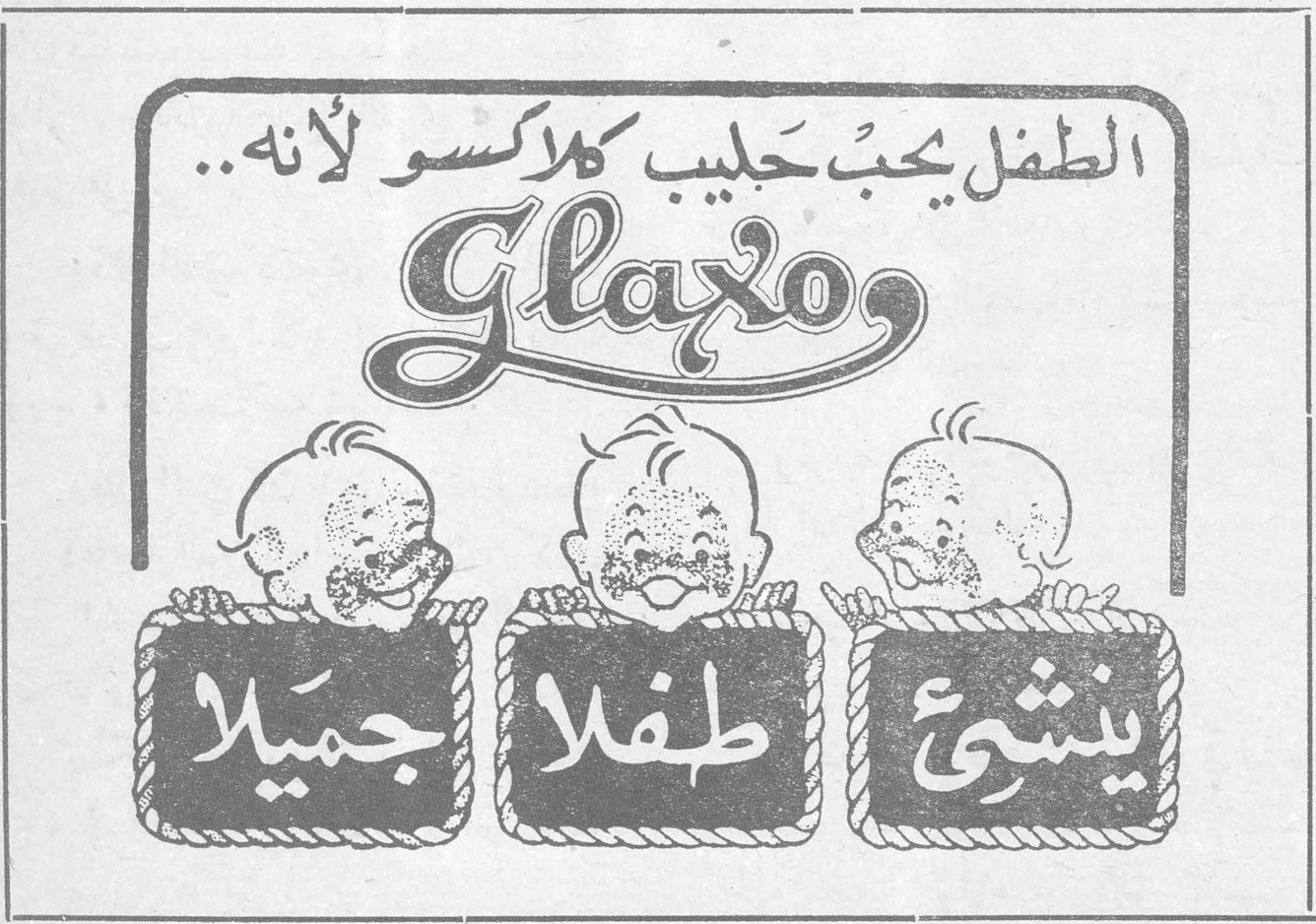
Glaxo Milk
Baby loves Glaxo milk because it...
Glaxo
builds a beautiful baby