and worked with the American government in Washington until he established his own business in New York in 1945, where he formed the "Eastern Trade Agency"; today he is engaged in exporting American goods to the East.
Mr. Saadou and his lady wife visited the countries of the Arab East last year on account of his commercial business. That was Mrs. Sandra's first visit to the land of her ancestors, from which she returned to the United States amazed at its beauty, and at Lebanon's above all; and she set to work with diligence and energy to encourage the holding of a conference in our beloved country. She is her husband's right arm in the realization of this idea and in the preparations for the conference.
Mrs. Saadou always appears elegantly dressed, and she designs most of her own clothes. She has a special message for the Lebanese and Syrian woman: that she make her emancipation complete, that she demand all her rights, and that she feel her full responsibility as a member of society; and she counsels her not to be ashamed of work, for labor and a profession confer honor and bring about the feeling of freedom and responsibility.
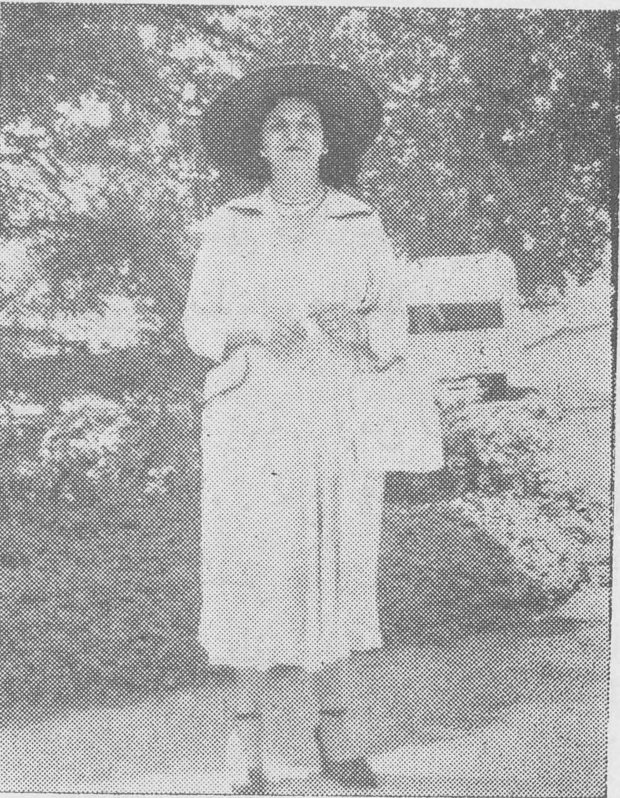
Mrs. Shahrban Chehab Nassif
(Mrs. Louis Nassif)
An energetic lady who loves work and sacrifices much money and time in the cause of social services, adorned with the qualities of kindness, sincerity, leadership, and organization, she is respected and trusted by all who work with her.
She has visited Lebanon and Syria and loved the land of her ancestors with a surpassing love; she strives always to create friendly and fruitful relations between the two parties, believes in woman's possibilities, and wishes to become acquainted with a great number of our women on her journey this summer to attend the Conference of Emigrants. She is an executive member of this conference, and on the "Hospitality Committee," which is composed of ladies.
Mrs. Nassif was born in Pittsburgh, in the state of Pennsylvania. Her parents met in this country and married "by elopement"! Her father is Sheikh Zakhour Chehab of al-Husn.
She received her education in Pittsburgh and married at the age of nineteen. Her husband, Mr. Louis Nassif, was from Mount Lebanon. He came to this country at the age of thirteen and worked with his brothers in making sweets until he became independent and founded his own branch in Wheeling, in the state of West Virginia (Wheeling–West Virginia), and his confectionery factory became one of the largest factories in that town. After Mr. Louis's death in 1947, Mrs. Shahrban took over the supervision of this factory, founded thirty-five years ago and still enjoying the same renown.
Beyond this, she is an active member of her community, among the Americans and among the members of her colony. She has worked, and still works, diligently and energetically in the service of the American Red Cross, particularly during the war years, and she was on the supreme executive committee of that institution. She is a member of the American Cancer Society, and she took part
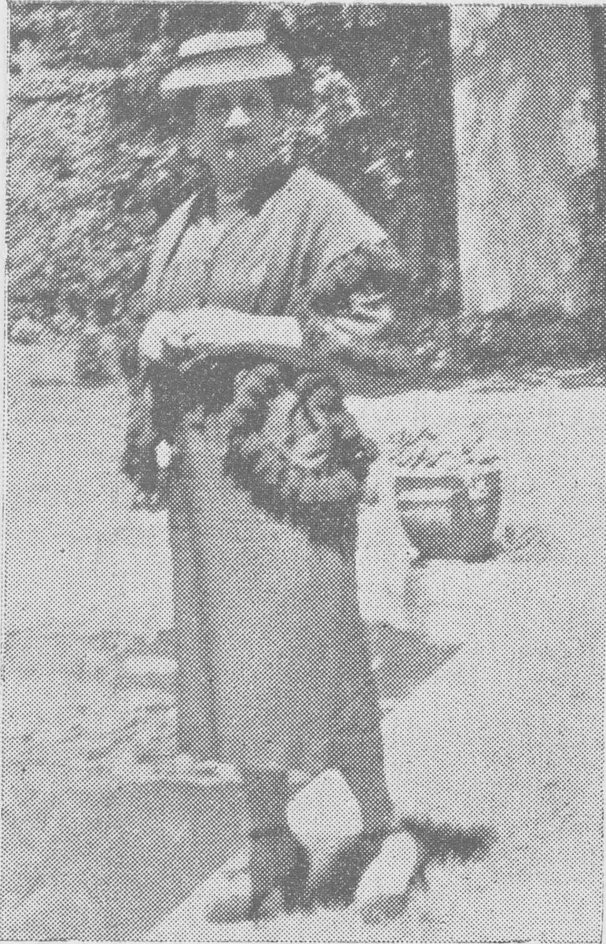
Mrs. Katrin Mokanna Barakat ...
(see page 50)
in founding a theater for artistic plays in her town of Wheeling; she is likewise vice-president of the women's club in that town, whose members number some 700 American ladies.
Among the members of her colony, she founded the Lebanese-Syrian Club, which is a member of the "Federation" that will hold its conference in Syria and Lebanon this summer. She is famous for her lectures to American audiences on Syria and Lebanon, especially after her latest journey to those countries, which left a fine impression on her soul; that journey was on the occasion of the UNESCO meetings held in Beirut, when she was a member of the American delegation.
This gracious lady lost her son — her only child — in the flower of his youth in the last war, and the blow of this affliction fell most painfully upon the heart of the poor widowed mother. But did grief keep her from work? No. Rather, with the courage of the American woman and her energy, and with the patience of the Eastern woman, she resumed her