
Egypt has Nefertiti, representing the first beauty among its women; and Greece has Helen and Phryne. Who, then, is the first beauty among the women of Rome?
The Roman Empire, despite the immense span of time it lasted, has not immortalized for us the name of a woman famed for extraordinary beauty who took her seat on the throne beside those we have named. And the Roman women who did become famous — such as Dido, Lucretia, and Caesar's wife — were all known and immortalized for the virtue that was in them, not for the beauty they possessed.
If we compare the Romans with the Greeks, we find them a rough, harsh people; we find in their language thunder while Greek has luster; and we hear in its din the tramp of legions marching to conquest, while Greek has the ring of a runner's feet in the fields of Olympus. Yet this does not mean the Romans were a people without poetry: it is enough to name Virgil, Catullus, Horace, and Lucretius to concede to Latin poetry its rank.
The Romans in the austere age of the Republic were a thrifty, simple, virtue-loving people; hence not much information has come down to us of how they lived then, and few are the records of woman's condition in that period. But prosperity came to Rome with the coming of the Empire, and Rome came to know all the varieties of luxury that prevailed in the different lands that had submitted to her; and with prosperity the virtues of the women of Rome began to collapse — and then, of course, it became possible to know more about them.
The Roman women of old were dark-haired, simple in their dress, seldom caring for adornment. But
after Rome began gradually to dominate country after country of the world then known, they began to change: the high-born among them took to acquiring great numbers of slave girls and bondmaids, and set about learning from the conquered peoples the arts of refinement in dress and appearance.
The Romans loved sleek, abundant hair more than the Greeks or the Egyptians had loved it before them. So the long blond
This is the first installment of a series of articles that "The Woman's Voice" will publish on the beautiful woman through the ages and in the various civilizations. It will set forth the foundations that the different peoples took as their measure of beauty, and will recount the lives of some of those women who were known for their extraordinary beauty and immortalized by it, as it will also picture the condition woman was in — how she lived, dressed, and adorned herself.
hair of the German and British women had its influence on the women of Rome, who took it up as a widespread fashion. Lucian relates that "a long time and a great effort are spent in curling the hair. Here is a woman steeping her hair in henna and drying it under the blaze of the midday sun, as the wool merchants do, because she loathes its natural color. And here is another who finds black hair more becoming to her, and so spends the greater part of her husband's income to secure black hair for herself: you see her searing it with heated rods of steel, bringing it down in front until it joins her eyebrows, hiding her forehead thereby, and behind letting it flow down her back alluringly."
The satirical poet Juvenal has verses in which he mocks the women of the age and the intensity of their concern with artificial adornment. He says: "Her hair alone demands the services of twenty dressers, at whose head stands Psecas, who bares his shoulders and chest and trembles as he tends each single hair of her sacred head..... He and his fellows build curl upon curl in her front hair until it becomes like a tower, and she appears before you like a giantess in height. But look behind, and you will find her more like a dwarf; and you will see
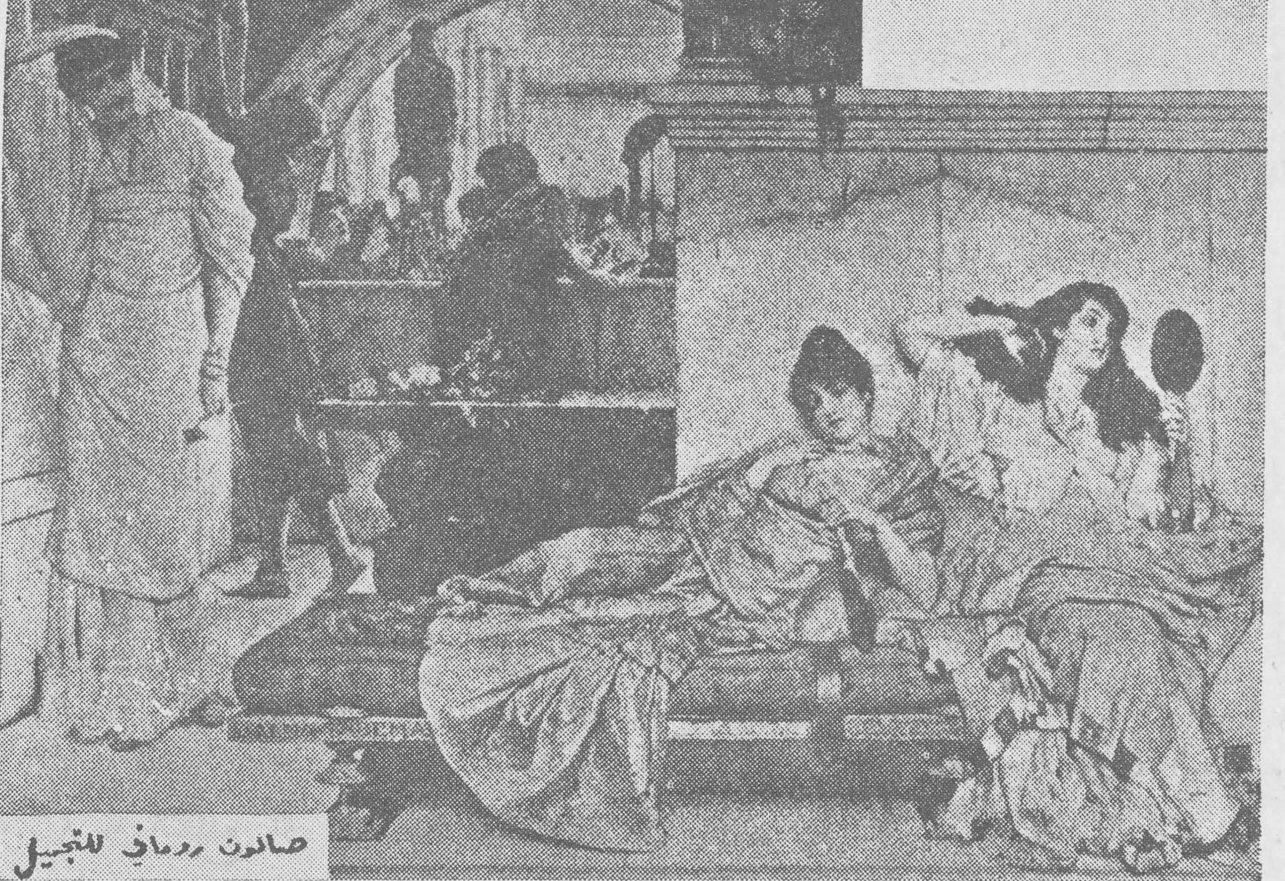
A Roman beauty salon