On Familiarity and Taking Liberties
Q — I used to hear the husband of Mrs. —, on more than one occasion, scolding her within earshot of other people until the tears sprang from that poor woman's eyes. I would pity her state and set her husband down as a brute. Yet at other moments I would feel for him, when I noticed him enduring, as though under an unbearable yoke, his wife's insistence on dictating her orders to him. And how wretched a man he was when she sat beside him in the automobile and set about instructing him in every matter great and small. I thought I would lay the case of this couple before the social counselor; perhaps she can account for this open and mutual discord.
A — The problem of Mr. and Mrs. — is that familiarity, which is indispensable to every person who shares his life with another, has developed — or I should rather say degenerated — into presumption. The difference is a very fine one — I mean the excessive liberty that turns closeness into distance. It seems to me that this husband and wife live in a state of perpetual forgiving. And the repetition of pardon for a repeated offense lowers the level of esteem and of love; and love weakens in proportion to the number of lapses that must be forgiven. Yes, these are slight matters, and pardoning them is the better course;
but the important thing is to root out the feeling of presumption from the bed of parasitic growths that rob each of the two of the other's respect, until both are left stripped of every quality of personality.
I advise them that each should collect himself — not so as to draw his weapon before other people, but so as to have recourse to it when he is alone with his companion, calling him to account with reason, wisdom, and self-restraint.
Q — I spare no effort to provide my son with every comfort. He sleeps in the best room in the house, and has all the food and possessions he could wish. I watch over his rest and worry over his illnesses; and yet one day I awoke to find no doubt left in my mind that he treats me — I, his mother — like a servant of his. His nature is very kind, but in his high-handedness he all but wipes his shoes on his parents. What is the cause of this ingratitude?
A — Your son's problem is not ingratitude for your kindness, since you never gave kindness any value in his eyes. You shower every gift upon him, necessary or trifling, in return for nothing whatever from the other side — such as thanks
and appreciation. Naturally, a child is not born grateful and appreciative unless you yourself teach him to be so — and why did you not teach him? Because you supposed that by removing every barrier between you, you would find your way into his heart; but the matter produced the very opposite. Instead of drawing closer, you drew apart; and, as you said, your son came to lord it over you. Familiarity became presumption. And no one can take complete liberties with another person while preserving love and respect for him. You ought not to have let him trample the dignity of his parents and strip you — you and his father — of personality and dignity.
Now that the problem has been laid bare, there is nothing for it but to make the effort to accustom him anew to stopping at a fixed limit, whether he is arguing with you for a permission or pressing you to buy a toy. Without firmness on your part in the matter, do not dream of his ever submitting. The change must come about in you first. And do not be alarmed by his weeping or his going on strike against food — those devices that used to cut you to the heart before. And remember that you cannot do without time, patience, and perseverance if you are to recover your standing and if he is to acknowledge this new relationship.
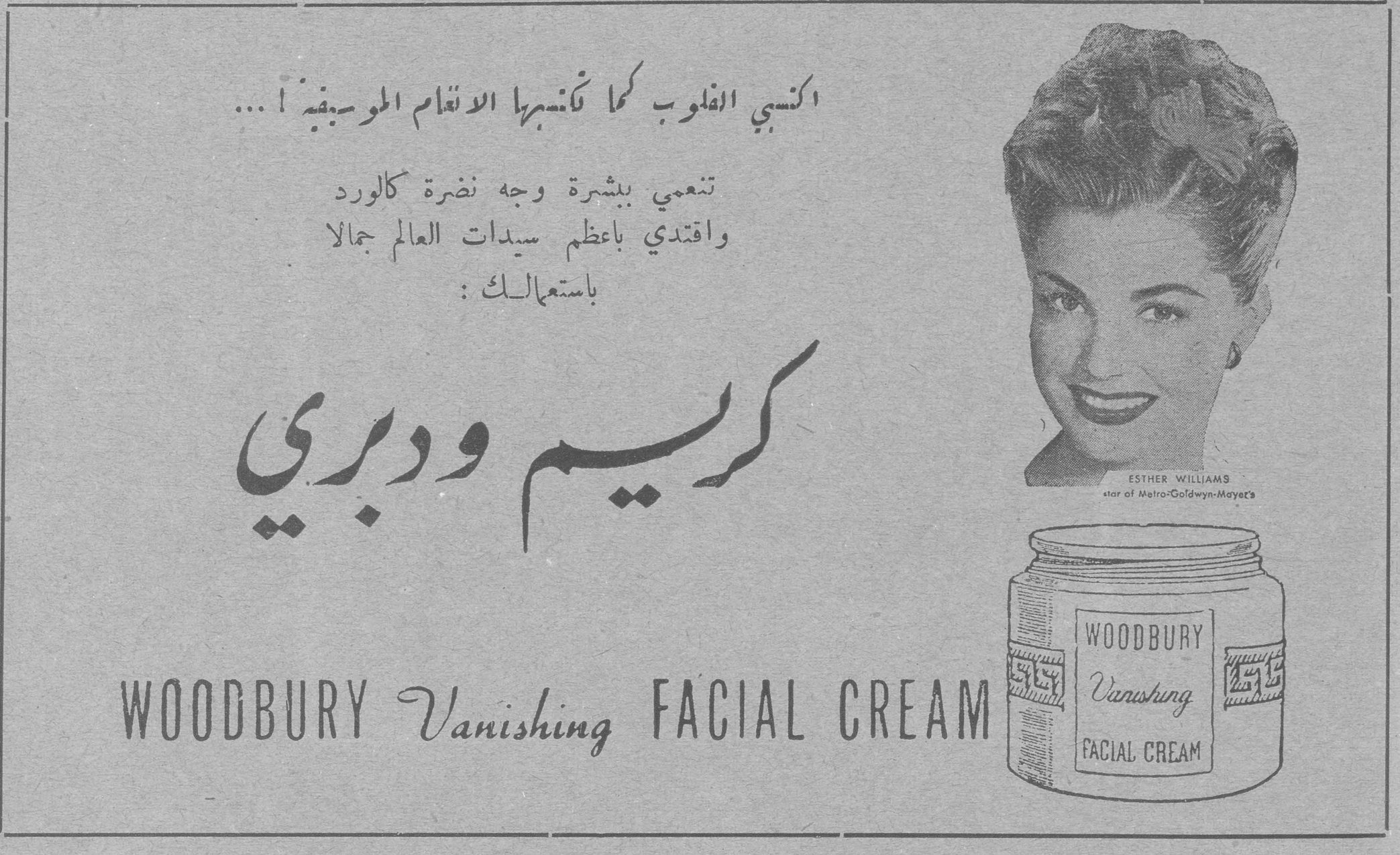
Woodbury Cream
Win hearts as musical melodies win them!...
Enjoy a facial complexion fresh as roses, and follow the example of the world's most beautiful ladies, by using:
Woodbury Cream
WOODBURY Vanishing FACIAL CREAM
ESTHER WILLIAMS
star of Metro-Goldwyn-Mayer's