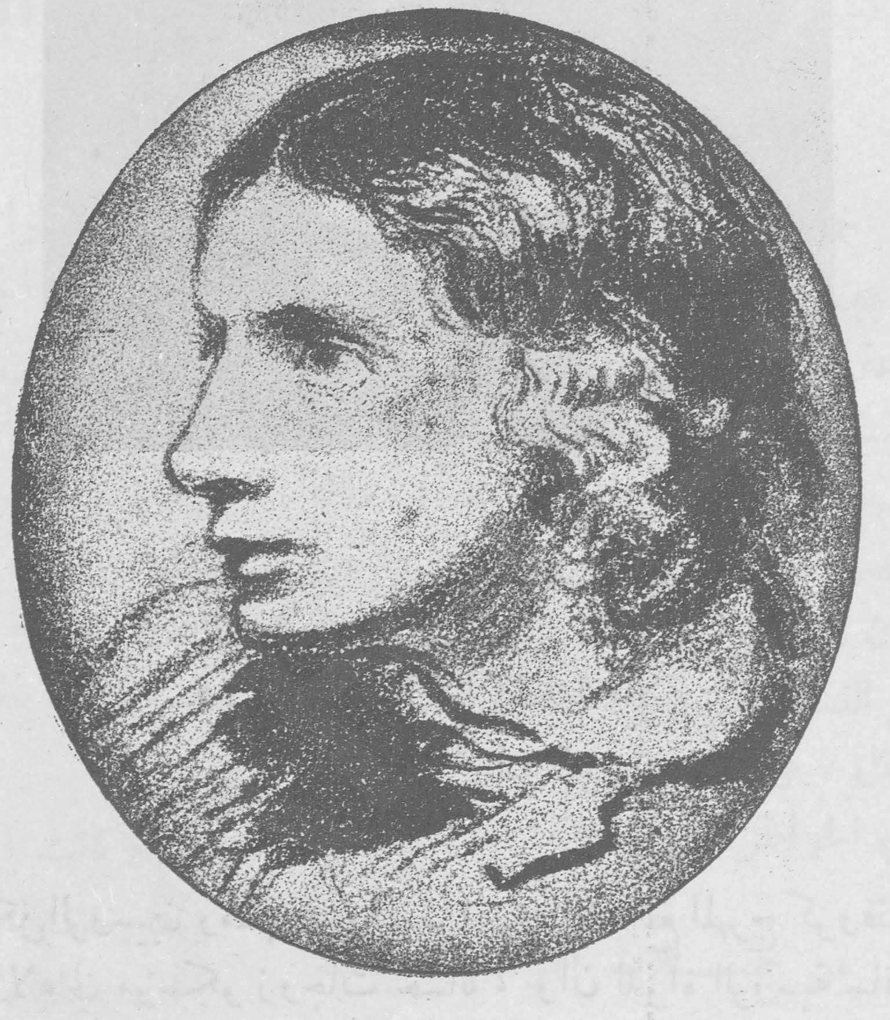
John Keats
"Beauty is truth, and truth is beauty; that is all you know upon this earth, and it is all you need to know."
This is John Keats, who knew that beauty and truth are one — and in his poetry they were one.
"A thing of beauty is a joy for ever: its loveliness increases, and it will never be forgotten, nor pass away."
And this is John Keats, whose poetry is still a joy for ever, whose loveliness still increases, and will never be forgotten, nor pass away.
He lived in the early years of the last century, a contemporary of a company of Europe's sweetest poets, artists, and thinkers — such as Shelley, Byron, Goethe, Beethoven, and Hegel. And he was "the nearest of men to Shakespeare; and had God prolonged his life beyond those twenty-six years, he would have joined the master of poets upon the threshold. On this the critics are all but agreed."
He loved Fanny Brawne, and corresponded with her long. His letters to her were lately collected, and behold, they fill a huge volume, from whose leaves perfume breathes — though it mingles, from time to time, with the echo of heartache, pain,
and disappointment.
From his letters to Fanny we transcribe two:
—1—
It makes me glad that I had no chance to send you a letter I had written you Thursday evening — for it was very like Rousseau's letters in "Héloïse." But I am more reasonable this morning. The morning is the only time I find fit for writing to a beautiful girl whom I love with the deepest love; for in the evening, when the dreary day has passed, and when the empty, silent, speechless room waits for me as though it had been made to receive me — then, believe me, passion takes hold of me and carries me away altogether.
I would not have you see the tremblings that come over me — tremblings I once thought it impossible should ever happen to me, and which I used to mock when they happened to others — lest you should think my misery had reached its utmost, or that a touch of madness had come upon me!
Ask yourself, my beloved:
Were you not cruel, to subdue me to such a degree, and to rob me of my liberty?
Will you confess as much in your letter, which you must write at once?
If you would spend your every effort to console and divert me, then put into your letter the fragrance that is in flowers, that it may send rapture through me. Write the tenderest phrases, and kiss them, so that I may at least be able to press my lips where your lips have been!
As for me, I do not know how to express my infatuation with a woman of such beauty: I need a word lovelier than my saying "lovely," and more beautiful than my saying "beautiful."
—2—
Sweetest of the sweet, Fanny:
You fear at times that my love for you may not reach the degree you wish. I love you, my dear girl, to the end of time, for ever, without the least reserve. And the more I come to know you, the more I love you.
And it grows under all circumstances: even my hours of jealousy were the throes of love; and when the fiercest fits of jealousy were gnawing me through, I was ready to die for your sake!