and want have sworn their pact,
and the band of travelers whose guide is bewildered in a deadly waste,
whose darkness in the starless murk is like pitch.
*
O my two eyes, be generous and do not run dry —
will you not weep for Sakhr of the bounty!
Will you not weep for the bold one, the beautiful,
will you not weep for the young lord!
*
The rising of the sun reminds me of Sakhr,
and I remember him at every setting of the sun,
and were it not for the multitude of those weeping around me
over their brothers, I would have killed myself.
But still I see a woman frantic with grief,
and a weeping woman wailing over a day of doom;
I see her distracted, crying for her brother
on the evening of her loss, or on the morrow after.
They do not weep for one like my brother — and yet
I console my soul for him with the solace of shared sorrow.
No, by God, I shall not forget you until
I part from my life's blood, and my grave is cloven open.
On the day of parting from Sakhr,
Abu Hassan, I bade farewell to my pleasures and my delight.
O my grief for him, and my mother's grief —
he wakes in the tomb, and in it he passes into night!
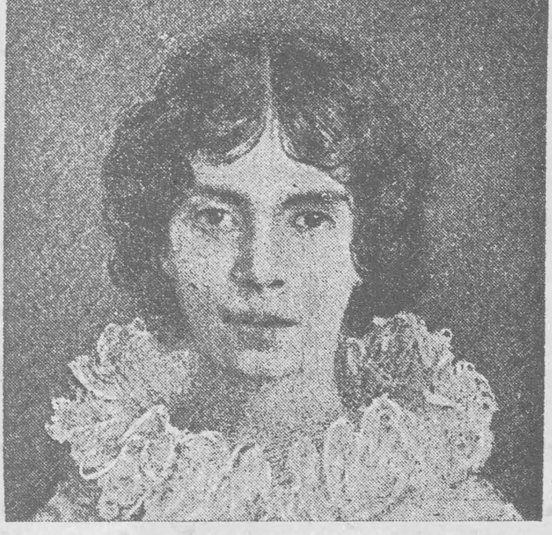
Had you mentioned Emily Dickinson (1830–1886) during her lifetime, you would have found but few who had heard her name or read her poetry. Mention her today, and there springs to mind at once the most famous poetess of America in the past century.
Her poetry is famed for its tender-ness, its sweetness, and its brevity. Most of her poems are short, each turning upon one small idea, which she pictures within a halo of similes drawn from nature, the seen and the unseen.
We shall forget him, my heart!
We shall forget him tonight — and I shall forget him!
We shall forget the warmth he gave,
and I shall forget the light.
When you have forgotten him, tell me,
that I may put out his memory.
Make haste — for if you linger,
I fear that I shall remember him!