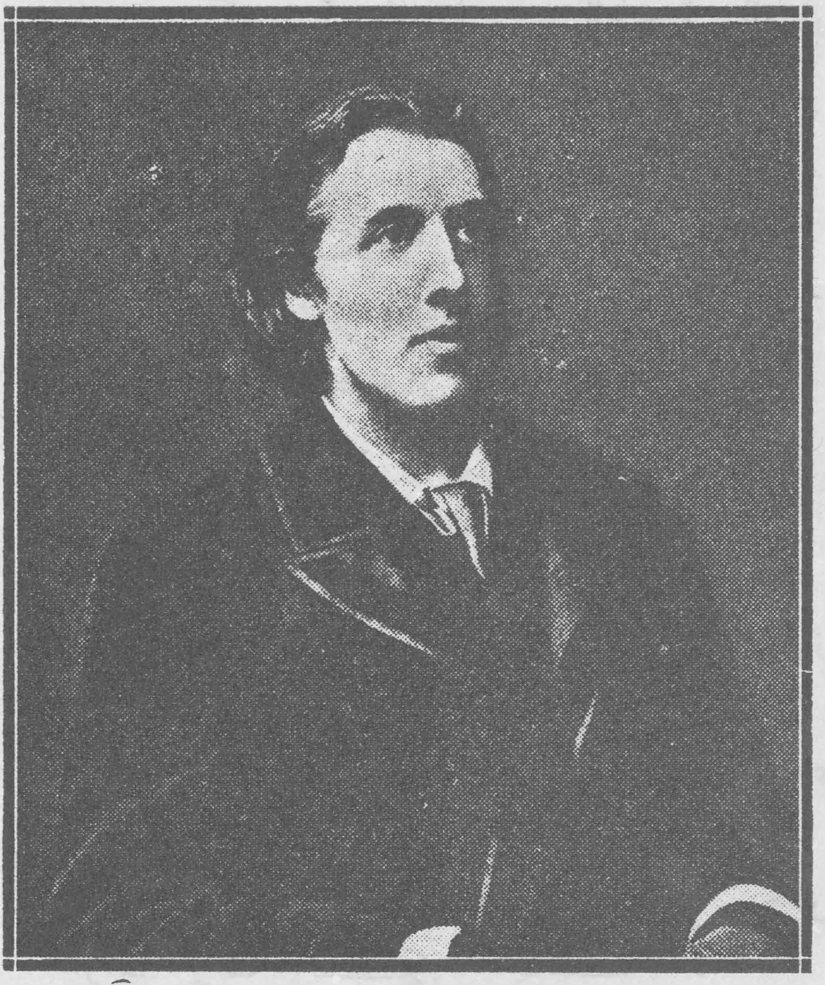
Oscar Wilde
One evening I was sitting at the Café de la Paix, watching the life of Paris, its splendor and its shabbiness, and marveling at those painful scenes that passed before my eyes—some showing poverty, others wonder. And as I sat there I heard a voice calling me. I turned, and there was Lord Murchison before me. We had not met since we were at college together, that is, for nearly ten years, so I was delighted to see him and we shook hands warmly. We had been close friends at Oxford, and I had loved him with a love that knew no bounds, for he was handsome, honorable, and high-spirited. I remember we used to say of him that he would have been a man of excellent character were it not for his truthfulness and candor—though in fact it was for his candor that we admired him. I found him much changed: he seemed anxious and agitated, as though in doubt over some matter. And I felt that this uncertainty could not be of recent date, for Murchison was of the Conservative party and a follower of the House of Lords. So I concluded that there was a woman...
I asked him whether he had married. He answered: "I do not understand women well enough!" I said: "My dear Gerald, women were made to be loved, not to be understood!"
He answered: "I cannot love where I cannot trust!" I said: "I believe there is a secret in your life, Gerald—will you not tell it to me?"
He answered: "Let us first go for a drive in a carriage; it is too crowded here. No, I do not want a yellow carriage... any other color; there is a dark green carriage—we shall take that one."
A few minutes later we were heading toward the Madeleine, and I asked him: "Where are we going?" He answered: "Oh, anywhere you like—to the restaurant in the Bois. We shall dine there and you will tell me your news."
I answered: "I would like to hear from you first. Let me in on your secret." So he took from his pocket a silver-mounted case and handed it to me. I opened it, and inside was a photograph of a woman, tall and slender, with an enigmatic expression and eyes of mysterious gaze; she had let her hair fall over her shoulders and was wrapped in furs.
My companion said: "What do you think of this
face? Do you believe its owner to be truthful?" I studied the picture carefully, and it seemed to me that the owner of that face harbored obscure secrets, though I could not judge whether her mystery was wicked or good. Her beauty was molded out of many mysteries—a beauty that does not yield. And that faint smile hovering on the lips was far indeed from innocence and simplicity.
He cried out, his patience exhausted: "What do you say of her?" I answered him: "She is the Gioconda in somber colors; tell me everything about her." He answered: "Not now—after dinner." And he went on to talk of other matters.
After dinner the waiter brought us coffee and sweets. I reminded Gerald of his promise, and he rose and paced the room back and forth, then came back and threw himself into a chair and began to tell the following story. He said:
"One evening I was walking down Bond Street at five o'clock. The street was crowded with carriages, but the din had almost subsided a little when a small