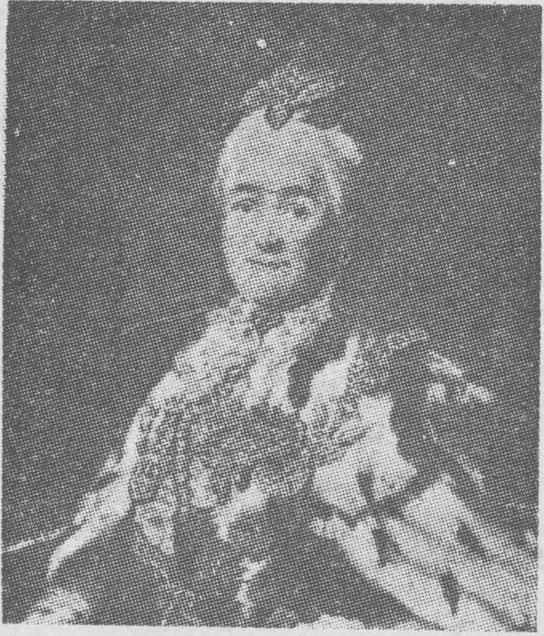
Catherine, Empress of Russia, one of the beauties of the century.
In English literature Lady Mary Montagu occupies a prominent place in which perhaps no one rivals her but Horace Walpole. After the two of them, letter-writing became a part of literature that cannot be passed over, lest a golden link be lost from its chain. It was our good fortune that Lady Mary traveled through most of the countries of Europe and left behind, in her abundant letters, a description of what she saw, in which she touched on the women of the various lands she visited.
In 1716 Lady Mary was in Vienna. It appears that the beauty of the Austrian women did not please her eye. She wrote:
"They build upon their heads fabrics a yard high, of three or four stories, and reinforce them with heavy ribbons of measureless length. They have taken this fashion from what milkmaids put on their heads to keep the pail from falling... Then they dress these fabrics with their hair, adding false hair to it, since they measure beauty by the quantity of hair upon their heads — enough to fill a whole bathtub... They are lavish in their use of powders, to hide the false hair from the true, and lavish in their use of jewels."
Her description of the women of Hanover is no less critical and scolding than the one before. She said:
"These women all have rosy cheeks — truly rosy — foreheads and bosoms the color of snow, crimson lips, and hair black as coal. They are, in this, perfect, and this perfection does not leave them until the hour of their death; but I could wish their beauty knew how to clothe itself in varied fashions instead of monotonous ones..."
In another letter she says that those women take care, when they sit, not to draw near the fireplaces, for fear the flame should melt what they have painted their faces and bodies with...
In 1718 she wrote from Paris, describing its women:
"In their clothes they are absurd to an unbelievable degree, and in the paints and powders they use, utterly unnatural. They cut their hair, shorten it, and curl it round their faces, then fill it with powders, so that it looks like white wool... They paint their cheeks down to the chin with a glaring red paint, till they seem to have no connection with human faces... I fancied they had borrowed their notions of beautification and dress from a fair-haired she-goat..."
Nor is Lady Mary the only one from whom we draw our first information about the women of the age and their beauties. There is William Alexander, who wrote:
"In the early eighteenth century women believed that God had created their waists far wider than they ought to be. So you would see them using the harshest of stays, tightening them as hard as they could, for fear their waists should look wide and they be charged with ugliness. But half a century later women began to feel that, besides the pain there is in the use of stays, they led to the opposite of what was intended, and doctors and philosophers began to attack their use. The women discovered that their mothers had been mistaken in their belief, and that God had created waists narrower than they ought to be... So they all set about remedying this deficiency,
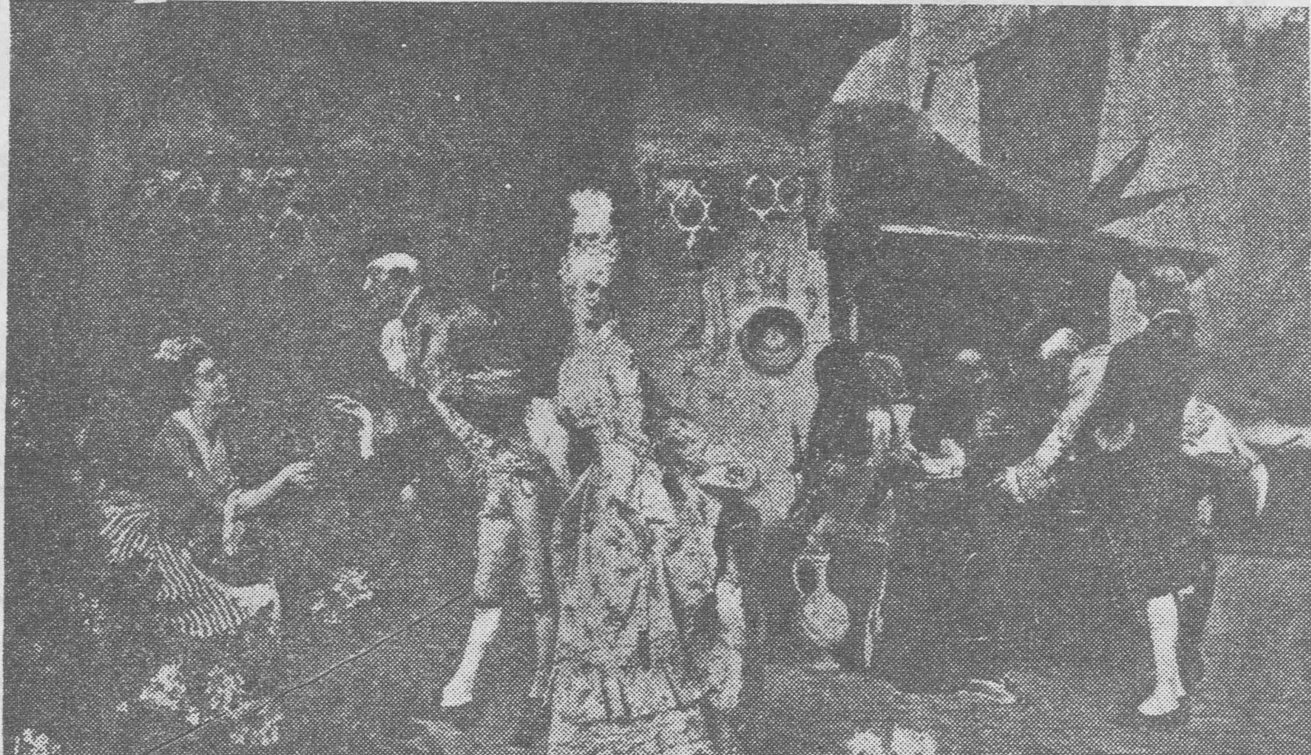
In this painting by Watteau you see the elegance which the aristocratic ladies of the eighteenth century displayed.