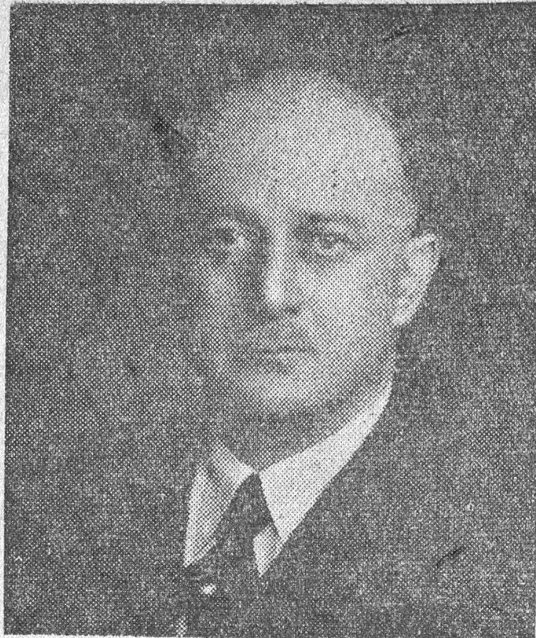
This reportage was not taken through the keyhole... but from a soft armchair set in the corner of a hall that would almost be elegant, if only there were a woman's hand at the Serail to look after the furnishings and things...
The physician Emir and man-of-letters Minister, Raif Abi al-Lama', welcomes "The Woman's Voice" in his polished, gentle way and orders coffee. The correspondent begs off, saying, "I am one of those who like to drink coffee in the houses of friends, not in government offices." Then she attacks:
— I want an interview "for the magazine of the women of Lebanon."
— On my eyes! Where will you begin?
— There are several matters, among them the future of the men and women teachers — I mean the law on private-school teachers; their employers will raise no salary and guarantee no teacher's future until you come to their aid financially. How will you solve this problem?
The Emir wrote the question on a piece of paper and said:
— And the other matters?
— The welfare of the Lebanese child in the remote villages.
— That is a problem it is high time we attended to. And what else?
— These heavy curricula: first and last, last and first. The serpents' heads — when will you rid our darlings of them?
And the Emir nods his head from top to bottom with the motion of one who agrees and concurs, and begins his talk on the teachers' question. Suddenly the usher enters and hands him a card; he orders the visitor shown in, and looks at the correspondent and at a seat in the corner:
— If you please: five minutes. Amuse yourself with this magazine.
There were greetings, and there was talk, and there was reproach lined with begging.
— Come now, Mir! Since you became a Minister we have troubled you with nothing but this single request: to appoint so-and-so a teacher in such-and-such a village — and he has been waiting for a year.
— But your friend, my dear sir, knows no foreign language, and the school of your "such-and-such" village has one teacher, and the program requires Arabic and a second language.
— Our friend is not going to teach medicine or philosophy. I shall send him to you; propose to him any essay you like — no one is "smarter" than he at writing essays.
— But, my brother, the art of teaching is one thing, and penning articles in the newspapers is quite another.
But the visitor does not weary and does not tire, and does not see the Emir drawing his handkerchief from his pocket to wipe his brow... until the usher comes in with a "new" card in his hand, and in the crack of the door a new visitor, who enters and sits in the place of the retreating one.
— You have forgotten us, Doctor. We did not ask you for the moon — a simple post as assistant teacher. We did not ask you to appoint twenty professors, come now!
And the Emir draws from a drawer a large bundle, its papers pressed between two covers of cardboard, takes from it a petition, and reads:
To the respected Minister
In these difficult days we take refuge in you...
Then he hands the petition to the visitor — who fancies it holds deliverance — and says:
— Here you are, sir: two mistakes in two lines. How do you expect me to appoint a teacher who writes "hadra" with the long ta?
— Make it hard and it will be hard; make it easy and it will be easy. Is he the only one who writes "hadra" with the long ta? There are a hundred teachers among us who write every long ta as a short ta.
—