He is supporter number 1 — he speaks of woman, of her role in society, and of that society's loss on the day it casts her into the corner, with the warmth of a believer and the eagerness of a patriot who wants Lebanon's happiness today, not tomorrow. He says:
I do not look upon the question of woman as a question concerning woman alone. It is man's question at the same time — that is, if we wish to look at this important matter through the spectacles of human progress and civilized advancement. I believe that whoever looks at the development of civilization in the history of mankind with detachment and a sound scientific spirit will find that the ages of renaissance and progress among the nations appeared in those eras when cooperation between woman and man was close. And no sooner did circumstances, or man's selfishness, decree that woman shrink back from work in public affairs than the ages of civilization's decline began and the march of progress in that nation came to a halt — because the wise Creator,
when He created woman a human being, did not create her for the operation of procreation alone, as some believe, nor for the raising of her own children only. No — woman was not created, with God having set in her soul those tender, lofty sentiments, to be selfish and care for none but her own child, but to balance what is in man of a strength that may reach cruelty and a might that may reach roughness, so that the qualities that distinguish her interact with the merits that are in man, and there emerges the ideal society that achieves happiness and rescues peace.
I believe that God did not ordain perfection in man nor in woman, so that each of them should feel the necessity of vital and social interaction with the other. Otherwise society loses every possibility of drawing near to perfection. Woman cannot claim that she alone is capable of reforming society, nor can man. And the facts of history are the truest proof of this.
Question: Do you think the Lebanese women's circles demanding political rights are proceeding in a way that will bring them to a near result — what are your criticisms of the method of demand?
Answer — For all my complete delight in the woman's renaissance, I hold one thing against it, which I observe in its associations and circles: its shrinking in upon itself, and the selfishness that springs from that. It
demands woman's rights without merging them into the rights of society, and therefore it works alone in its demands and contents itself with the courtesies of a few men. It is as though, in its demand, it wished to work for a women's society other than the society of men. And that is the very sin into which men fell when they judged that woman should be tucked away in her house; perhaps some of the apprehension that appears in certain men has its origin in the sense of this tendency. This is borne out by what is recorded in the history of Greece: that woman lost her right to vote in the time of Pericles, when all the women stood together over the naming of Athens, and the men could not meet them with a like solidarity, because of woman's strong influence upon man's soul — so Athens was named Athens as the result of that vote. Whereupon Pericles issued an order forbidding woman to vote... I return to where I began: that we should look upon woman's question as a social question aimed at man and woman together, in a society where true cooperation is realized. This question will be solved only in the light of the interest of society as a whole — not for the interest of woman alone, nor for the interest of man alone. That is why I have several times already presented a proposal to the cultural and social circles on the necessity of holding a scientific
congress to study woman's question in the light of the social situation in all the Arab countries generally and in Lebanon particularly. For in my view it is an important question that must not be left to improvisation.
Question: Some say the right to vote and to stand for election should be given to the cultured woman only. You know that the men who vote are not all cultured — how do you judge this injustice?
Answer: I explain this by what I said in an article I published on woman, the gist of which is that I see this view as an evasion by man to delay the question, when he says: this right for man is an acquired right, and the law was issued thus!! And since when have laws had the right to dictate to social developments? I believe that laws adapt themselves to society's need and its developments, and I cannot understand how injustice becomes an acquired right — and here one may well ask: why were legislative assemblies created, if not to amend laws? This problem will not be solved in a truly human way except by equality. The ignorant man was not deprived of the vote when this right was given to all men. Therefore women must not be divided into classes when this right is given to them. And if men fear that woman will leap at public posts, and one cannot keep away from a post the woman who is not fit for it — just as confessional
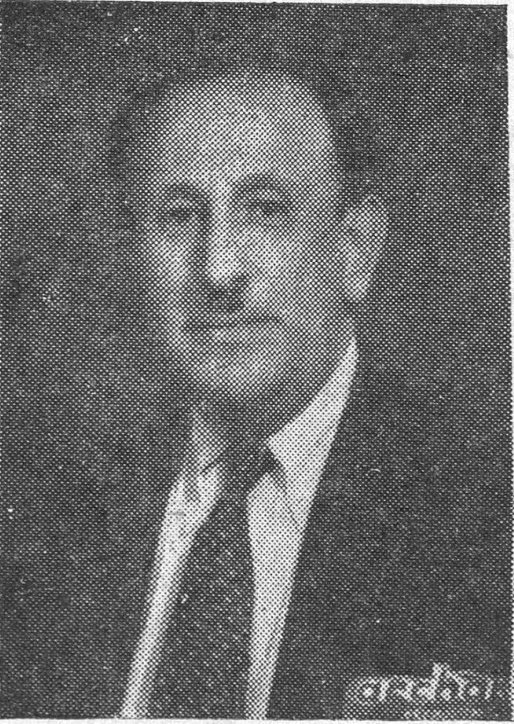
Mr. Wasif al-Baroudi