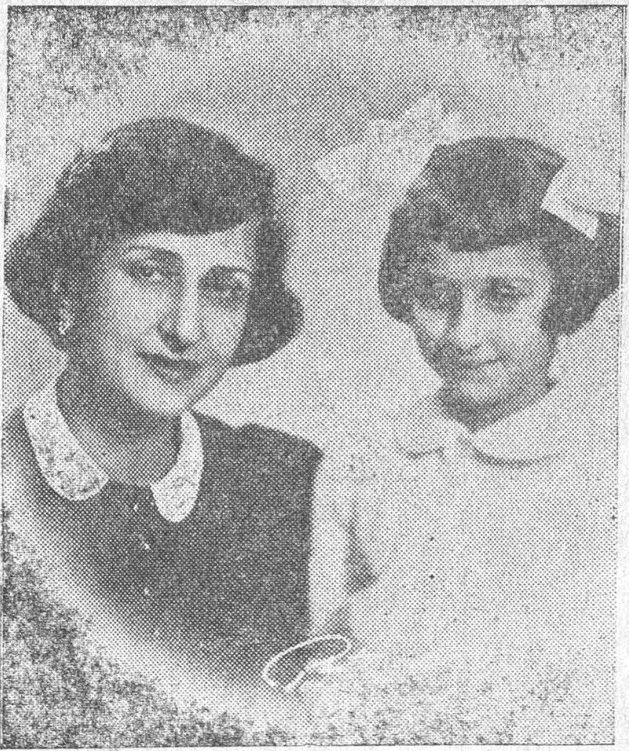
Mrs. Naziha Hasib al-Solh and her little daughter
the sixth.
She says:
Rights are taken, not given — and woman, when she asks for the right to vote, must be worthy of it.
Woman — in principle, the woman who has all the qualifications men have — has the right to vote; yet this principle cannot be applied in Lebanon, for the following reasons:
1 — Because woman's culture and her degree of refinement have not risen high enough.
2 — Because woman is still subordinate to her husband in everything... and so on voting day she will be a tool in his hand.
3 — Because the free exercise of the right to vote is not possible; man himself is not free with absolute freedom, and the causes that limit this freedom are: sectarianism... personal interests... and the deep roots of the party spirit and the clan spirit...
4 — Because woman, if she is to exercise her political right without falling short in her duties at home, cannot count on kindergartens to which she might entrust her children, Lebanon being bare of such institutions.
Woman will vote and be voted for when the obstacles mentioned above disappear — and in my opinion her deprivation of the vote and of the right to sit in the Chamber does her no harm, so long as she carries out a mission more sacred still: preparing the children — in the schools or in the homes — to be good Lebanese citizens.
Our delegate put these two questions to some students of the baccalaureate class at the French College:
1 — I heard a student of your class say, apropos of the talk about the committee for woman's rights, that telegrams do not lead to rights. What, in your opinion, are the ways of getting there?
2 — When the time comes for you to vote and be voted for, what will your program be? And if you are only a voter, what will you require of your candidate?
A — Experience in our Arab East has taught us that talk, however fine, is the weapon of the weak, and telegrams are only a kind of this talk, which leads to no satisfying results. Since woman is not so weak as to resort to this path, I propose that she turn to practical means: let some of our ladies meet a select group of deputies of the present Chamber — for all talk outside the Chamber is counted as wasted — and propose to them that they remind the Prime Minister of a promise he made at the meeting of the Arab Women's Congress, namely, to give the Lebanese woman her rights undiminished after the first Arab country to do so. We ought to have been the first, but the matter is settled, and Syria was the one that began. I believe that amending the electoral law is not difficult, since six months have
passed upon it, and that is the term fixed for any amendment; and I believe that the weapon of the wives will make the deputies champions of our cause, and the Lebanese Arab woman a grateful supporter of theirs.
I believe that when woman obtains her rights she will enjoy them all, and in the fullest way; and since elections are a national duty, there must be deep thought before practicing it and stretching out the hand with the ballot paper toward the appointed box.
As for my program, it is nearly one and the same whether I were a candidate or a voter:
1 — That the candidate be a man of culture and of understanding of the issues, with a measure of intelligence; and that he have a personality that imposes itself and
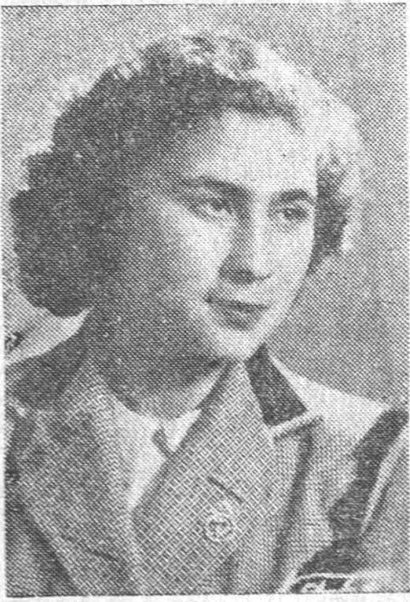
Miss Samiha al-Shaar
is not led about according to the whims of certain people.
2 — That he fix meetings bringing together his electors, at which he explains to them the situations in local politics and world politics that perplex them.
3 — That he be the guide of the young: mentally, so that they follow him and he stands as a model for them; and physically, by opening athletic clubs and model schools.
5 — That he be modest, open-hearted toward every complaint, obliging.
6 — Last but not least, that he not use his parliamentary influence for personal ends, and that he have, beside his seat in the Chamber, another