he was not killed or punished afterward. He gave that picture of his the name "She Who Says: Yes — to Everyone"...!
...And among the duchess's precious effects there was found a genuine treasure which she had surrounded with every care and attention: the twin rarities, Goya's two canvases — the naked, and the clothed as if naked...!
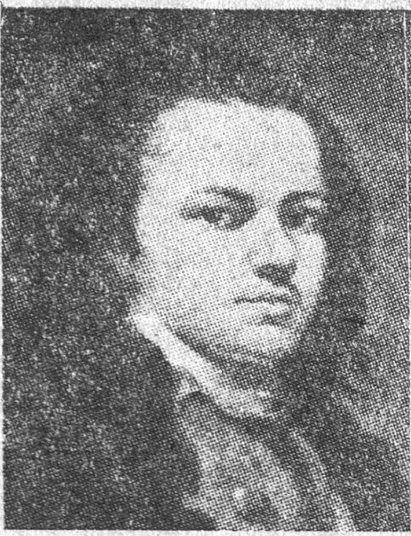
The artist, by his own brush. (Goya)
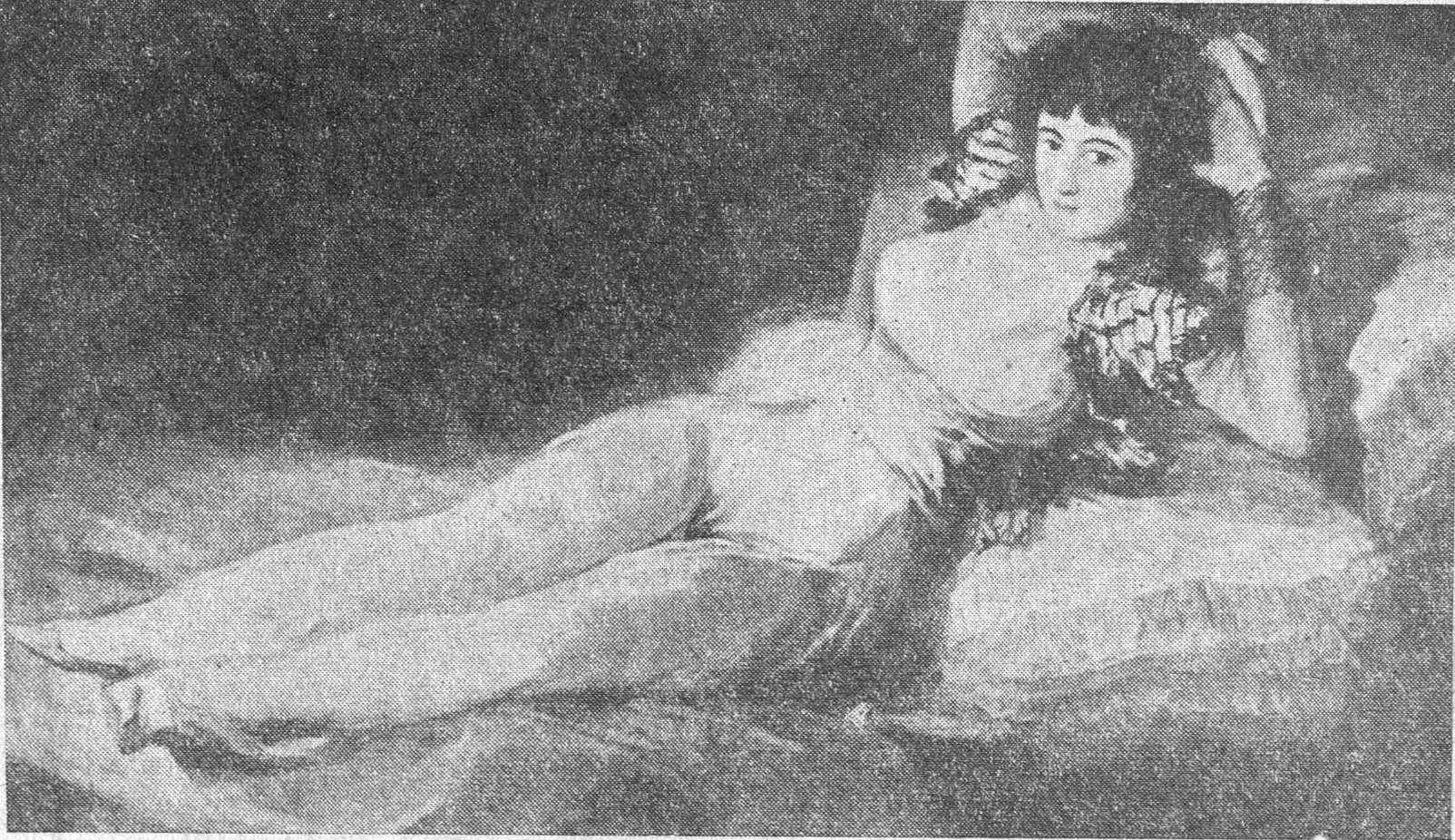
The Maja clothed — or as if clothed... The artist painted it to escape the wrath of the duke, the model's husband. (Goya)
Once only did fortune smile materially on the outcast artist Paul Gauguin: on his arrival in France in 1893, returning from Tahiti. He learned that an uncle of his had died (at the right moment, as Gauguin said!) and had left him thirteen thousand francs. Gauguin sent part of the money to his wife and children in Denmark, and set up a studio for himself in Paris, decorating its walls with implements of hunting and combat.
And in the studio he installed a Javanese girl, named Anna, with bronze skin, whom he had met in Montmartre. Gauguin painted her as a queen of the South Seas, mounted on a blue throne, while his little monkey leapt from place to place about the room, on whose
door he had carved, in the language of Tahiti: "Here is love...!"
After a time Gauguin carried Anna and the monkey off to the province of Brittany. There a brawl broke out in which the artist tangled with some sailors, and in it he was wounded. Gauguin was still on his sickbed when Anna fled from him and made for Paris, where she plundered everything of value in Gauguin's studio, and vanished...!
And so Gauguin's accustomed poverty came back to him. He traveled afterward to Tahiti, where he died eight years later, alone, hurried to his end by disease.
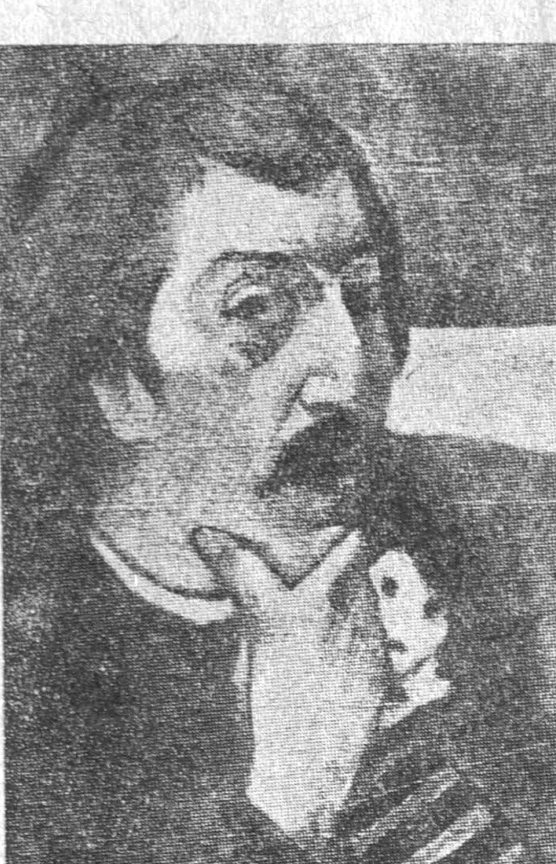
The artist, by his own brush. (Gauguin)