hopes are scattered as ashes.
He saw diseases ravage him, his children, and his cattle; he suffered from them yet could not ward them off, and stood with folded hands before their blows.
He saw all this and much else besides, concerning the sky, the clouds, the stars, the rivers, the seas, the trees, birth, and the sexual passion; but he grasped the essence of nothing that he saw, and so he remained ignorant.
And man's ignorance was the first station through which passed the caravan making its way toward religion and then art, toward faith and then beauty.
And ignorance begot... curiosity:
During that period of remotest antiquity man was, as we have said, a child in his awareness and understanding. Now we see that the child stands dazed before the phenomena of nature and the hidden things of the universe, yet we see in him a love of knowledge and a desire for mastery over what still lies in the realm of the unseen. He looks at the candle burning, and the sight of it delights him, but he understands nothing of it: he does not know the secret of the radiant light, nor is his mind strong enough to fathom that red flame issuing from it. But he is not content with looking; he must know what he does not know, and so he touches the flame — for touch is the only link between him and the mystery before him: neither smell avails now, nor sight, nor hearing, nor taste. He touches the flame, burns his fingers, and cries out for help — all for the sake of one thing he considers essential: the love of knowledge.
Such was the state of ancient man: his glaring ignorance of everything in existence begot in his soul the desire for knowledge and the love of inquiry, which was the second stage on the road to the forging of myths. And this
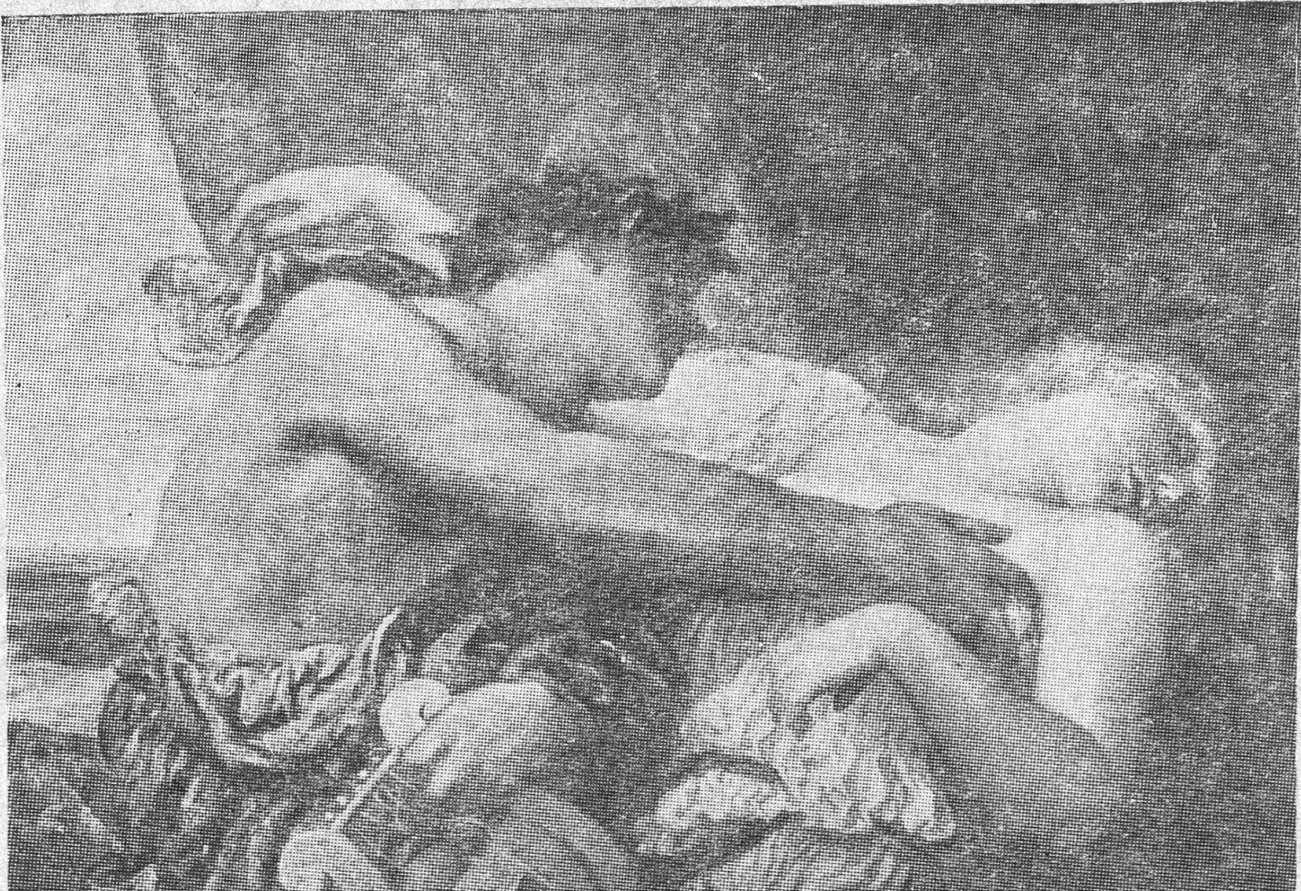
And among them is the myth of Orpheus and Eurydice... He loved her, and followed her to the abode of death. With his poetry and his music he moved the lord of perdition, who returned his beloved to him...
curiosity carried man from phase to phase, and made him interpret things as he wished and as he could, without any counselor to set straight the steps of his thinking, or any restrainer to keep him from error, or any guardian to guide him to the truth.
... and fear:
Man's ignorance led him to curiosity, and his want of knowledge begot in him the desire for knowledge. But these two factors did not stop there; they begot new tendencies in our first ancestors. Among these things was fear.
Today we see all that ancient man saw, but our understanding of the reality of what we see lets us live in security, fearing nothing from it. Ancient man, however, was terrified by everything he saw, because he did not know its reality. We see the sun, and its affair does not defeat us; we know how to guard against its violence and to protect the crops from it. And the sea — we build ships that mock it and sail with a might that scoffs at its might. And disease — we take such medicines as in many cases ward off its evil from us. But he feared the sun and was in constant terror lest it destroy his harvests; he feared
the sea and never felt safe from its evil; he feared disease and did not know at what time or in what form it would assail and strike him down. He saw much and feared much. Therefore he stood before the phenomena of nature and the foundations of life in fear and dread, and looked at the sun, the sea, and disease — at everything he did not understand — with a gaze of reverence born of trembling, littleness, and fright.
And from the fear of death arose belief in the spirit and in magic:
But our friend man feared one thing more than all we have mentioned, a thing we still fear and tremble at whenever it is named, despite all that Heaven has done to make us understand it and be at peace with it — death. When his wife or his children passed away, he would ask: Where has she gone? Where does the soul go after death, and where does dying lead its poor victim? Nothing works upon the mind like death, and there is no secret man tries to fathom like the secret of death — no wonder, then, that we read that the Anglo-Saxon tribes embraced Christianity at the dawn of English history when it became clear to them that it taught man about his condition