Woman in Dakar

Dakar is the capital of Senegal, which most people suppose to be unbearably hot; but I say that its summer is like the summer of Beirut, if not gentler. As for the weather, it usually turns cool from December until late April, and the heat waves begin in May; then, when June comes in, the sky begins to pour out its abundant rains, reviving the earth — a signal to the peasant to set about plowing the land and sowing the peanuts that are the great crop of this country, by which I mean Senegal. For here the weather is the opposite of our country's: the rains fall in the summer season instead of the winter. As for vegetables such as squash, tomatoes, and the like, they never cease at all.
The streets are wide and clean, and electricity is found everywhere. Most of the building in this city belongs to the sons of the colony, and the capital has come forth in its splendid new dress, proud of the efforts of the sons of the Lebanese colony. Whoever knew Dakar twenty-five years ago, in the days when it was barren ground, and comes to it today, is dazzled at this unceasing construction and this beauty in which the city is clothed in all its quarters. Life pulses in it in the full sense of the word, and the reins of commercial affairs are almost entirely in the hands of the sons of the Arab colony.
*
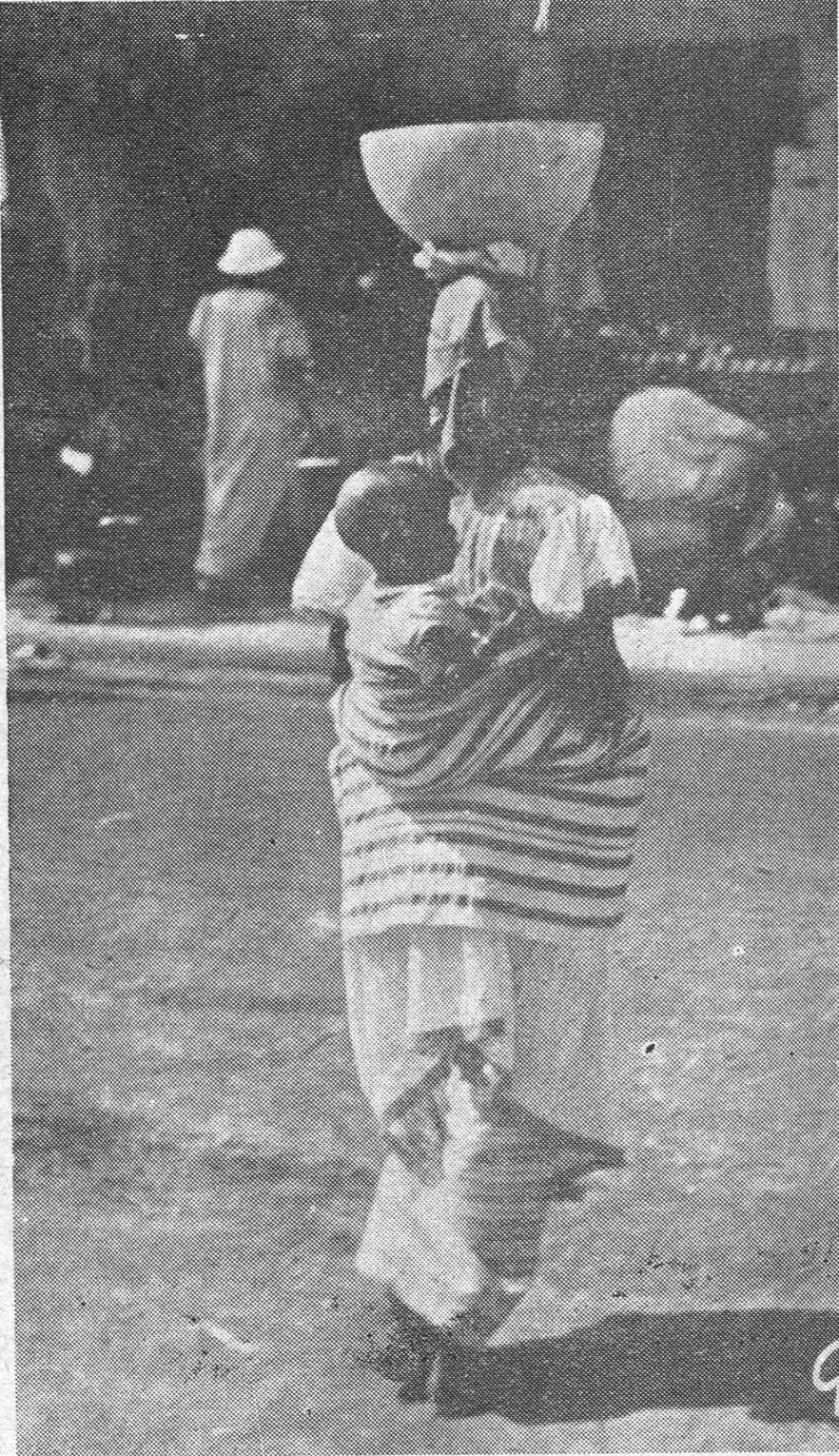
The life of the natives: man and woman work alike, with no difference between them. The native black woman is strong of build, firm of muscle, erect of stature, laughing of mouth, smiling at life. On the whole the native woman is athletic from her practice of strenuous labors: she pounds rice and "dakab" in the mortar, for instance, with a pestle nearly a meter long, and she goes about the pounding in an artful way, as though she were playing upon strings. Seldom does the eye fall on a frail, sickly woman; most of them are strong. And how lovely is the sight of the women on their way to the "marché," the vegetable market: each one sets her child on her back, tying him with a piece of cloth about her waist, and they carry the basin on their heads and walk unhurried, the basin on their heads untouched by any hand, as though it were a beautiful wreath of flowers.
As for the native people, they are stripped of selfishness; they love one another and help one another, and they still live by the ways of nature. You will find them, for instance, a group of ten persons with a bowl of rice before them; someone passes nearby, and at once they call to him and seat him to eat with them, and if each of them gets only a morsel or two it does not trouble them, and they say, "Praise be to God." Their love for one another is strong, and they bear no hatred toward other peoples.
Scenes of women's life in Dakar...