This is a word I address to the Lebanese man, hoping that, should he read it, he will open his mind and his heart to understand woman's just demand, look kindly upon it, and support it.
The Lebanese woman is Eastern; she keeps the traditions, and by virtue of her home upbringing she respects the man and reveres him, regarding him as father and husband, head of the house and source of blessing, and she detests the rebellious mannish woman. But this has bred no submissiveness in her: when she demands her rights as a citizen she does not take the posture of a beggar, for she is asking for a right that is naturally hers. It pains woman, sir, to be forced to demand of you a right of which God did not deprive her, a matter He did not entrust to you, nor did He authorize you to withhold it from her or bestow it upon her as alms. Rather, she believes that God lavished upon her the gift of tenderness and love and the spirit of sacrifice, alongside intelligence and a living conscience; and so she asks to cooperate with you in managing the affairs of Lebanon for the good of Lebanon. Woman feels for the worker and the farmer, cares for the rising generation and its upbringing, and concerns herself with the vagrant, the sick, the orphan, and the disabled. She spreads the spirit of peace and universal brotherhood — and how greatly we need peace and brotherhood.
When woman reads Article Seven of the conditions for electors in the Lebanese constitution — even after its amendment in the month of August 1950 — the article which stipulates that the right to vote in Lebanon is restricted to men, she sees in this a diminution of her right and an insult to her, and she rises up against this diminution. Having entered every
field of work side by side with man, she refuses to be deprived of exercising the right to vote and to stand for election, and refuses to be placed on the level of the feeble-minded, minors, and criminals, whom the constitution of Lebanon bars from the right to vote, as set forth in paragraphs three and five of Article Twenty-One of the Lebanese constitution. Would you place the Lebanese woman on the level of these, O Lebanese man? Woman — mother, educator, wife, sister, and daughter?
The sovereignty of the people means the organization of the powers in the interest of the people, so that no one of its members has any privilege over another. Is woman in Lebanon one
of the people, or is she not? Is it permissible that she be counted among its members only on the day she is required to pay taxes or is punished for breaking a law?
As for the proposal of the legislative committee — despite its acknowledgment of woman's right to equality — the proposal to grant her this right in stages, the Executive Committee of the Women's Organizations in Lebanon, which has the honor of speaking in the name of the Lebanese woman, has rejected it flatly, finding that it diminishes her right and places obstacles in her path.
I shall not take up the worn-out tune we have heard so often, that woman is for the home and the children, nor the heavy joking that some repeat, saying that the father will be forced into the kitchen if the mother enters the Chamber of Deputies. I shall not take this up, because the conscious, cultivated woman understands her duties better than the critics do, and because she holds motherhood and her duties to her husband sacred, and considers them the loftiest thing for which she was created.
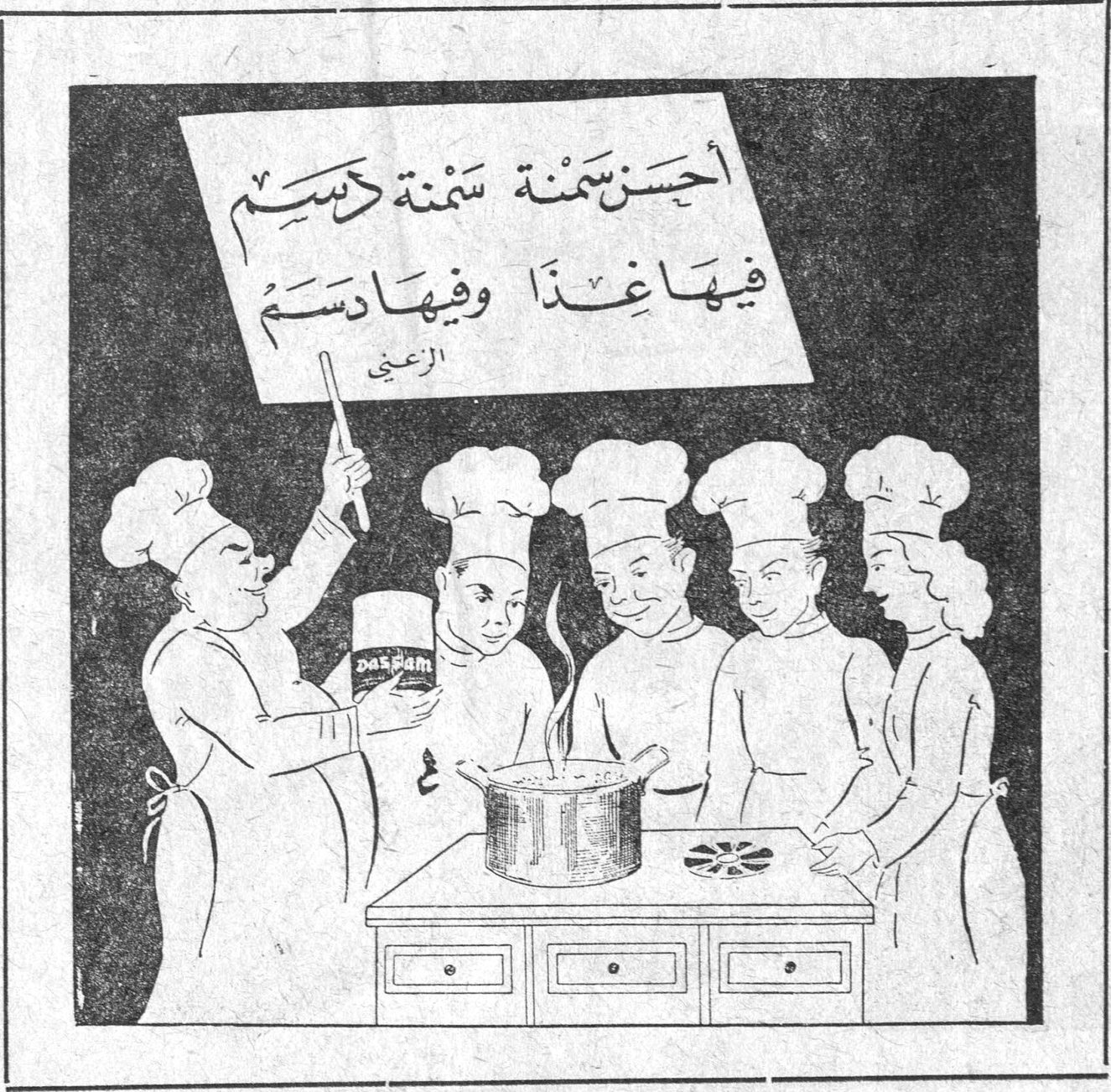
The best samn is Dassam —
nourishment in it, and richness in it.
Al-Za'ni