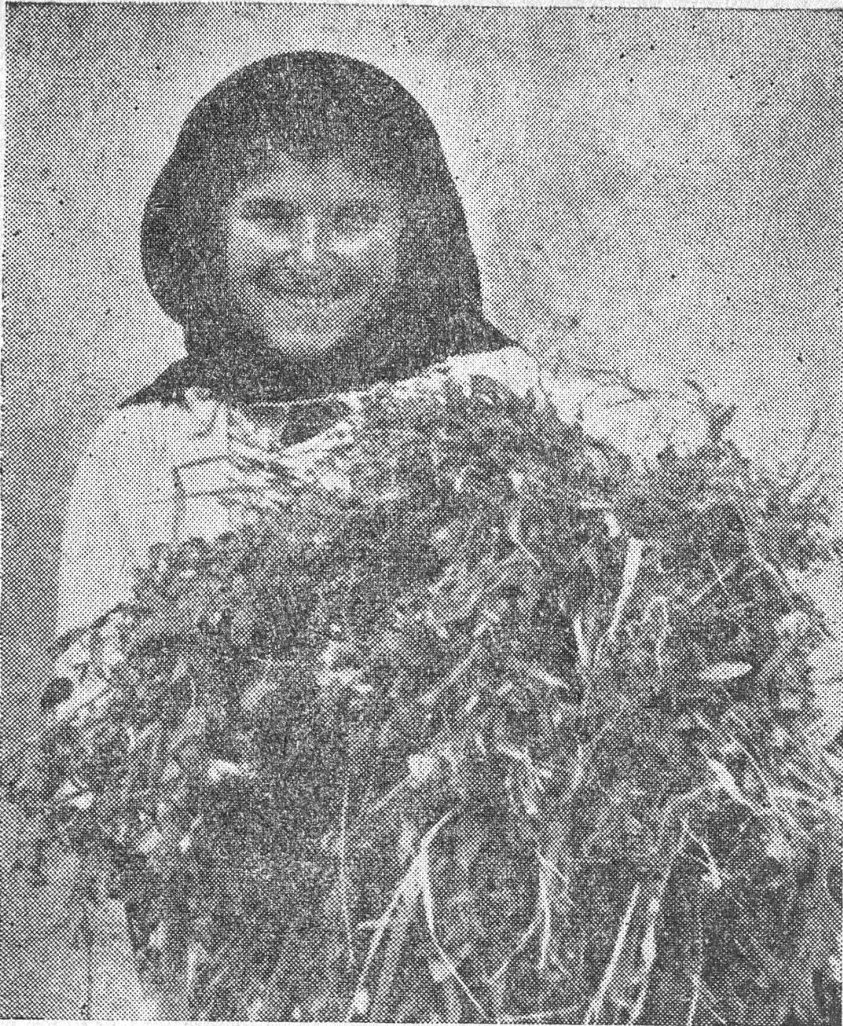
Maryam carries a bundle of grasses to feed the neighbors' cow.
How does the young girl live in our country today? On what basis does she build her personality and nourish it? What are her views on life? On learning? On marriage? On politics? On religion? Etc...
— 4 —
Maryam Abd al-Latif is not the only village girl who toils and labors all the days of the year in pursuit of her livelihood; there are hundreds like her scattered through the villages of Lebanon, plain and mountain alike. And although the village where Maryam lives lies scarcely more than fifty kilometers south of the city of Beirut, the girl who lives there is all but deprived of the most important means of comfort, while the girl of Beirut swims in a material and educational ease that is to be envied.
To one who looks at the village, it seems barren; its houses, built of mud and mud-brick, resemble dried-up ruins. If you wander through it, you find its paths narrow and twisting, muddy in winter and blown with dust in summer. Nor is it strange that green trees are almost nonexistent, for the village lacks water and suffers thirst six months of the year.
And the scanter the means of comfort in a village, the greater the hardships of its people; responsibilities pile upon the village woman, and she works to discharge them with nimbleness and energy. There is no doubt that the greater burden of running the affairs of the house falls upon her, since the husband's work is confined to the field, while her own function branches
out and varies, taking in the affairs of house, family, and field together.
Maryam has been accustomed since childhood to her village's ways of living. She knows that her father is a poor peasant who toils seven months of the year for a big farmer in the village, receiving a wage of six hundred Lebanese lira; and since this sum does not suffice to support his wife and five children, he works the remaining five months moving from field work to building, and then to the olive and dibs press.
No wonder Maryam spent her childhood roaming the lanes and fields of the village, for her family lives in a single room lacking the most important means of health and comfort — it even wants a kitchen, a bath,
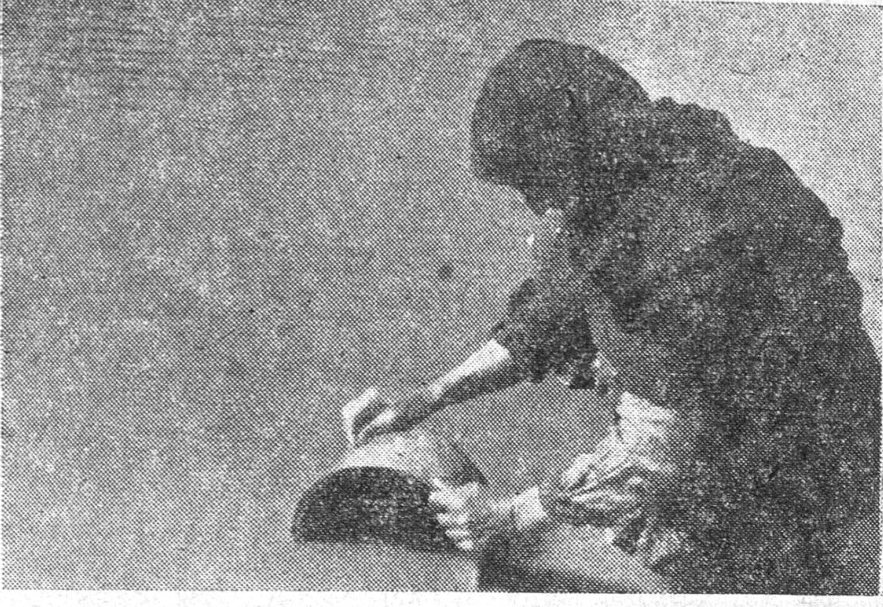
Umm Maryam carries the food vessels to the riverbank to clean them there.