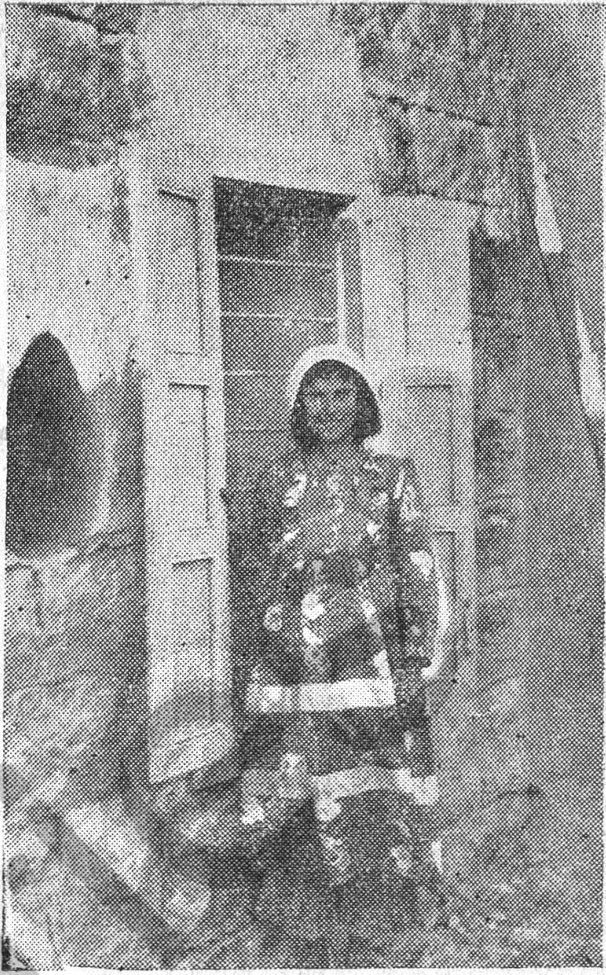
Maryam in her "formal" dress
and a privy. And since the village's government elementary school has been running in order only for the past two years, the street was Maryam's first "school"; and here she is, having reached seventeen years of age, completely illiterate, the time for schooling having passed her by because of her continual occupation in helping her mother with the work of house and field. She was ten years old when she began carrying her little jar to fill it at the spring; and with every year she advanced in age, the jar grew bigger, and today she carries it with lightness and grace, and makes for "the spring" morning and evening every day — and it lies some ten kilometers from the village.
The tasks Maryam performs vary with the seasons of the year and
the seasons of farming, but there are household duties she must discharge before setting about the work of the field. She rises at daybreak and says the morning prayer, then cleans the room and goes to the spring; after that she makes for the rough outskirts of the village and gathers firewood, returning home with a great bundle on her head. If her mother is away in the field, it is she who prepares food for her brothers and sisters — usually confined to one staple, "burghul": either she cooks it with lentils as "mujaddara," or she adds to it some kind of vegetable, according to what is plentiful. She is skilled at preparing the dough of "marquq" bread and baking it, and every week she helps her mother bake upwards of two hundred loaves on the saj.
And since water is not to be had in the houses of the village, every ten days Maryam makes for the bank of the Litani River to wash the family's clothes; it lies about two hours from the village on foot. She carries the clothes and the washing vessels on her head, pulling her little brothers and sisters along behind her. There, on the riverbank, she kindles a fire in a hearth with a tin full of water above it, and sits in the open before the washing-basin to clean the family's clothes. Afterwards she bathes with her brothers and sisters in the river, then returns to the village in the evening.
The toil of work grows lighter for Maryam in the winter season, and she keeps to the house. In spring she picks the za'tar plant to sell to the merchants of the city; and no sooner does harvest-time draw near than she takes her part in it, gleaning what remains of the
grain and wheat in the field; then she moves on to work picking the fruit of the fig and the olive for the owners of broad estates.
In the autumn season she makes for the orchards of the coast, which lie some twenty kilometers from the village, and there she works for a daily wage in the growing of vegetables and fruit. She gives her mother whatever wage she receives, except for 25 Lebanese lira, which she spends yearly on the purchase of her clothes. And though she owns only two dresses — the first of glossy silk, which she wears on wedding occasions, and the second of red cotton, figured with bunches of flowers — she is entirely content with them; and her wish is to visit the city one day to buy a necklace and gold earrings.
Maryam returns from her work
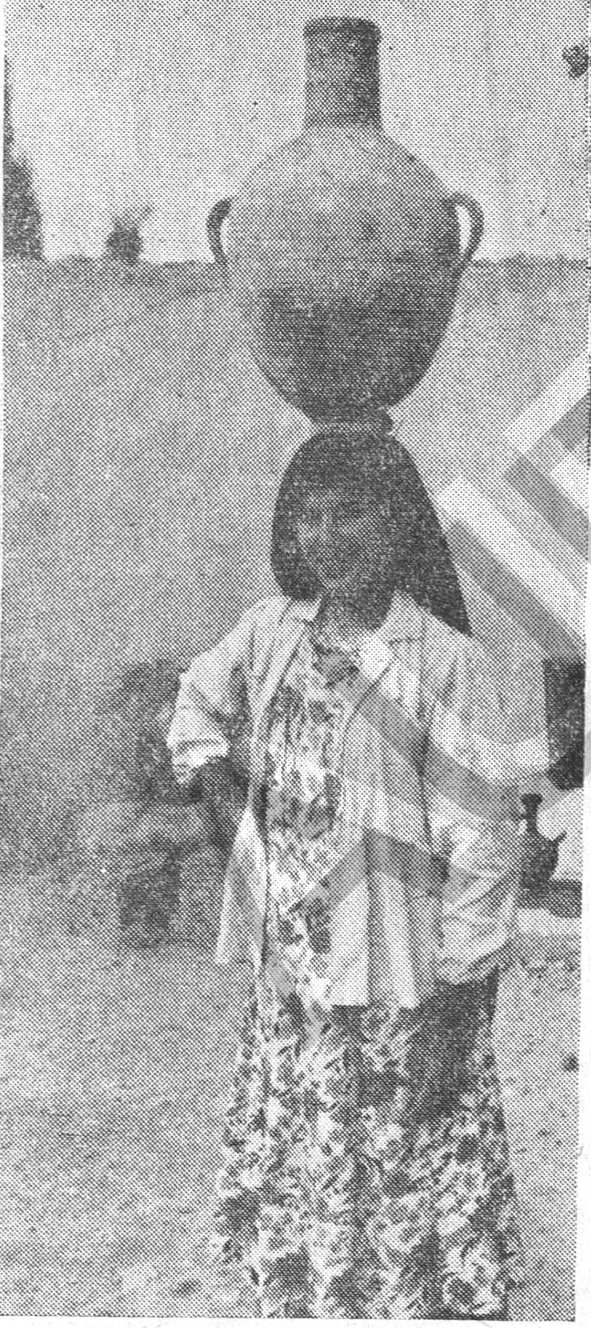
Among the arts Maryam has mastered: carrying the jar on her head in perfect balance!