Among the prominent problems that face a large class of parents, here as in the other countries of the world, is the problem of shy children. They meet with abundant difficulties in freeing their children from that shyness and bashfulness, and they fear these will end by affecting their natural growth as the young men and young women of the future. So you see them resorting to all manner of methods and devices to stop the galling shyness at its limit — and very often the methods they have turned to are mistaken, so that they harm their children where they intended benefit.
Upon children's doctors and psychologists, and upon the magazines that specialize in such studies, there stream numerous letters from anxious fathers and mothers; and in their scope they do not go beyond: "How, do you think, can we manage to bring our boy to mix with his companions? In his infancy his health was poor and he was highly sensitive, so we kept him at home most of the time. Now shyness has taken hold of him; he will not play with children his age, and gladness does not take possession of his heart unless he buries his nose in a book or one of us undertakes to amuse him." Or beyond: "Our daughter is sensitive to an unbearable degree; she imagines that her movements and her conduct are awkward and invite ridicule, and that people mock her the moment she turns her back to them. We undertook to enroll her in a
dancing class, hoping this would be a help toward giving her confidence in herself, but the result was the opposite of what we expected. We were compelled to take her out of the class. And every time we try to make her mingle with her companions, her sensitivity and her nervousness increase. What can we do to help her rid herself of all this?"
On this pattern run most of the questions and cases. As for the experts on the subject, their first and fundamental advice to parents who wish to do away with shyness in their children is this: that they try to divert the child's chief interest from his own self to another direction outside his own sphere. They hold that the
child's interest in certain hobbies, especially those connected with handwork, has a good effect on the child; and that any work in which imagination and the hands join together will lead in the end to restoring the child to his natural state.
Nor is it difficult for parents to hit upon a hobby that will occupy their children and distract them from themselves. The child needs a hobby from the time he begins his first primitive thinking. Only, the parents must choose for them such hobbies as they feel suit their natures and inclinations. In the kindergarten years it is well to train them in drawing and in picture-making with color and with modeling paste. If they master that to some degree, and it appears that their gift runs along that
direction, one can advance in the treatment and settle on other hobbies and occupations
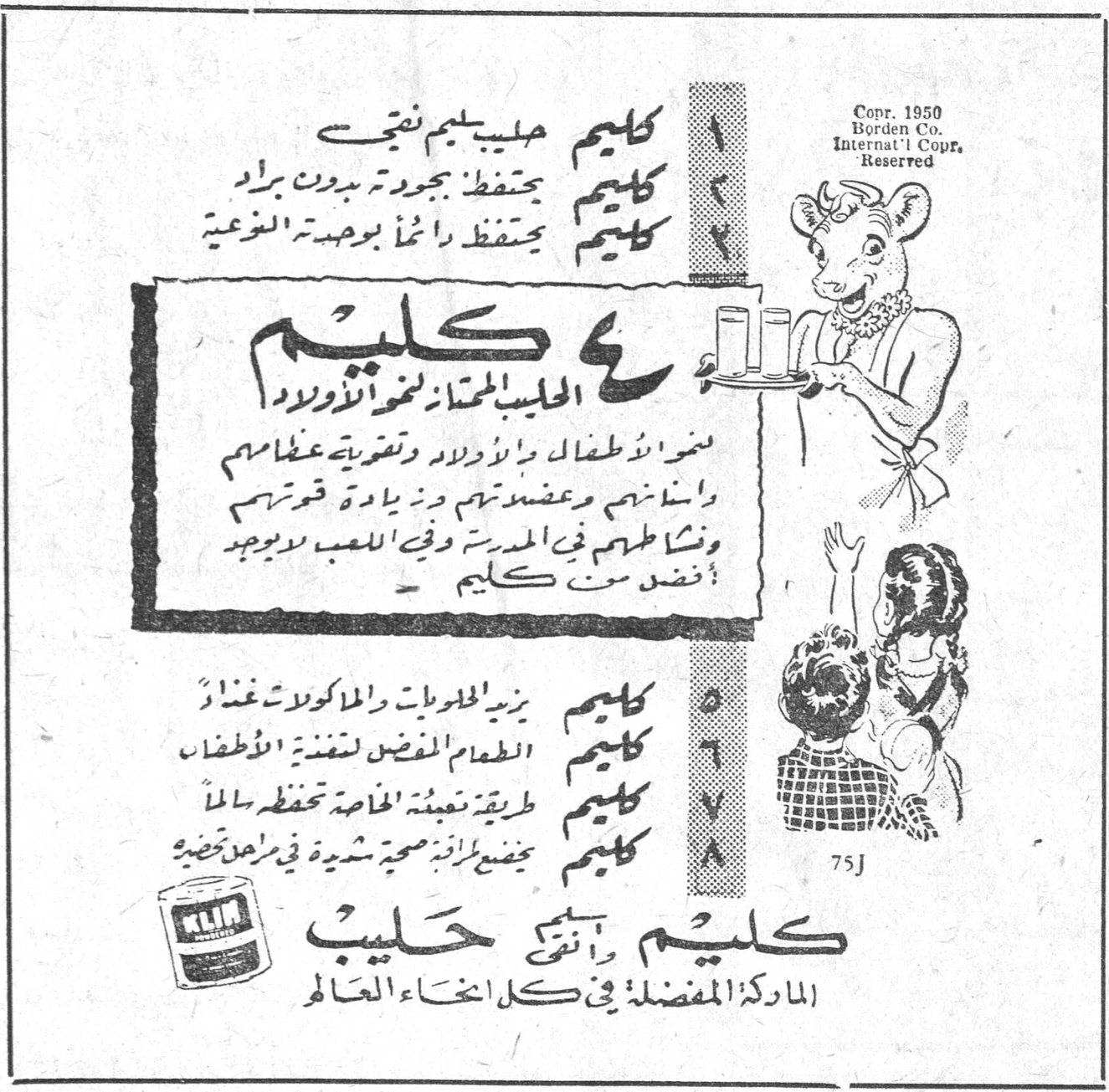
Klim
The superior milk for the nourishment of children
Klim is wholesome, pure milk
Klim keeps its quality without a refrigerator
Klim always retains its nutritive value
Your children grow, as infants and as youngsters, and their bones, teeth, and muscles are strengthened, and their strength and liveliness increase at school and at play — for there is nothing better than Klim
Klim makes sweets and dishes richer and more nourishing
Klim is the favorite food for the feeding of infants
Klim — its special method of packing keeps it sound
Klim keeps a wholesome, appetizing treasure in your pantry, madam
Klim — and you have milk
The favorite brand in every part of the world
Copr. 1950 Borden Co. Internat'l Copr. Reserved
75J