On the occasion of the anniversary of the birth of Henry Dunant, founder of the International Red Cross, the Lebanese Junior Red Cross distributed, on Thursday and Saturday, May 10 and 12, to all the orphanages of Beirut, of the various communities, 1,650 parcels containing assorted gifts sent by the American Junior Red Cross.
The ladies of the Lebanese Red Cross visited all these orphanages, accompanied by the pupils belonging to the Junior branch, who handed the gifts to each of the orphans in a brotherly spirit.
Also on this occasion, on the evening of Thursday, May 10, a charity "bridge tea" was held at the house of Dr. Joseph Hanina, its proceeds set aside for the works of the Junior Red Cross. The lady of the house kindly placed her spacious halls at the disposal of the Red Cross ladies, earning their thanks and appreciation.
On this occasion we received the following word from Mrs. Ellen
Rihan, secretary of the Lebanese Red Cross:
On the twenty-fourth of June, 1859, the Italian town of Castiglione witnessed a deadly massacre of war. The streets filled with the wounded, moaning and crying for help; the bodies of the slain piled up in the roads; blood mingled with dust; the cannon set about mowing men down, and the powder flew in the air.
Terrified children and wailing women. Terror gripping everyone, and the churches thronged with hundreds of refugees, jostling and racing to get inside, in flight from certain death.
This is war, and this is the battle of Solferino, witnessed by a young Swiss named Henry Dunant, whose business affairs had led him to that spot. His feelings were shaken, he suffered within, and his heart opened and overflowed with compassion and tenderness; and he raised his voice, crying: "Help the wounded. There is no difference between one wounded man and another. Nationalities and geographical barriers do not concern me. I see in the wounded nothing but men in pain." He said this with his heart breaking, though he stood on the victor's ground; for the banners of victory could
not lighten his suffering, and the music of triumph could not deafen his ears to the moaning of the wounded. He set to work in earnest: he helped the doctors, dressed the wounds, buried the dead, carried the crippled, and gave the thirsty to drink. He passed three days and three nights working without pause; and then, when he returned to Geneva, those scenes kept troubling his sleep, so he wrote a book, which he called "A Memory of Solferino," and sent it to the kings, statesmen, and rulers of Europe. It was written in the language of the heart, and so it moved hearts, calling upon them to work to lighten the woes of wars. It carried to the world a new idea — the idea of complete selflessness in the service of the wounded of wars. It planted in those who read it a feeling that rose above the differences of race, religion, and color; it came as a cry wrung out by the sight of the suffering, and it reached the ear of everyone who had tasted pain.
The writer then passes through Dunant's life before the occurrence of this event, which turned the course of his life upside down and led him to call for a general conference in Geneva — from which the Red Cross sprang — and which he opened with these historic words:
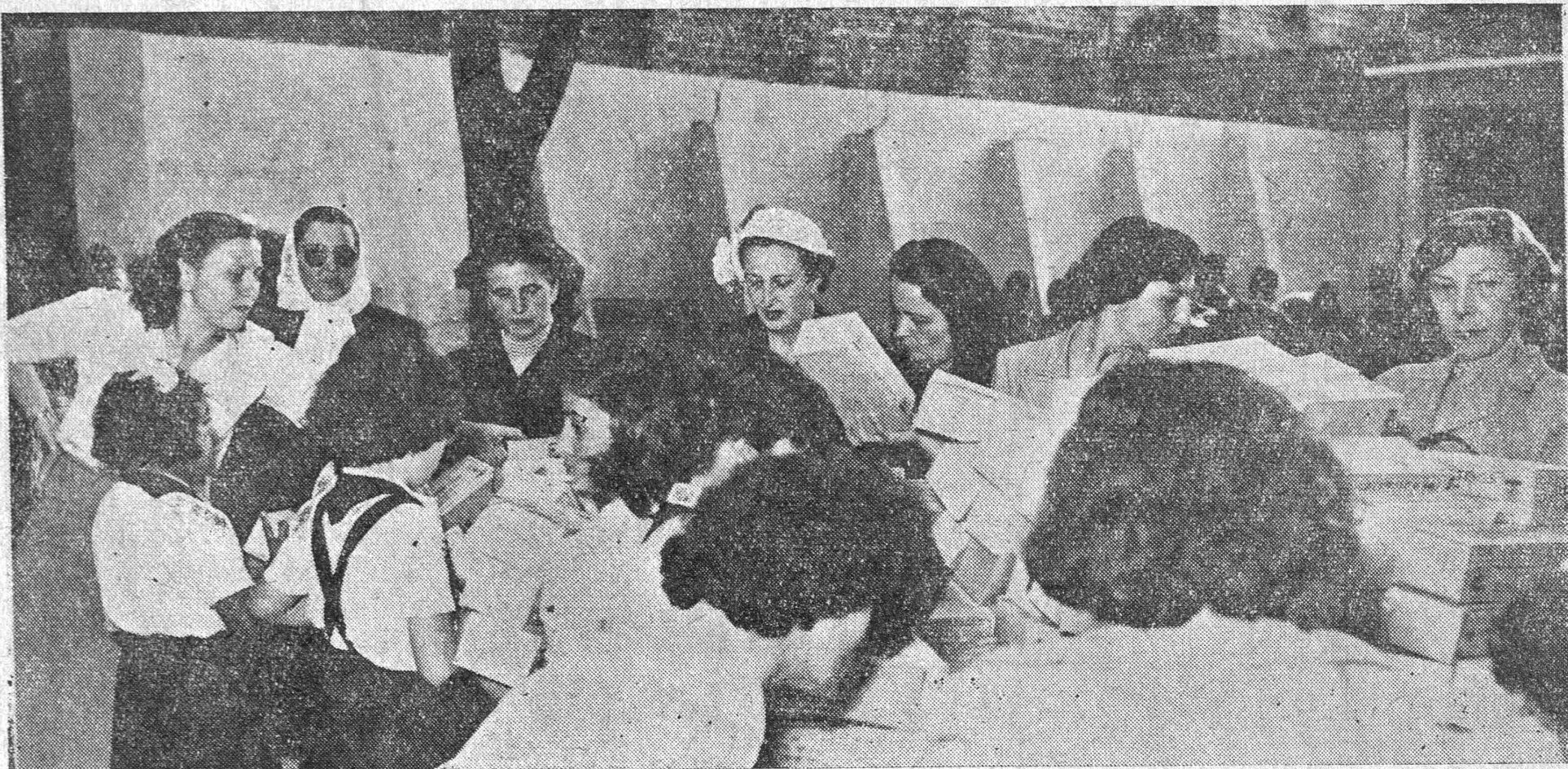
The ladies of the Lebanese Red Cross presenting the gifts to the juniors