The Conference of Civil Organizations in Lebanon, which comprises more than seventy non-governmental organizations and institutions, is still pursuing its efforts to acquaint these organizations with one another and to work at fostering the spirit of cooperation and concord among these various organizations.
To this end the Conference has held more than one meeting, bringing together the presidents, men and women alike, of the civil associations for discussion and deliberation on everything conducive to the good of these organizations.
Last month the Conference held a general meeting at the Druze Orphanage, attended by delegates of most of the associations belonging to the Conference. In it Dr. Jamil Anouti presented a detailed report on the Conference of Civil Organizations of the Near East, held in Istanbul last month; and the presidents, men and women, of the following organizations each presented a report on their organizations:
The National Relief Committee at the American University of Beirut. The Young Women's
Christian Association (YWCA). The Society for the Protection of Children. The Committee of the Druze Orphanage.
After study and discussion of these reports, those present made a tour of the rooms of the orphanage, admiring the order and arrangement and feeling at first hand the devotion and vigilance expended in the cause of this vital and useful project — which moved them to bestow every praise upon those who conduct this project and labor for its sake.
The League of Women's Neighborhood Committees
The League of Women's Charitable Neighborhood Committees was founded in Beirut in 1943 in the quarters of Dar al-Mreisseh and Minet el-Hosn, and in 1945 it branched into nine committees in all the quarters of the capital, each working independently under a single system embracing them all. The number of members of these committees reaches eighty, and of subscribers, two thousand. These committees are bound together by a higher council which unifies their aims, organizes their work, and forms of them a single bloc.
Its purpose is to raise the social and moral level of woman and to direct her aright, and to extend
help to those whom life has struck with its harshness and misery, so that they have fallen into the pits of ignorance, sickness, and want — to lift them out of the depths of wretchedness and make of them individuals who benefit the nation and are to it a store and a support.
Its aim is to open schools for vagrant children, and to establish a general workshop in which girls may learn all the kinds of handwork and sewing, so as to become able to earn their living at need.
The treasury of these committees is fed by monthly subscriptions from the middle and wealthy classes in all the quarters, by donations and zakat, and by the holding of parties. The following is a brief statement of the committees' works from March 1945 to January 1950:
In the quarters of Basta, Ras al-Nabaa, Dar al-Mreisseh, Minet el-Hosn, Burj Abi Haidar, Musaytbeh, Zaydaniyyeh, Sanayeh, Horsh, Tariq al-Jdideh, Zuqaq al-Blat, and Achrafieh, the committees distributed the following:
4,650 black smocks, the dress of the state schools; 700 white collars; 816 pairs of shoes; 2,000 copybooks; 700 pens; and schoolbooks for 650 girl pupils in various schools; 380 wool sweaters; 14,000 yards of
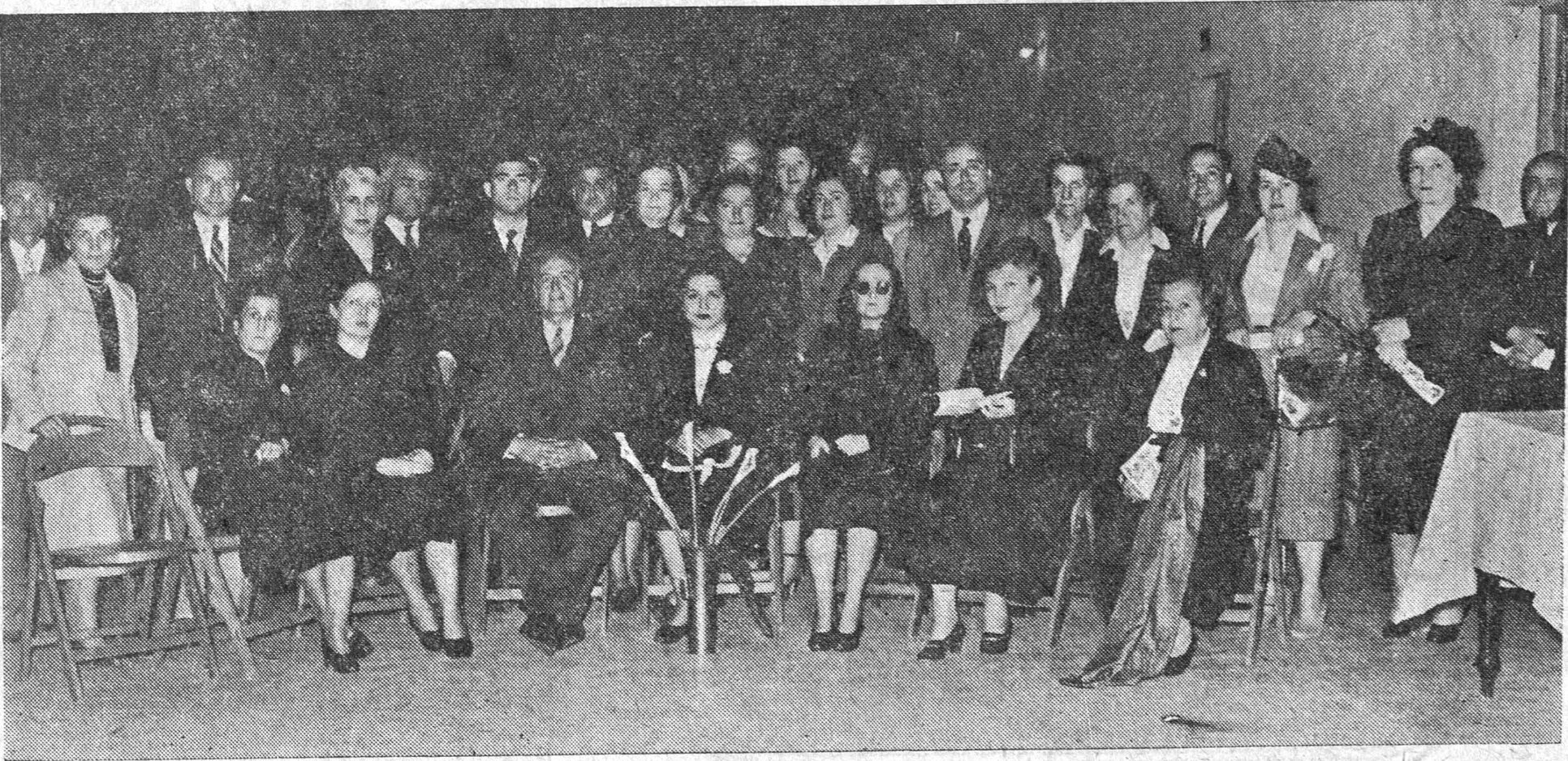
A general view of the Conference of Civil Organizations in Lebanon