The good shepherd knows his flock and his flock knows him; he loves his sheep and lays down his life for them, and they come to him, and near him they find the richest pasture.
The good shepherd leaves the ninety-nine ewes and goes searching for the one that has strayed from the straight path.
The good shepherd is he who taught that a single soul is worth a whole world, and that heaven rejoices more over the return of one sinner than over ninety-nine righteous!
In the light of these lofty teachings, by the inspiration of that merciful spirit, and moved by the example of the "Good Shepherd" himself, the mission of the "Good Shepherd Institution" went on taking shape across the years and shining out in the skies of unhappy humanity — as goodness, mercy, righteousness, and love toward those whom the vanity of life deceived and against whom man's sinful lust committed its crime, robbing them of the fairest virtue and the most sacred human dignity while they were still innocent minors. Life turned its back on them before they had tasted its sweetness or its bitterness, and society cast them out as it casts out an evildoer — even parents, brothers, and friends.
Then, in the depths of despair and humiliation, under the weight of a bitter existence, an insulted dignity, and a plundered right, and in an exile forced upon them by criminal lusts — behold, arms, nay hearts, open to their fullest, to flood them with an outpouring of tenderness and consolation, breathing into them the hope of rising again and of returning to the world of dignity and self-respect, and stirring in them the dormant, timid feeling, that it may awaken to the songs of life and the smiles of victory and salvation. They are the arms and hearts of the angels of mercy and the apostles of goodness and love, women who have vowed themselves to the service of the fallen — the innocent or the deceived — with all the zeal, the nobility of feeling, and the holy ardor they possess in pursuit of a straying soul, after the pattern of those teachings.
And their house, standing on the outskirts of the capital, on the height of Dekwaneh, amid luxuriant gardens, is but one landmark of that beneficent mission, a living, effective expression of fundamental social teachings.
It is an institution unique of its kind and its aim in our Eastern lands. And how greatly our society needed it — needed its reforming mission and its
fruitful services in the world of morals and virtues, for the peace of souls and the soundness of society. It opened its doors in 1935, its capital a strong faith in Divine Providence, and a humble house whose building went on rising, its range widening and its effort multiplying, in the measure that Providence granted success, the sisters' sacrifices flowed generously, and the hands of benefactors gave freely. Despite financial straits, despite the circumstances of the war, and despite the smallness of the "House's" revenues, it has been able to send forth five hundred girls who look out upon life and enter society with new faces, great souls, and honest conduct.
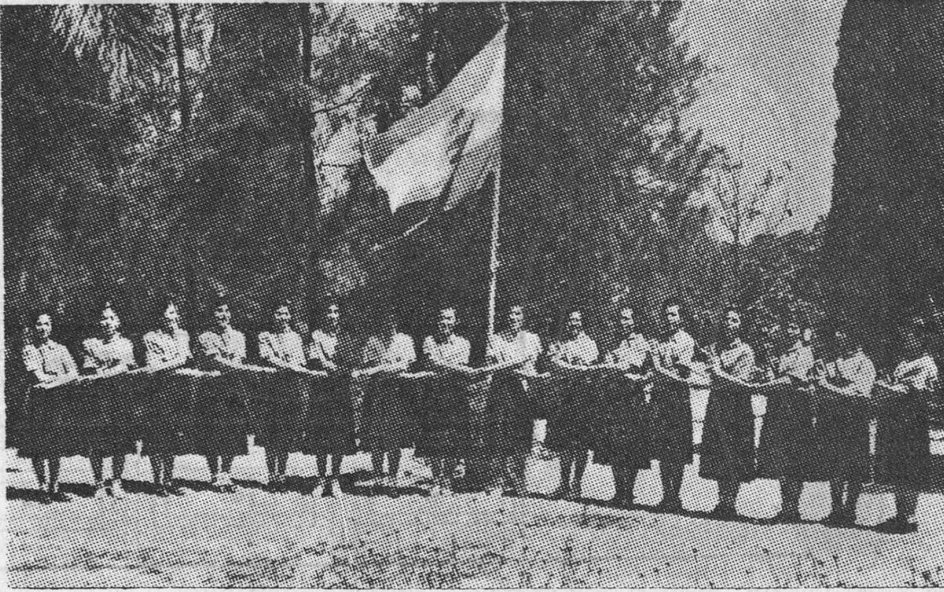
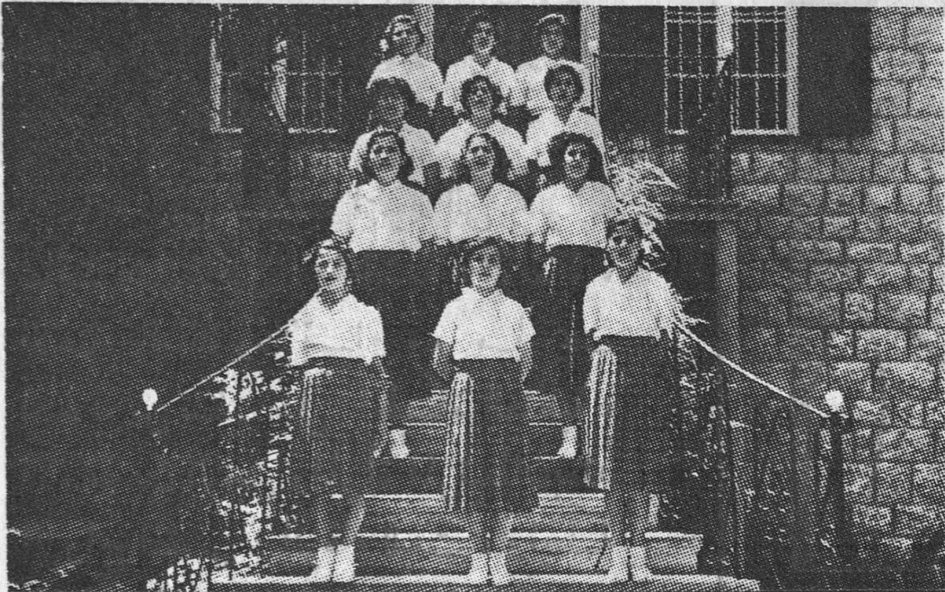
From the day the "House" opened its doors and took up its mission, the number of those taking refuge in its protection has risen steadily: from three girls in 1935, to eleven in 1936, to forty-one in 1942, to sixty at present. And whether the number grows or shrinks, the sisters' efforts never flag; they are in constant activity to provide these unfortunates with a sound upbringing, sufficient education, and good training in family life and household tasks, without ever letting them feel any slight to their dignity, any lowering of their standing, or any deprivation of the innocent joys of life.