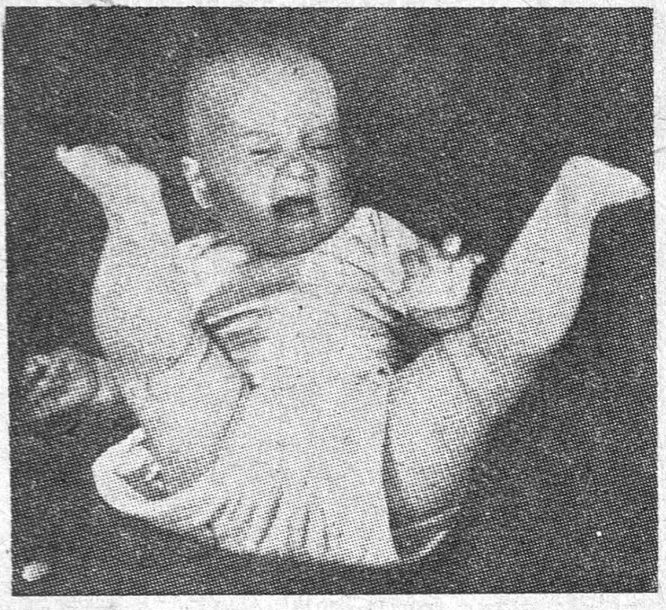
The doctor said: I used to visit Mrs. Suad every day during the first week after the birth of her baby. The baby was growing well and regaining the weight it had had at birth — about four kilos — and its mother felt a continual improvement in her health, and kept asking me insistently: When may I begin moving about the house? For I have learned from a friend of mine that she was up and about five days after her delivery.
And my answer was: There are doctors who say there is no objection to the nursing mother's leaving her bed as soon as possible, but I say: why not give the nursing mother the chance to rest from the strain of childbirth, if that can be managed? There is Mrs. Suad's mother, or some of her relatives, who can take upon
themselves the household work, while the mother — the baby's mother — devotes herself, in her bed, to the care of her baby.
It is best that the nursing mother remain ten days in bed, and then begin to move about gradually. As for the exercise she needs: she should breathe deeply and move her hands, feet, and legs; then she should exercise the inner abdominal muscles, drawing them inward as she breathes in and relaxing them as she breathes out. This kind of exercise is very useful for the nursing mother.
Then, on the fourth day after delivery, she should take up an exercise known as the bicycle movement — that is, lying with the face upward and imitating the motion of a bicycle. This
exercise is tiring at first, but it strengthens the muscles.
Finally, the nursing mother should take up the arm exercise: raising her arms above her head and lowering them gradually to her sides. This exercise is very useful for the muscles of the chest.
The mother grows anxious about her milk, for she yields nothing in the first three days after delivery, and it seems to her that her milk has stopped. The truth is that the nursing mother yields no milk in the first three days — as if nature intended the baby to take no milk in those days.
The nursing mother's milk is usually preceded by a substance called colostrum, and the baby should be nursed on it, so as to draw from it its nutritive matter.
When the baby is born, its intestines are filled with a sticky substance called meconium, and the baby's digestive apparatus cannot perform its natural function so long as this substance remains in the baby's intestines. Accordingly, half a teaspoon of salt is put into a vessel holding about two large cups of water; it is boiled, then left until it is lukewarm. During the first three days of the baby's life it sucks a little of this water, and from the fourth day on it is given a teaspoonful of it once every four hours. The benefit of