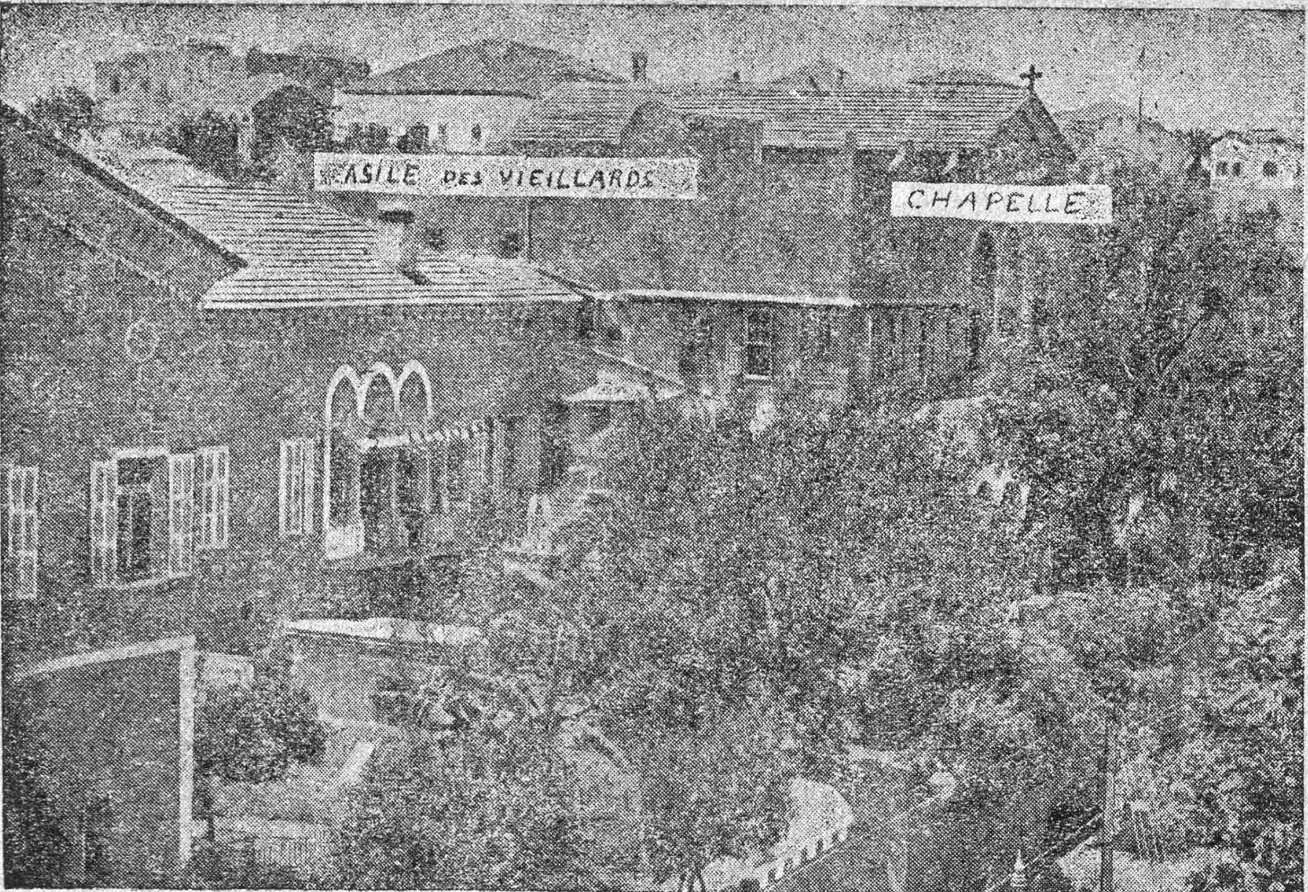
The old people's home is a social institution of very great importance in the Lebanese Republic. Before we move on to this home, which stands in the Furn al-Shubbak district of Beirut, and before we walk through its corridors and its rooms and become acquainted with its conditions, we present to you a brief glimpse of this home's history.
In Beirut in the year 1900 there was a person called Count Frazi. One day he went to Cairo and visited the old people's home there and admired it, and he decided that a home for the aged should be established in Beirut as well; so he sent a proposal to that effect to the society that oversees such work in France — the Confraternity of Our Lady of Sorrows.
The society studied this proposal in 1904, but did not set about
The old home for the aged — originally the Italian Consulate building
carrying it out until 1913, when the society's superior, Mother Saint Justine, arrived in Beirut. Four sisters followed her, and they founded a home for the aged in the old Italian Consulate building in Beirut.
A year after the home's founding, the number of its aged residents had reached 400. When war was declared in 1914, the Turkish authorities demanded that the sisters leave the country at once, so they left the home in the care of a number of Syrian sisters.
As the home's superior was about to leave the port, she said to the Vali of Beirut: Your Excellency the Vali — we are leaving Lebanon, leaving the aged in your care. The Vali answered her: You may, Sister, leave them in my own care. When the war ended, only two of the residents of this old people's home remained alive; the rest had gone to meet their Lord through hunger.
•
And now, here is the old people's home in our own day: the car
carried us to Furn al-Shubbak and stopped with us on a side road before a huge iron gate. The doorman received us — a man who has lost his sight, but whose insight is strong. He greeted us with the question: What do you want? We answered: We wish to visit the home.
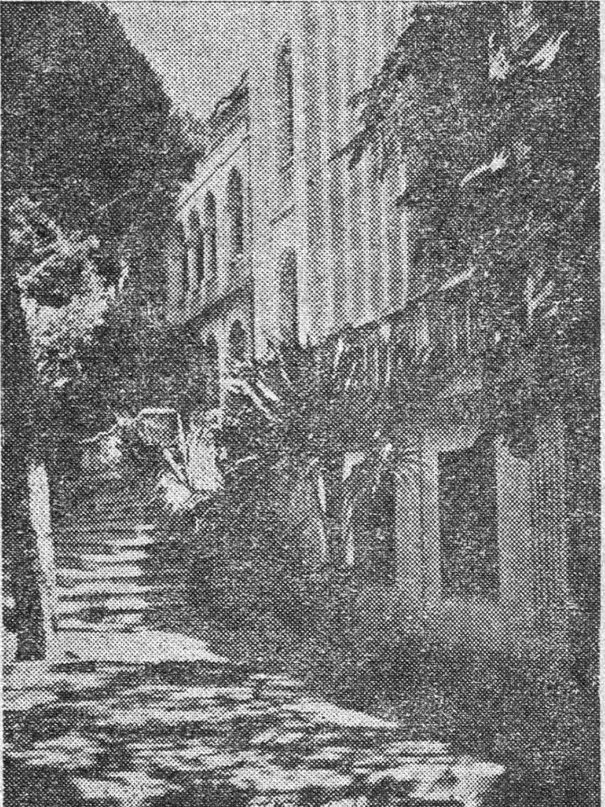
We passed through the gate and found ourselves before a stately, oblong mansion of three stories, surrounded by pine trees over an area of hundreds of square meters. The doorman walked ahead of us, calling: Mother... Mother... And the home's superior, Mother Cléante, came out to us, followed by the convent's engineer, Mr. Bakhos. The superior welcomed us with her cheerful face and charged Mr. Bakhos with easing our task: to acquaint us with this humane institution which serves needy Lebanese who are advanced in years.
We walked with Mr. Bakhos and Mother Cléante along the garden paths, and this conversation passed between us:
Q: Who drew up the design of
The new old people's home in Furn al-Shubbak