only.
Q: And how are the residents of the institute distributed by nationality?
A: Eighty-four Lebanese, seven Syrians, two Iraqis, one Greek, and two Swiss.
Q: How much does one blind person cost you a year?
A: A blind boarder costs us about 800 Lebanese lira a year.
Q: May we know something of the institute's budget?
A: The institute's annual budget comes to about forty-five thousand Lebanese lira, the greater part of which comes from Switzerland, while 13 percent comes from benefactors in Lebanon.
Q: Do you receive any government aid?
A: Most regrettably, we receive nothing.
Q: Would you permit us to make a tour of the sections of the institute?
A: With great pleasure — of course — please, come along.
Q: What do they make here?
A: Here they make brushes. We produce 150,000 brushes a year.
Q: And what do they make here?
A: Here they bore the wood for the brushes. We make eight million holes in wood every year.
Q: And what is this large storeroom?
A: This is a storeroom for straw of every kind, which we import from India, China, Mexico, and Africa.
Q: And what do they make here?
A: They make baskets and straw chairs.
Q: And what is this room?
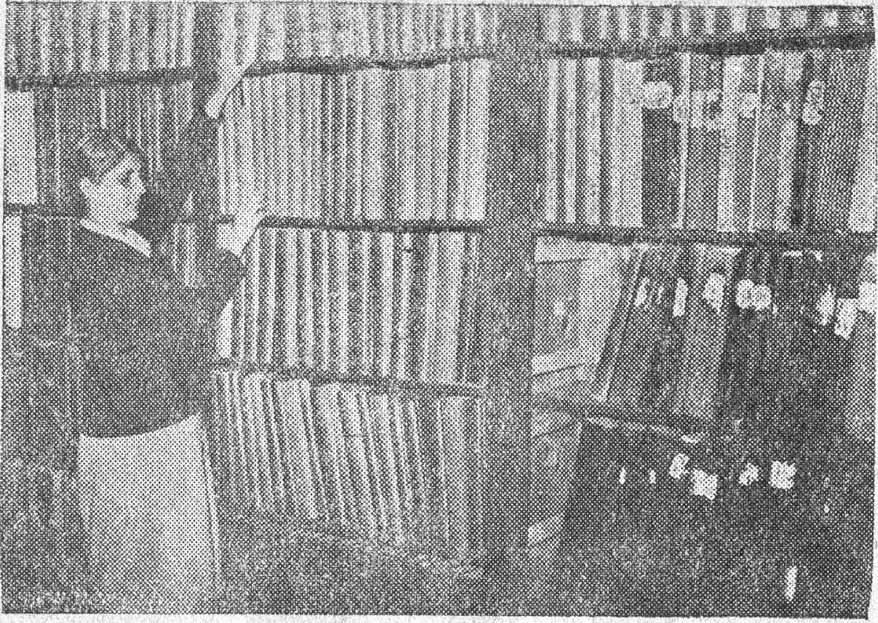
A: It is the institute's library. Here the blind read books of religion, science, and literature. Look —
this is a relief map of Lebanon, and these are relief drawings of animals, plants, scales, and instruments. And this is a relief drawing by which the blind man learns how the blood circulates in the human body.
Q: And what is this machine?
A: It is a typewriter, on which the blind man types with one hand while with the other he feels the material he is copying from.
Q: That is to say, the machine makes raised dots that form a given text?
A: Yes, exactly so.
Q: And what is the Braille method of writing for the blind?
A: It is only six dots serving as the basis for all the letters of the alphabet: one dot is "A," two dots are "B," and so on. This method has become uniform for all the blind of the world; the single dot, for instance, indicates the letter "A" in all languages, and so with the rest of the letters.
Q: And why was it given the name "Braille"?
A: The method takes its name from Louis Braille, born in Paris in 1809, the son of a saddle-maker. It happened once that he was playing with an awl and a piece of leather; the awl leaped from his hand and struck his eye, putting it out. Soon he lost the second eye and became blind. And it was this awl, which had cost him his sight, that inspired him to use it in devising the alphabet known by its six raised dots — indeed, they give the blind man sixty-three kinds of signs. The Western blind man writes with them from right to left, and when he turns the sheet over he reads it from left to right; the Arab blind man writes from left to right and then reads from right to left.
•••
We returned to the office of the director of the institute so that he might give me his views on the blind, our brothers in humanity. He said: "We must look upon the
A library in raised dots
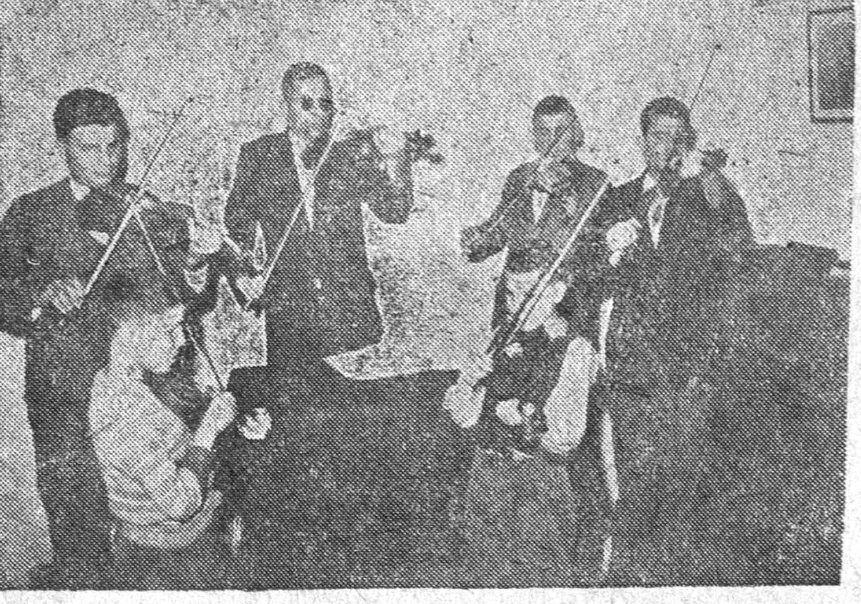
The musical score, when it is needed