As for the grapes and figs and plums and cucumbers and tomatoes and all the other fruit and vegetables, I do not know what they cost, because every morning they pile up at my house as presents from the neighbors — I could open a shop. And when they learned that my daughter in Cairo collects stamps, colored letter-envelopes came to me by the dozens, until I had gathered hundreds of postage stamps — Brazilian, Argentine, American, Australian. It appears that a great number of the sons of "Ain al-Burghush" are scattered over the ends of the earth.
The most open-handed of them with stamps was the village baker, for he has a son studying engineering in Denmark.
Truly they are a rare people, with a mania for the education of their children that is like a touch of madness. You see one of them, teeth smashed, clothes in rags, bent over the stones, hewing them with steel from al-fajr to al-najr — a saying of theirs meaning from morning to evening — to save a lira, and add it to a lira, until they become hundreds, which he spends on one of his sons at some university in Beirut or Paris or New York; and he does it joyous and proud, to secure for his son the higher culture of which he himself was deprived.
One day I resolved to buy a piece of land and build myself a house on it to my liking, to be a summer place for me to live in every year. So I asked one of the village notables, by the name of Najm al-Azraq, whether he could direct me to a landowner who would sell to me. He answered that he owned many parcels, but that they were not for sale; indeed that there was no one in his family — the house of al-Azraq — who would sell any of his possessions; but he assured me that certain members of the Qahwaji family would be very much interested
in selling lands, and advised me to approach the said family. And Mr. Najm al-Azraq's reply carried a certain testiness whose cause I did not know.
And when I approached Nimr al-Qahwaji — the head of his family — I heard the same answer I had heard from Najm al-Azraq. Mr. al-Qahwaji added, in an angry tone, that the possessions of the house of al-Qahwaji were not for sale, and advised me to approach the house of al-Azraq, who would doubtless be pleased to sell some of their possessions. So I was at a loss, and could not fathom the secret of the talk I had heard. I looked into the matter with tact, and learned that these villagers count it a disgrace for one of them to sell any land; that a traditional feud has reigned between the two families, al-Azraq and al-Qahwaji, since olden days — each family lives in a separate quarter; and that advising me to approach the other family to try to buy property was a jab, a slight, and an insult to the enemy family. And I remembered then how they used to call on me in two separate companies, and how one quarter would blaze with lights and thunder with rifle-fire at some political event while the other quarter stayed dark and silent.
So I became careful, in my dealings with the villagers, to keep the balance: if I visited someone of the house of al-Azraq in the morning, I reached the house of one of the Qahwajis in the afternoon, so as to wound nobody's dignity — for they are sentimental to a degree hard to imagine.
Your pardon, Si Atiyah — I meant to tell you what happened to us yesterday.
Some days ago a man came to me — the president of a school and orphanage in a neighboring village — and invited me to attend a celebration to be held at the school and orphanage; I accepted with thanks. And hardly had he gone out my door when another person came in, informing me that he was the director of the school and orphanage, and that he invited me to attend a celebration to be held there.
So I knew for certain that the entrenched enmity among the people of "Ain al-Burghush" is an exact copy of what spreads through all the rest of Lebanese life, and that each of the two men — the president and the director — wished to give me to understand that he was the host of the invitation and the master of the school and orphanage, and that the other was of no use and no consequence.
I hired a car, and we drove about a quarter of an hour until a village faced us, black of houses, flat of roofs — the eye would almost slide off it were it not for a small white building with two wings. The driver said: "There are the school and orphanage. That white building, a span long and a third of a span wide; inside it are two teachers and a quarter, and it holds nine pupils and a half."
I climbed the building's steps between two rows of scouts with their long staves, and the band rang out a military air, and at once I felt a thrill that woke my spirit, so that I began to admire everything I saw.
I followed the director, talking with him and listening to his talk. Everything I saw grew great in my eyes, and this building, which from afar had seemed paltry, grew vast. Here was a well the boys had dug with their own hands; and this was a room whose building an emigrant in Argentina had donated; and these were wooden benches the teachers had joined together to carpenter;
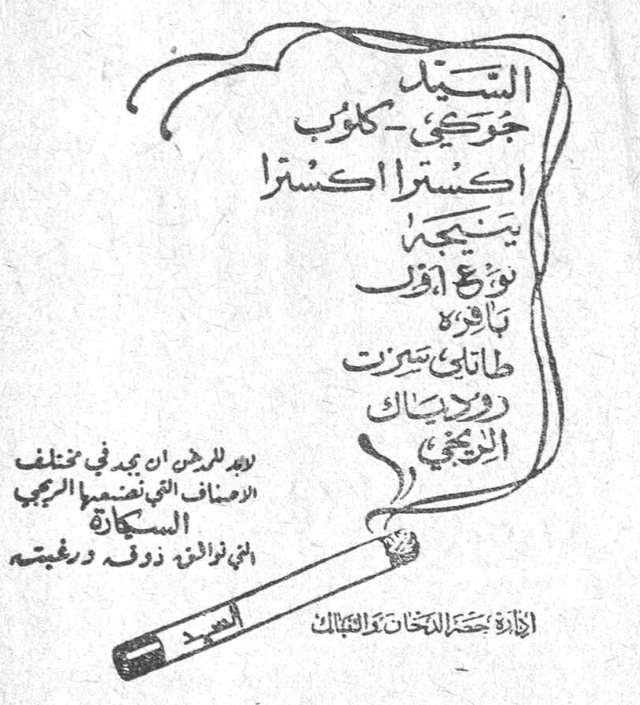
Tobacco Advertisement (Gorki — Club)
Tobacco
Gorki — Club
Extra Extra
First Grade
Bakoura
Sizert tips
Rodisan
The cheap one
The cigarette
A taste to relish