No two people differ on this: that beauty is a fundamental factor of happiness and contentment. We adore a beautiful flower, we love a beautiful face, we are gladdened when we see a beautiful view, and our souls are at ease when we put on elegant, beautiful clothes. It is fitting, then, that we take special care to make our homes beautiful and attractive, for it is within their walls that we spend the greater part of our
lives. Here, then, we review some of the elements of beauty in the home.
You may be one of those whom fortune has favored, granted a natural gift for knowing which colors go together. But there are those among us who lack this natural gift, and so it is important that we find some guide to help us in choosing harmonious colors.
And you can find, madam, the guide you need in many things, if you turn your attention to them. Suppose, for example, that you have decided to do over the reception room again this year, and that you have chosen a new kind of patterned curtains. Look at the pattern closely and carefully: you may notice many kinds of shades and colors that you did not expect to see, and that do not show themselves to the eye at a mere passing glance. And you may find that the colors used in the room's curtains guide you to all the colors you need and to the ways of arranging and distributing them: pale colors for the wall surfaces and the ceiling, a color darker than that for the floor of the room, and gay, clear colors for the covers of the chairs and the cushions and the rest.
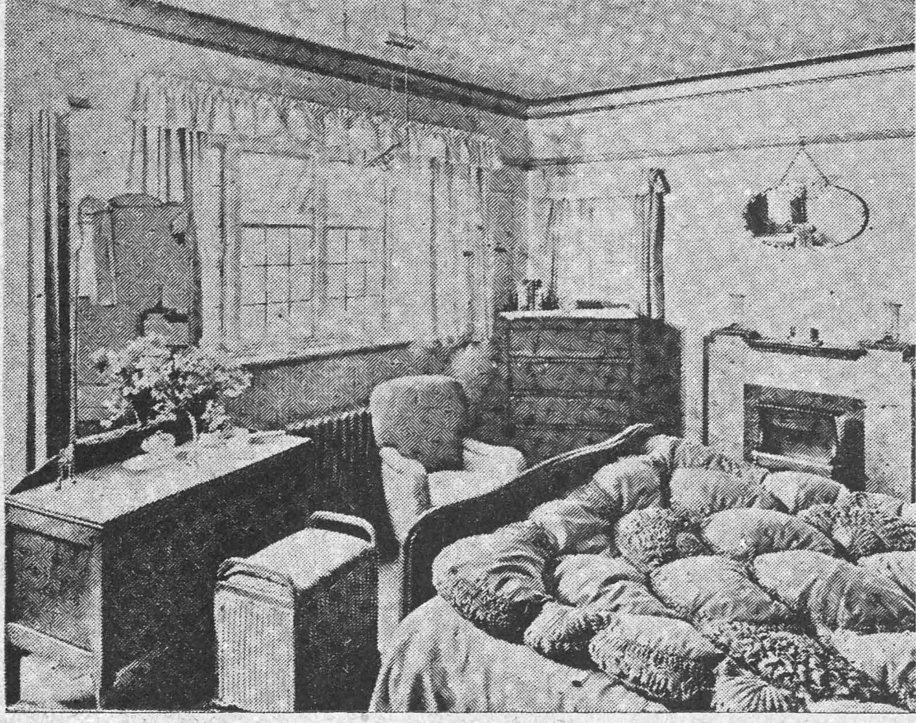
Yet the choice of colors is a matter on which people differ, and the best colors for your home are the colors that please you and set your soul at ease.
You may choose, madam, the color you love for the bedroom or for the bathroom. The color you choose for the bedroom may be rose-red, and for the bathroom, blue. But the choosing does not stop there. For example: do you want all the bedroom's walls and its ceiling, and the designs and curtains in it, to be rose-red? That would without doubt be an ugly sight. You must therefore use other colors in addition to the rose-red. Pale blue, for instance, or gray, or white — or all three together — differ from the rose-red, but their difference is quiet and gentle. So the rose-red bedroom will not be rose-red at all; it will rather be a room whose most conspicuous color is red.
And if we suppose that you want a blue room, you will find that blue suggests coolness in the room where it is used, just as loud colors suggest heat and warmth. Therefore the room in which red is used successfully must also contain a sufficient measure of the cool colors, to temper the sharpness of the red. But the cool color must not be so noticeable that it hides the red and keeps it from showing — and here begins the problem of arranging colors.
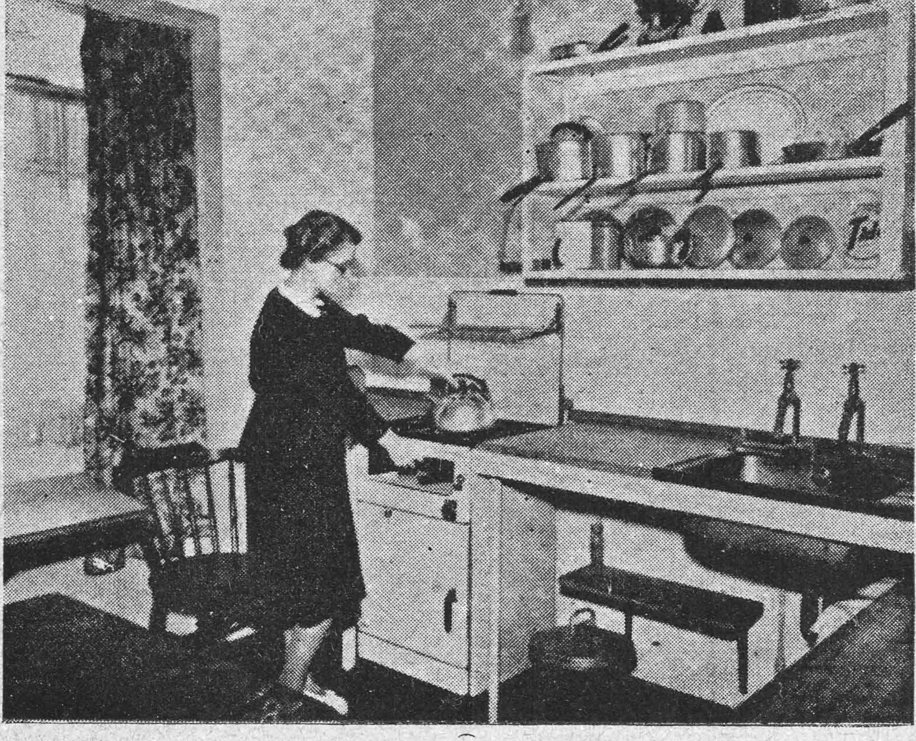
There is no doubt that the colors of rooms have a great psychological effect, especially if the room is one of those in which we work for a long part of our day — the kitchen, for example. And in choosing the colors of the kitchen walls we must observe an important point. We know that dark colors hide the dirt that clings to them, and so some may think that