and Ellen Rihan. A committee ruled by concord, sisterhood, and mutual support; work that does not seek the limelight; a rotating presidency, a single goal, and unceasing effort. This committee is backed by the women's organizations and by public opinion in every part of Lebanon. You have seen, O Lebanese, the handbills in the windows of the shops; you will see them in the cinema houses; you will read the endorsements in the newspapers,
and you will hear them from Radio Lebanon. Women's Week is Lebanon's week. Meetings are being held in Tripoli, Tyre, Sidon, Zahle, Baalbek, and Aley. And on the thirteenth day of the present month a great meeting will be held at the Roxy Cinema under the patronage of the First Lady of Lebanon, Mrs. Laure Khoury, wife of His Excellency the President of the Republic; Abdullah Bey al-Yafi will open it, and speeches will be given by Mr. Habib Abu Shahla, Mr. Subhi Mahmasani, Miss Ibtihaj Kaddoura, Mrs. Emily Fares Ibrahim, and the lawyer Miss Laure Nasr. The Lebanese woman asks for her right, and she believes she will obtain it. She is a citizen who pays taxes like the man: why, then, is her opinion not sought on the spending of those taxes on the projects that bring good to Lebanon? She is a citizen who is punished exactly like the man if she breaks the laws: why, then, does she not join with the man in making the laws? She raises the rising generation and directs the girls' schools — the schools of half the nation: why, then, does she not help in drawing up the curricula of instruction? She suffers from the high cost of living and feels its harshness; she sacrifices and studies and works to economize in expenses: why, then, does she not help in studying the ways of fighting the high cost of living? Why does she not take part in framing the laws to raise the standard of health?
Woman is a working member of society, a useful member who cannot be dispensed with. It is not permissible that she be treated as a subordinate whose duty is to carry out the laws while having no part in making them. She is half the nation, and she refuses to remain in the margin. She must be inside, in the house of the nation, where the destiny of the nation is decided.
In the name of the Executive Committee of the Women's Organizations in Lebanon, and in
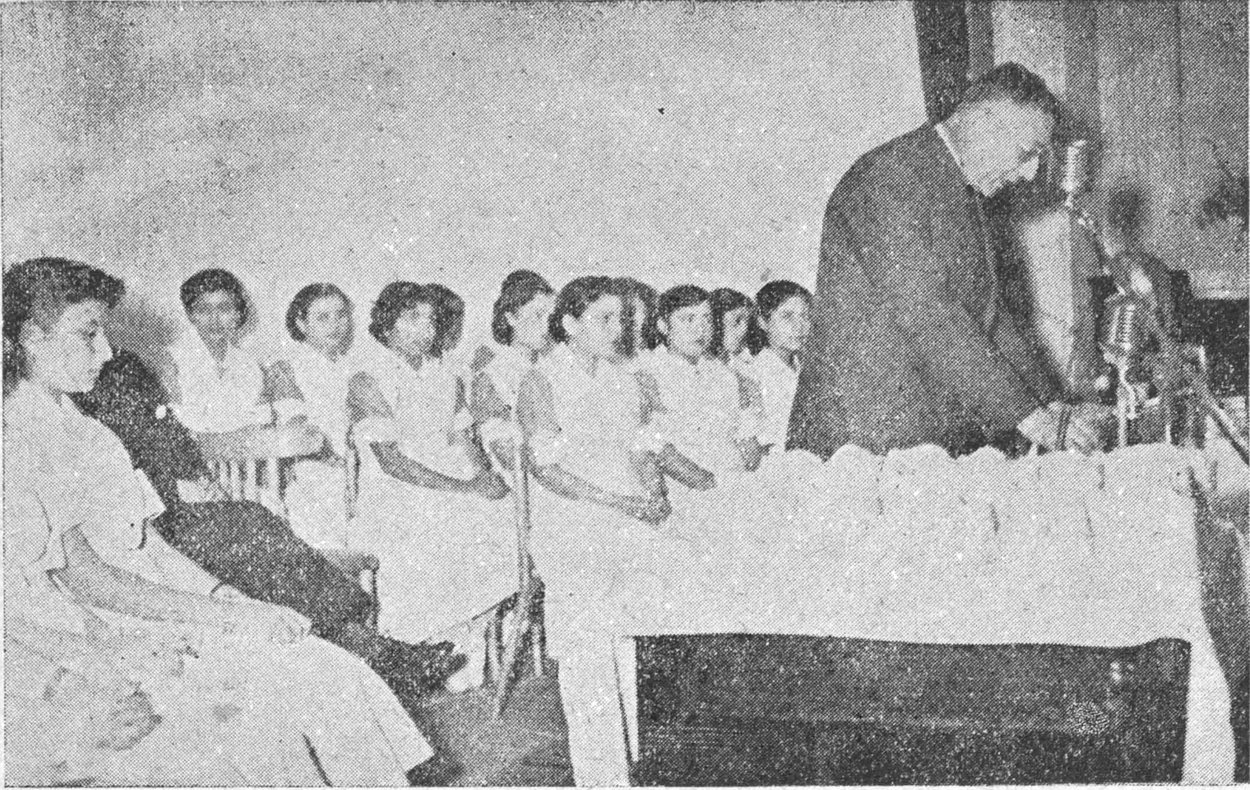
• Among the most charming celebrations of last month was the one held at the National Nursing School to confirm the graduating nurses in their posts, and to announce their readiness to go out into practical life.
The speaker of the occasion was the head of the institute, Dr. Mustafa Khalidi, who touched on the many difficulties the school faces in these hard times, brought out the importance of the mission for which it labors, and praised the fine spirit shown by his colleagues, doctors and nurses alike.
As for the anthem “Candles of Humanity,” the nurses' anthem, the emblem of nursing, and the rest, they lent the celebration an air of splendor and radiance... And we, while praising the tremendous efforts Dr. Mustafa Khalidi devotes to the service of his school and to raising it to a lofty standard, congratulate the nurses on their success and their confirmation, and wish them, as they go out into life, a future crowned with success in the service of humanity.
the name of the Lebanese woman, I come before the master of the country, the father of the Lebanese, to ask for justice. We are half your people, Your Excellency the President — a half whose political right is trampled, in a country that helped draw up the Charter of Human Rights. The head of this beloved homeland will be lifted high when woman receives her right, and so takes pride and rests assured of her dignity; when the discrimination in treatment between man and woman disappears; and when the men of this homeland no longer oppose the recognition of woman's right. Remember the month of Tishrin of the year 1943, the month of deliverance, and remember woman's share in the struggle and in giving voice to the feeling of the nation. Lebanon belongs to all its children
— to you and to us. And there is no doubt that the Lebanese man will not accept that the Lebanese woman be treated like the criminal or the imbecile, and so be denied a right that God gave her. Nor will he accept that Lebanon lag behind the procession of the civilized nations, in every one of which woman exercises her political right. Nor will he accept that the right of the mother, the wife, the sister, and the daughter be usurped. And the Lebanese woman is confident of the success of this national cause in the Lebanese Chamber, that she may help the man in working to raise the standing of the homeland — which will never rise, and never attain the rank it must reach, except through the cooperation of all its children.
Long live Lebanon, and the men of Lebanon, and the Lebanese woman!