Anyone acquainted with the various fields of women's activity in Lebanon soon finds his attention drawn to a name that stands, by right, in the vanguard of the active members in more than one field. The bearer of this name is Mrs. Alice Alfred Nakkash. She will speak here about the most important of her social projects, the "Union for the Protection of Juveniles."
Mrs. Nakkash is one of the leading figures of the women's renaissance in Lebanon, and one of the most active and most devoted of our ladies in giving her time and her thought to those humanitarian projects that call for a woman's heart, a woman's hand, and a woman's giving...
For a full year Mrs. Nakkash supervised the editorial committee of The Woman's Voice magazine. For all her high social
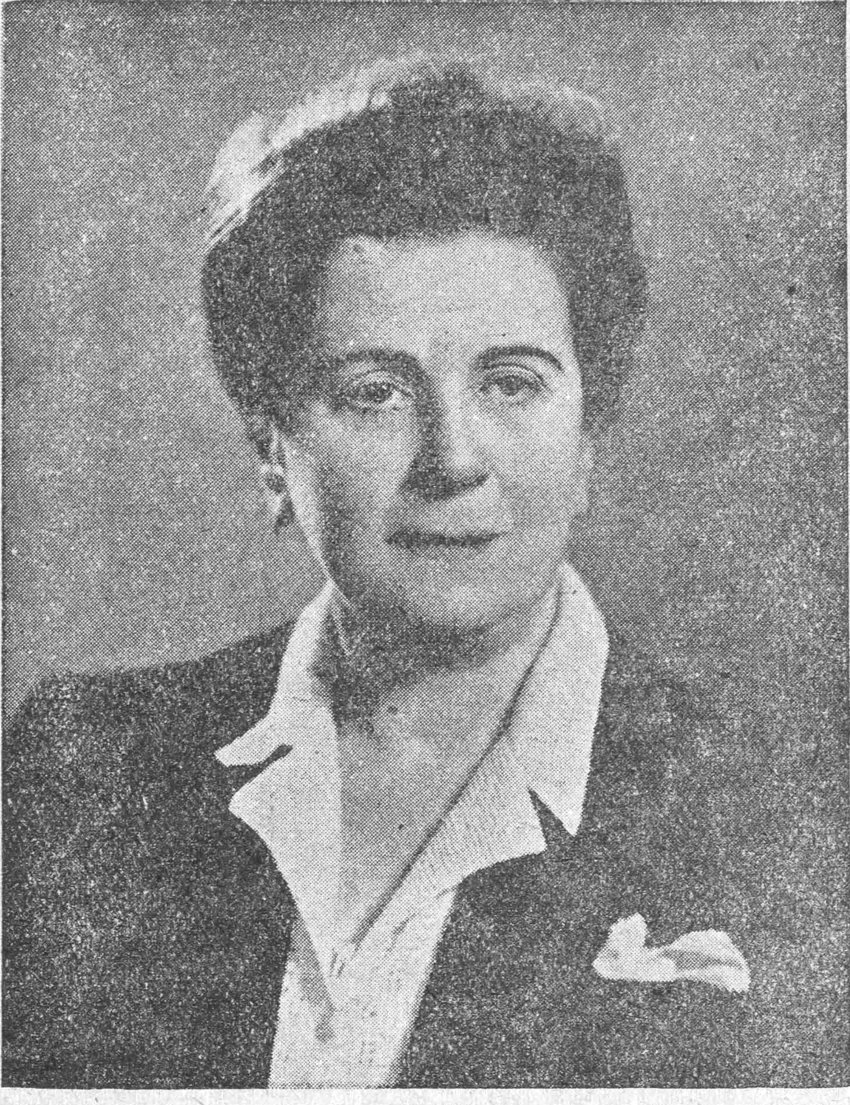
standing, hers is a modest personality, close to every heart, kind and tender — and this contributes greatly to her success in the work we shall discuss together.
Q — The first question: when, Mrs. Nakkash, did you found the "Union for the Protection of Juveniles"?
A — We founded the "Union for the Protection of Juveniles" in Lebanon in 1939, and in 1944 the criminal courts came to regard this association as an essential element in the application of social theories in the trial of delinquent juveniles.
Q — You mean, Mrs. Nakkash, that delegates from your association attend the court sessions and give their opinion
on the fate of the juveniles who are brought before the courts for committing first offenses such as pickpocketing, theft, moral decline, and the like?
A — Yes; and most of the sentences handed down against delinquent juveniles are given on the strength of the opinion of the association's delegate, who will have conducted a wide social investigation into the boy's environment and among the members of his family; and on the grounds and findings of this report the court relies in giving its judgment on the fate of these delinquent juveniles.
Q — It is without doubt the best and fairest of methods, because the delegate will necessarily have treated the child's problem from its social and psychological sides, and taken into account all the circumstances that led him to commit the social crime; consequently her judgment upon him comes nearer to justice than any other judgment issuing from the court alone, out of a merely external interrogation of the juvenile and of the two witnesses!
A — Of course, Mrs. Shayboub — the more so as the delegates who carry out the social investigation and study the problem from all its sides are specialists in this very work. They are, to begin with, licensed nurses or holders of the baccalaureate, and beyond this they have studied their social work seriously, for a period of twelve months.
Q — Truly, that is a fine and thorough specialization. And
how many social workers are there, Mrs. Nakkash?