There is a company of our brothers in humanity whose faces we never see, hidden from sight until the end. They are creatures like us, but they bear infirmities, or some deficiency in their bodily and physiological make-up.
We walk in the streets and see one another healthy, sound of constitution, life flowing from our gait, our glances, our smiles, and our talk; we work in order to live, and we live in order to work. Life values our existence, and we value the meaning of life.
But those human creatures who dwell in the invalids' shelter — who are they? What do they want? What is their aim in life? They are remnants of shattered humanity, living on hope, with no hope of survival.
Have you ever seen yourself before the trick mirrors? Have you seen what bodily deformity is like? Yes — you see yourself in strange, uncanny shapes, and you laugh; but at the same time you are terrified, and you look at yourself to be reassured that the infirmity you saw was nothing but a kind of optical illusion.
And now come with me to the invalids' shelter, to witness the struggle waged between mercy and human suffering.
We were received by the head of the shelter, Sister Brigitte, a model of piety and mercy. She has spent sixteen years of her life serving the outcast class of mankind: she worked first in the beggars' shelter, and after that shelter was handed over
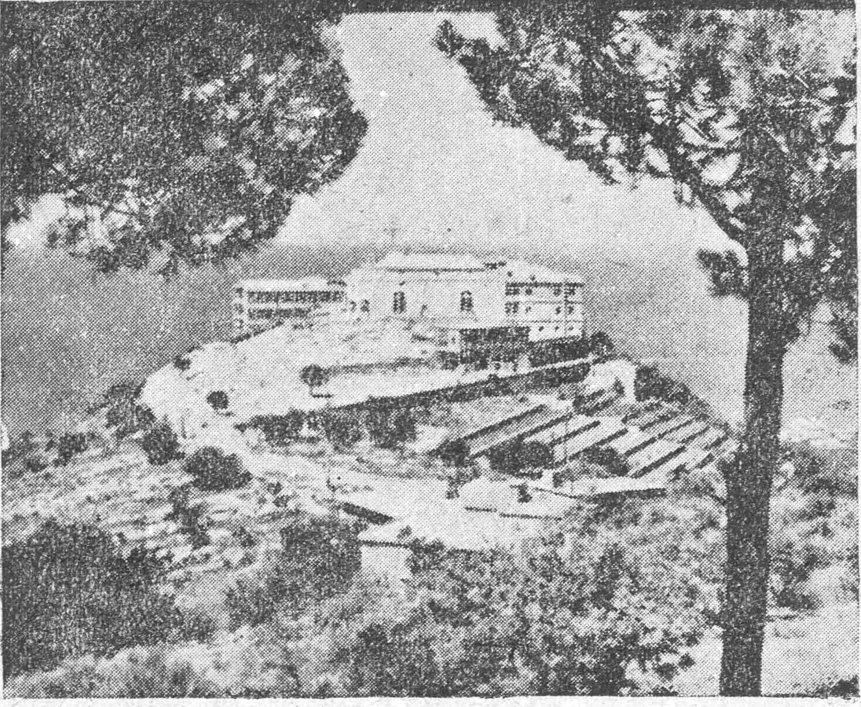
The Hospital of the Cross
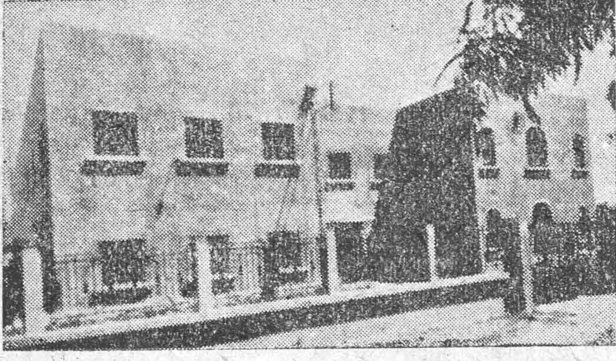
to the Quarantine administration she moved to the invalids' shelter that stands in the Dawra district of Beirut, where she works with all the strength and steadfastness given her, together with a band of Sisters, for the welfare and comfort of the shelter's inmates.
Before we set before you samples of the shelter's works and its life, allow us to give you a brief sketch of the history of this social institution.
Sister Brigitte said to me: It would be best for us to go together by car to the Deir al-Salib hospital, which stands on the mountain near Antelias; there we shall meet Father Yaacoub the Capuchin, for the invalids' shelter is one of the fruits of his noble humanitarian works.
A third of an hour later we were sitting in the presence of a modest, dignified man of nearly seventy; beside him sat the superior of the convent, the reverend Mother Marie Lacroix.
This conversation took place
between us:
Q: Is the invalids' institution attached to any body?
A: No, my son. The Deir al-Salib hospital, the invalids' shelter, the Deir al-Qamar orphanage, the shelter of the Monastery of Jesus the King, the convalescent hospital in Antelias, the Jal al-Dib school, and the rest home at Our Lady of the Sea — these are all my personal projects. I created them all by my own endeavors, relying on God alone.
Q: And how did you secure the capital, reverend Father?
A: In days gone by I supervised a hundred and thirty-six schools in Lebanon, and from my toil and the sweat of my brow I saved up a sum of money, and with it I bought this land on which the Deir al-Salib hospital for mental diseases stands. I bought it for two hundred and fifty Egyptian pounds.
Q: And when was that?
A: In 1919.
Q: And then?
A: Then I built on this patch of ground a hermitage — that is, a monk's cell — consisting of two rooms and a church; the building was completed in 1925.
In 1926 I began the project of establishing a
The Invalids' Shelter