In the Lebanese Kitchen: Arnabiyeh
I have prepared for you, Madam, in this corner a certain dish—"arnabiyeh." Arnabiyeh is a Lebanese dish which, I do not think, the Arab kitchen outside Lebanon knows; and this dish is among the most delicious of dishes, one our mothers prepare for special occasions. In answer to the wish of certain lady friends who asked for instructions on how arnabiyeh is made, here, Madam, is the way to make it:
Put a quantity of meat, about two uqiyyas, in small pieces, over the fire and fry it with a spoonful of ghee; it is best to put bones in with it, and for the meat to be shank meat. Sprinkle over it a little allspice, cinnamon, and salt, and once it has browned, add to it two onions cut into small pieces. After you have stirred the meat with the onions, put over them the chickpeas soaked the night before—about a large cupful—then pour over the whole a pitcher of hot water and let it boil on the fire until done. If the water dries up, add more, but let it be hot.
Meanwhile, the kibbeh is pounded in the familiar way and shaped into small kibbeh balls, pointed at both ends and hollow within... that is, they are stuffed with nothing. These little balls are boiled in the meat-and-chickpea broth while it boils on the fire; and after they are well boiled, the balls are lifted out and set aside.
When you are certain, Madam, that the chickpeas and the meat are done, turn to a quantity of tahini and add to it the juice of
the abu sfeir—a kind of citrus you doubtless know...
Thin the tahini with the strained abu sfeir juice until it has all dissolved and the mixture becomes smooth. Then add it to the meat and chickpeas on the fire and let it boil; then make sure the salt and the sourness are just right; then add the boiled kibbeh balls, so that all boils together until the liquid thickens.
Serve the arnabiyeh at table, to be eaten alongside rice.
There is one fine point of craft to be observed in arnabiyeh—the necessity of paying attention to the way the abu sfeir is squeezed, so as to guard against the bitterness of the peel seeping into the food. To be certain of this, wash the knife after cutting each fruit,
and wash your hands too with plenty of water between one fruit and the next; and beware of rubbing the peel between your fingers as you do when squeezing lemons, for the peel of the abu sfeir is intensely bitter, and this bitterness passes into the juice with the greatest of ease. Remember this whenever you wish to squeeze abu sfeir, for whatever purpose.
•
There are some Beirut ladies who prefer that the chickpea disappear into the arnabiyeh: the chickpeas are boiled first and drained, then added to the meat and onions.
There are also those who mix the abu sfeir juice with lemon juice to heighten its sharpness; and the juice of a single orange gives the arnabiyeh a delicious flavor.
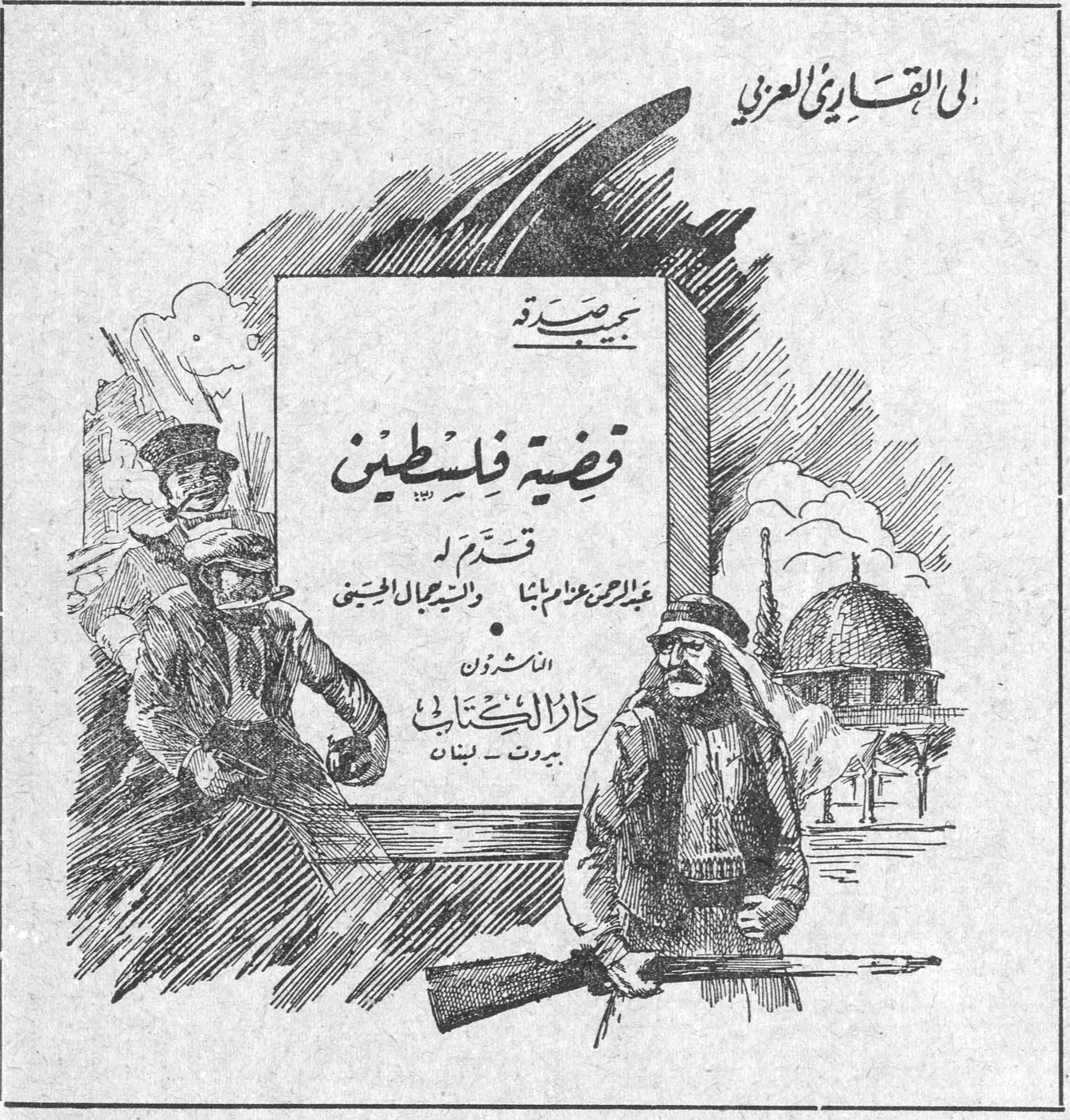
The Palestine Question (Dar al-Kitab)
To the dear reader
Soon to appear:
The Palestine Question
With forewords by
Abdul Rahman Azzam Pasha and Mr. Jamal al-Husseini
Publishers
Dar al-Kitab
Beirut — Lebanon