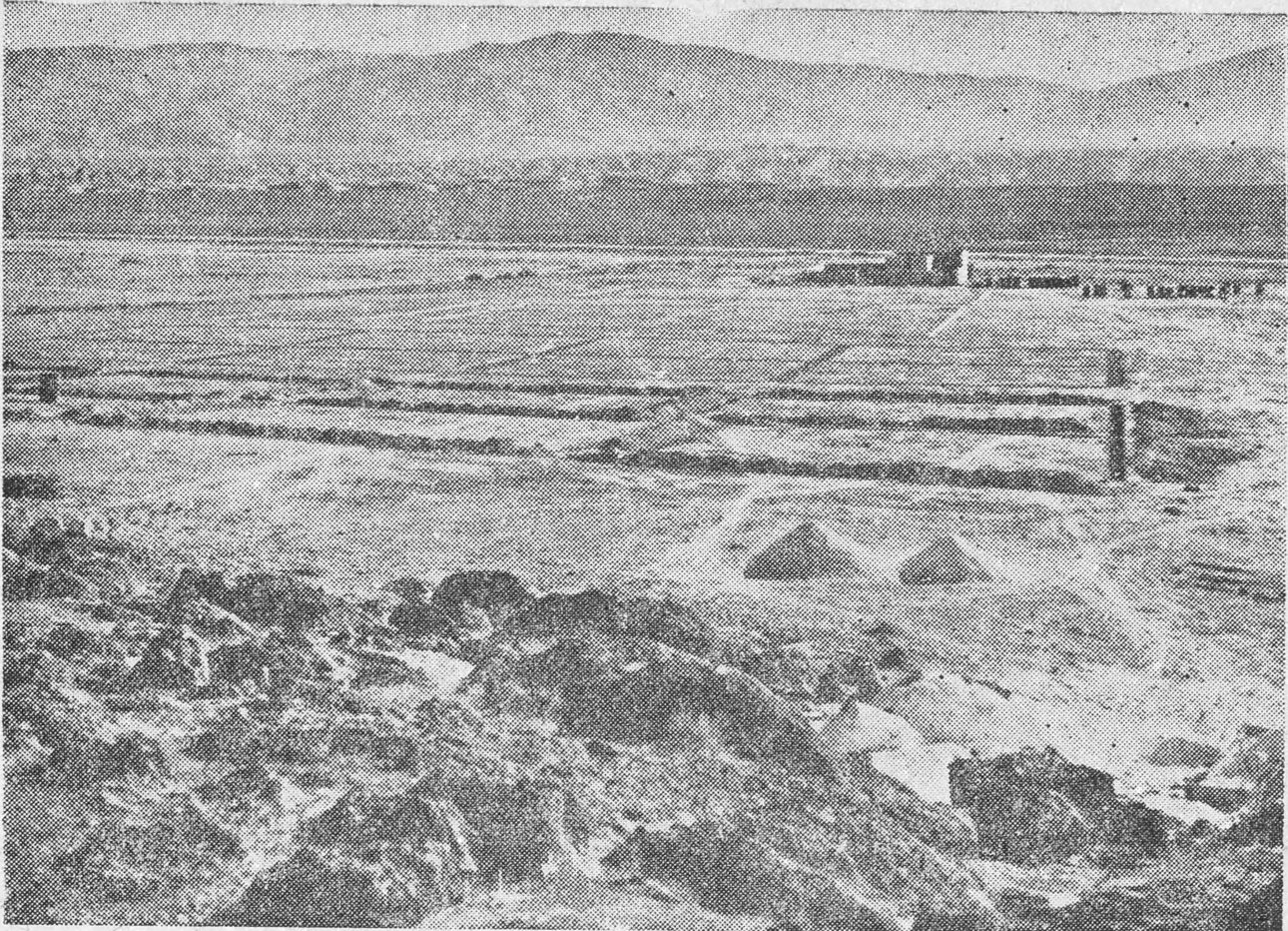
A general view of the plain of "Marj Na'ja," where the plans have been laid out for building the model village.
After the Relief Agency's experts examined the soil, most of the land was planted with wheat, and experiments were made in planting various kinds of vegetables — potatoes, squash, tomatoes, onions, and so on. Some of these have already begun to bear, and with amazing speed... The agricultural expert there says that the soil in that region is virgin soil, of such quality and fertility that it runs ahead of the harvest seasons of other countries; this
advantage alone is enough to tempt the refugees to remain here and export the products of their lands abroad. And it was found very necessary to equip them with modern agricultural knowledge that will secure them summer crops and winter crops alike, so that they draw a double benefit from the land and their profits multiply with time. This too is what the International Agency is striving to secure as far as it can.
... Our eyes turn toward the village itself: some of it has been
finished, and of some the walls have risen. Here the author of the plan and supervisor of the building, the engineer Habib Bishara, undertakes to make clear to us what we could not grasp. The houses in the village are of three kinds: one of earthen mud-brick, one of rubble stone with earth and lime, and the third of concrete with rubble stone. He shows us that this village is an experimental village for many villages that will be built in other places, and how its plan was drawn up on modern technical principles, in which the aesthetic, the economic, and the sanitary considerations were all observed at once... Each family has a house of two small rooms, with the possibility of adding a third room in the future, and a walled forecourt. Each house has a small kitchen, a latrine, a coop for the chickens and a pen for the animals... And the village will have a school for the children, who now number one hundred.
I left my journalist colleague Miss Winter absorbed in photographing the village and slipped inside the tents, where the women and the nursing infants were — and the state of things within bore all the marks of shabbiness and misery. The women gathered around me, baring their breasts, complaining of nakedness and of provisions that fall short of keeping body and soul together for them and their children... These provisions last them twenty days of the month; the remaining ten days they live on the daily wages of their men, which the Relief Agency grants them in return for their share in building the village... And you see their families there in the tents, on worn-out mats, their eyes on the white houses rising higher from one day to the next... When will these beautiful houses become their own, so that they may order their lives in them anew, and live the life of the honored farmer?!
To this the executor of the project, the engineer Issa Fashi, gave answer: he hopes that by the end of April the building of twenty houses will be
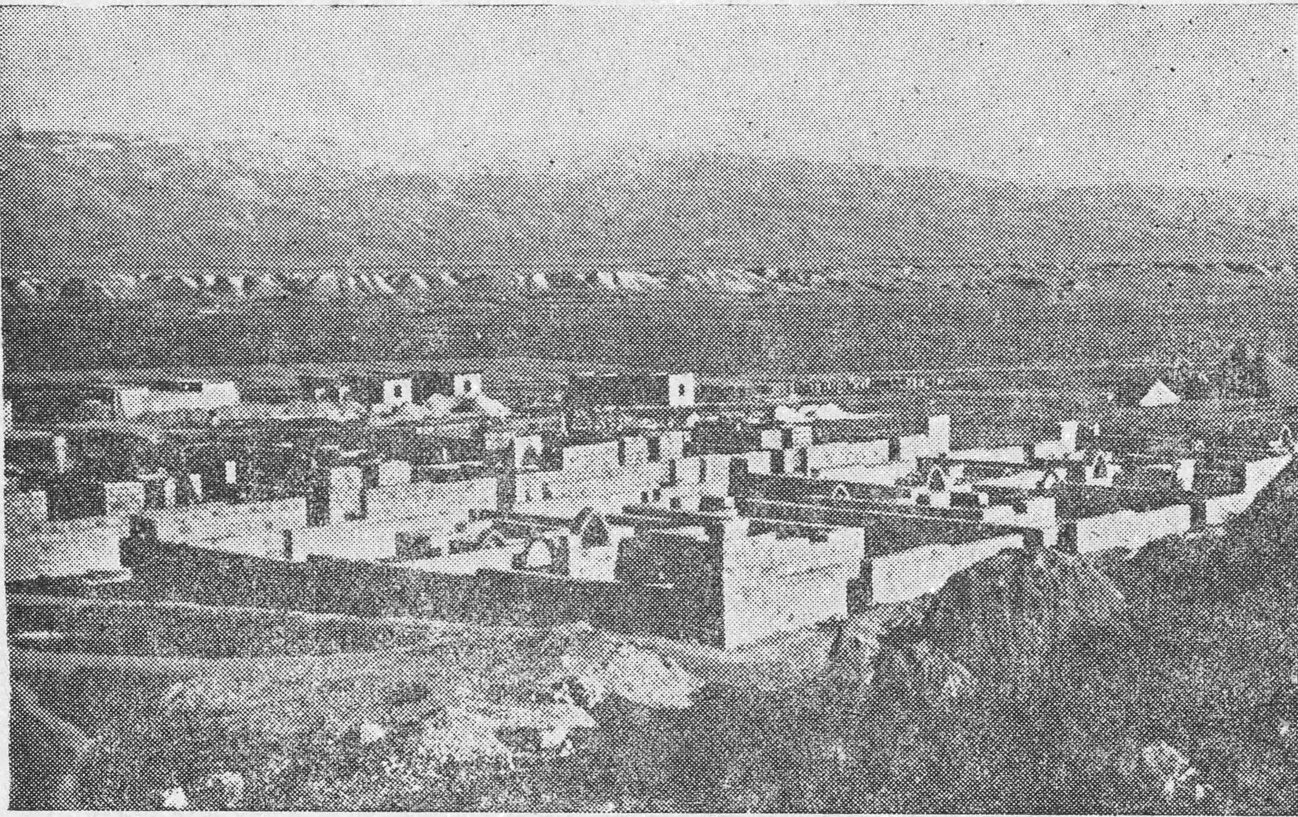
Another view of "Marj Na'ja," where a portion of the houses of the model village for the permanent housing of the refugees has been completed.