spring most kinds of flowers come up here in our country, and in the remaining seasons of the year each kind comes according to the warmth of climate it requires. The lily, for instance, comes up in summer, and the stock in winter. But, as I have already indicated, modern discoveries, and care founded on experiment and science, have made everything possible, so that any kind of flower may be had in all soils and at all seasons.
And the means to this — almost the only one — is the glasshouse, built on technical lines to preserve for each kind of flower the degree of warmth it demands, together with proper care in the way of ventilation, feeding, and gentle handling.
Q: What is the proportion of flowers imported into Lebanon compared with what Lebanon itself produces?
A: The proportion of flowers coming into Lebanon is very small; our flower sellers imported nothing but a few kinds of roses and carnations from Egypt — until I came along and took a bold step, almost a gamble, in this trade, considering the costs it entails and the risk of spoilage. Nor will I deny here the taste of the Lebanese, who appreciate a fine thing whatever its price.
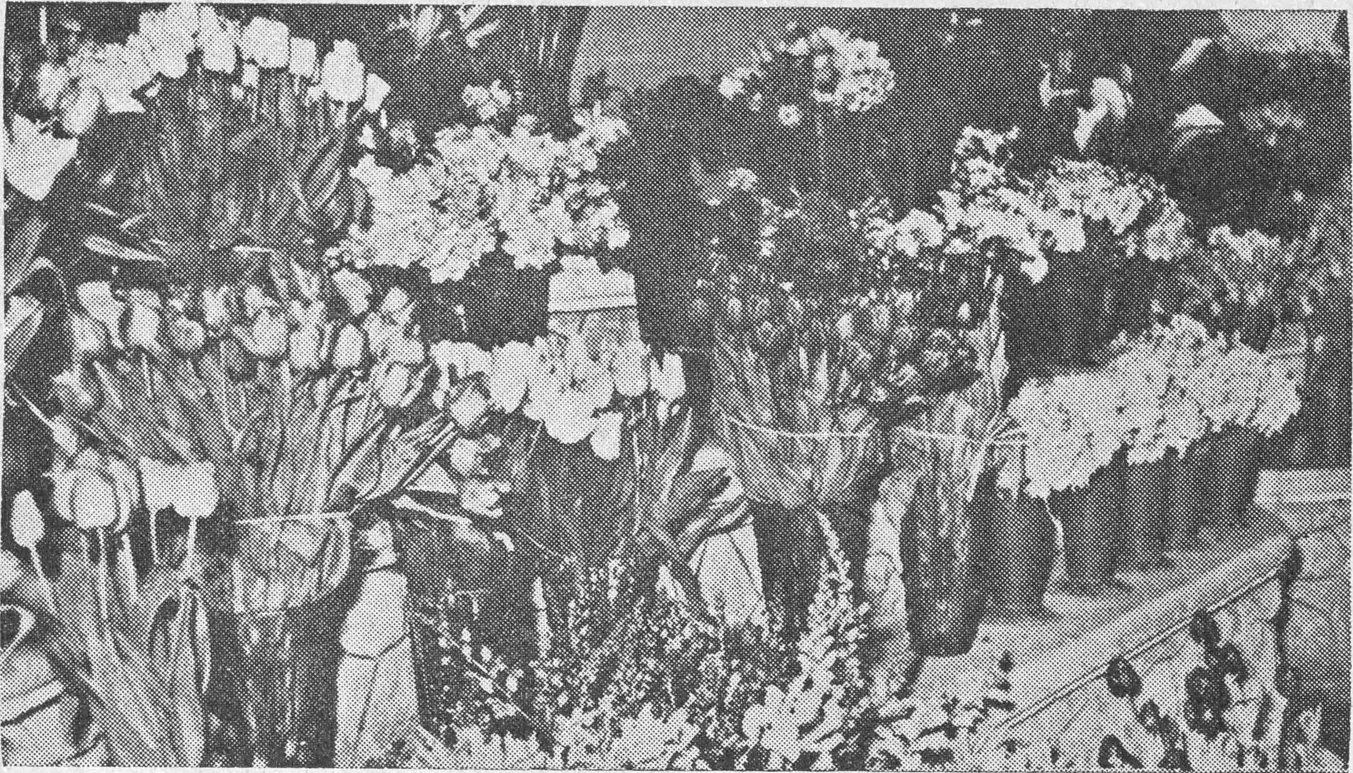
The step I took was this: I began dealing with European countries — Holland, Belgium, France, and Italy — and in January I imported "muguet," "lilac," and "tulips" in large quantities. These flowers bloom in different months of the spring, according, again, to their different regions. The lilac comes from Russia, the muguet from France, and the tulips from Holland. Holland has managed, by certain technical methods of hers, to bring these flowers up in the depths of winter and export them abroad — and this is what I myself am working at today, so as to do without importing altogether.
Q: What are the most important flower-exporting countries in the world?
A: The most important flower-exporting country today is Holland. In the past Germany showed greater care, art, and output, but the collapse of that nation after the last war put Holland in the lead. Belgium rivals Holland in this field, then France, then Italy. As for England, she counts for almost nothing in this trade.
Q: How are the flowers carried from abroad to our country?
A: The surest way of carrying these flowers is, without doubt, by air — that is, by plane.
Q: Which countries build the greater part of their economy on flowers?
The importance of a trade of this kind varies for each of these countries with the volume of what it produces. The one country that builds its finances on the export of flowers is Holland, followed step by step by the countries we have already named, in proportion to what they produce in flowers, bulbs, and seeds.
Q: Have you a word you would like to address to our readers, ladies and gentlemen?
A: I can only draw the attention of our worthy readers to one point of real importance: the care
of flowers in the home — for upon them depends the survival of these bouquets and the length of their life. — And here I felt that my interlocutor had given me more than I had wanted, and that I had used up a great deal of his time; so I took my leave, thanking him for his kind reception and his generosity in answering my questions.
Clusters of white "lilac," whiteness at its very purest. Among its colors is the lilac shade, which is imported from Russia.
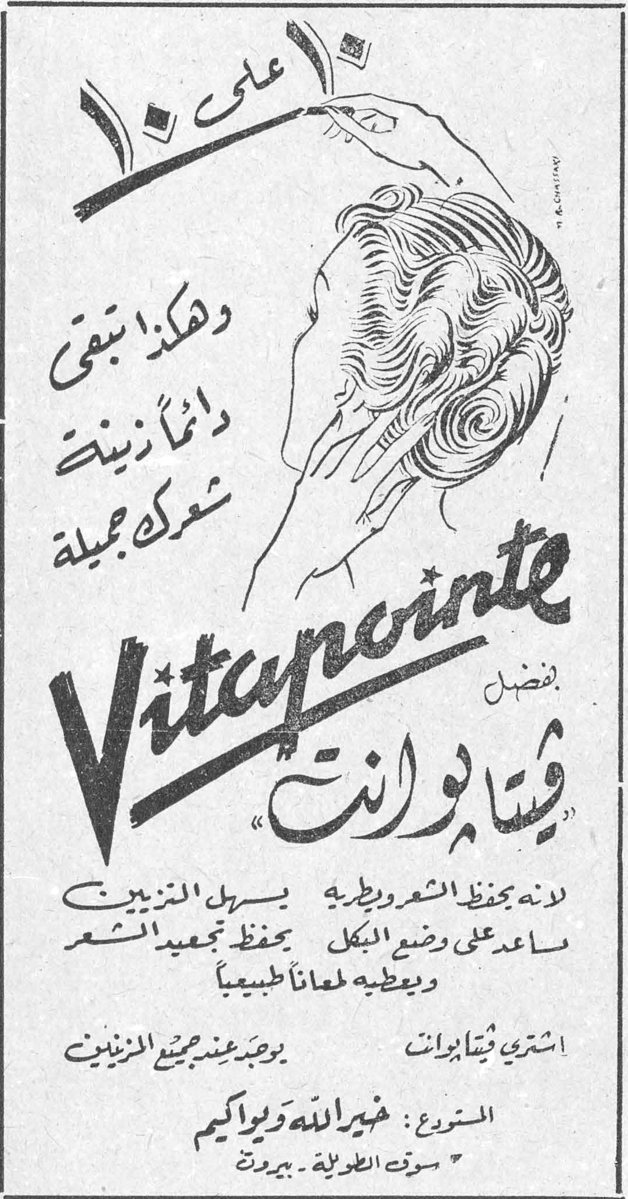
Vitapointe
10 out of 10
And thus your adornment — your hair — stays beautiful always
Vitapointe
Thanks to "Vitapointe"
For it preserves the hair and its moisture — makes it easy to wave
Helps in setting the pins — preserves the hair's curl
And gives it a natural sheen
Buy Vitapointe
To be found at all hairdressers
Distribution: Khairallah and Rakim
Tawileh Street — Beirut